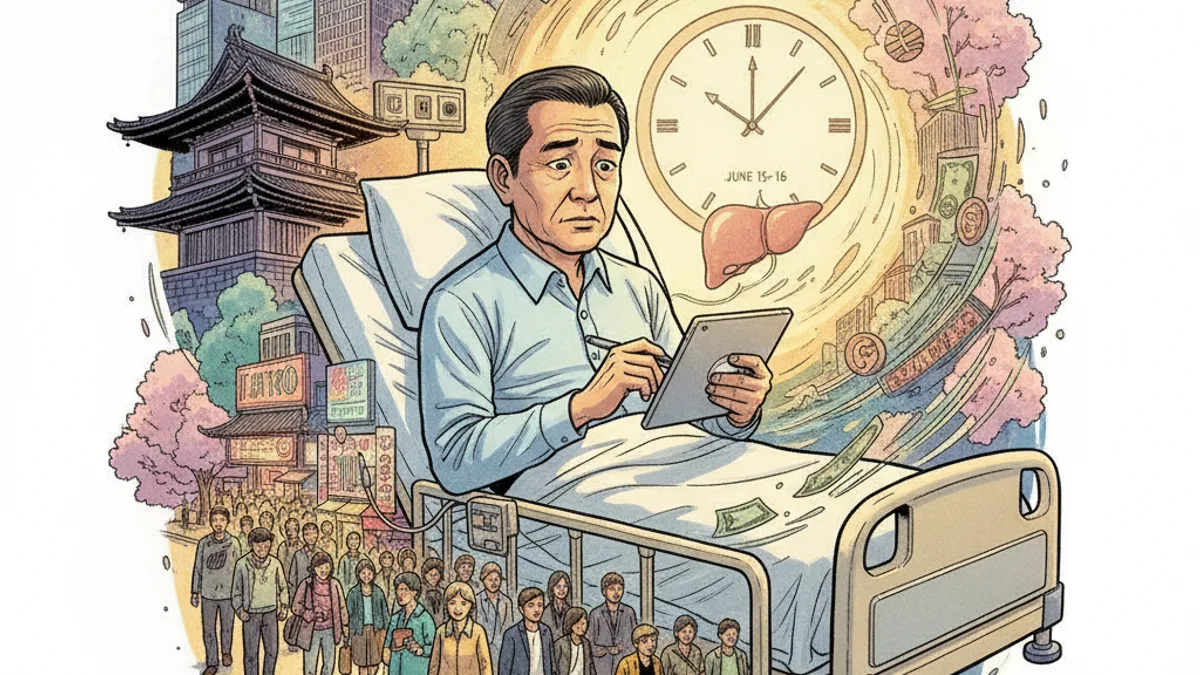
Bank of Japan Governor Ueda Hospitalized, to Miss Key Policy Meeting
BOJ Governor Ueda hospitalized June 9 for liver infection, expected two-week recovery. Will miss June 15-16 policy meeting but participate via written submission. Monetary policy decisions may affect expat finances.
Key Points
- • Governor Ueda hospitalized June 9, expected two-week recovery from liver infection.
- • Will miss June 15-16 policy meeting, participating through written submissions only.
- • BOJ policy decisions may impact mortgage rates, savings, and yen exchange rates.
- • Policy Board's nine members ensure meeting proceeds despite governor's physical absence.
Bank of Japan Governor Kazuo Ueda has been hospitalized since June 9 for treatment of a liver cyst infection and is expected to miss the central bank's crucial monetary policy meeting scheduled for June 15-16, according to an announcement from the BOJ.
The hospitalization, which is expected to last approximately two weeks, comes at a critical time for Japan's financial markets and raises questions about potential impacts on monetary policy decisions. According to NHK, Ueda will participate in the policy meeting remotely by submitting his opinions in writing, though he will not attend in person.
Ueda, 75, is being treated for hepatic cyst infection (liver cyst infection), a condition that occurs when fluid-filled sacs in the liver become infected. While the BOJ has not provided detailed information about the severity of his condition, the two-week hospitalization period suggests the infection requires careful medical management and monitoring.
The timing of Ueda's hospitalization is particularly significant for foreign investors and expats with financial interests in Japan. The June policy meeting comes amid ongoing speculation about the BOJ's monetary policy direction, particularly regarding potential adjustments to its ultra-loose monetary stance. The central bank has maintained negative interest rates and yield curve control policies for years, but recent economic developments have sparked debate about possible policy normalization.
For expats living in Japan, the BOJ's monetary policy decisions have direct implications for everyday finances. Interest rate changes affect mortgage rates, savings account returns, and the strength of the yen against foreign currencies. Any shifts in policy can impact the cost of remittances to home countries and the real value of yen-denominated salaries when converted to other currencies.
Despite Ueda's absence, the BOJ has established procedures for such situations. The central bank's Policy Board consists of nine members, including the governor, two deputy governors, and six other members. Decisions are made by majority vote, and the meeting can proceed with Ueda participating through written submissions. This ensures continuity in monetary policy deliberations even during the governor's absence.
The hospitalization also highlights broader questions about succession planning and governance at Japan's central bank. While Ueda assumed his position relatively recently in April 2023, his leadership has been closely watched by both domestic and international financial markets. His academic background and previous experience as a BOJ Policy Board member have shaped expectations about the bank's policy trajectory.
For foreign residents working in finance or business sectors closely tied to monetary policy, this development underscores the importance of monitoring BOJ communications carefully in the coming weeks. While written participation allows Ueda to contribute to policy discussions, his physical absence from the meeting room may affect the dynamics of deliberations and potentially the clarity of post-meeting communications.
The BOJ has not indicated whether Ueda's hospitalization will affect any other scheduled appearances or responsibilities beyond the June policy meeting. Market participants will be watching closely for updates on his recovery and return to full duties.
Expats should note that while this situation may create some short-term uncertainty in financial markets, Japan's central bank has robust institutional frameworks to ensure policy continuity. The two-week recovery timeline suggests Ueda should be able to resume normal duties relatively soon, though the BOJ will likely provide updates as his condition progresses.
For those with investments in Japanese markets or significant yen-denominated assets, it may be prudent to monitor exchange rates and market reactions following the June 15-16 policy meeting, particularly given the unusual circumstances of the governor's participation.