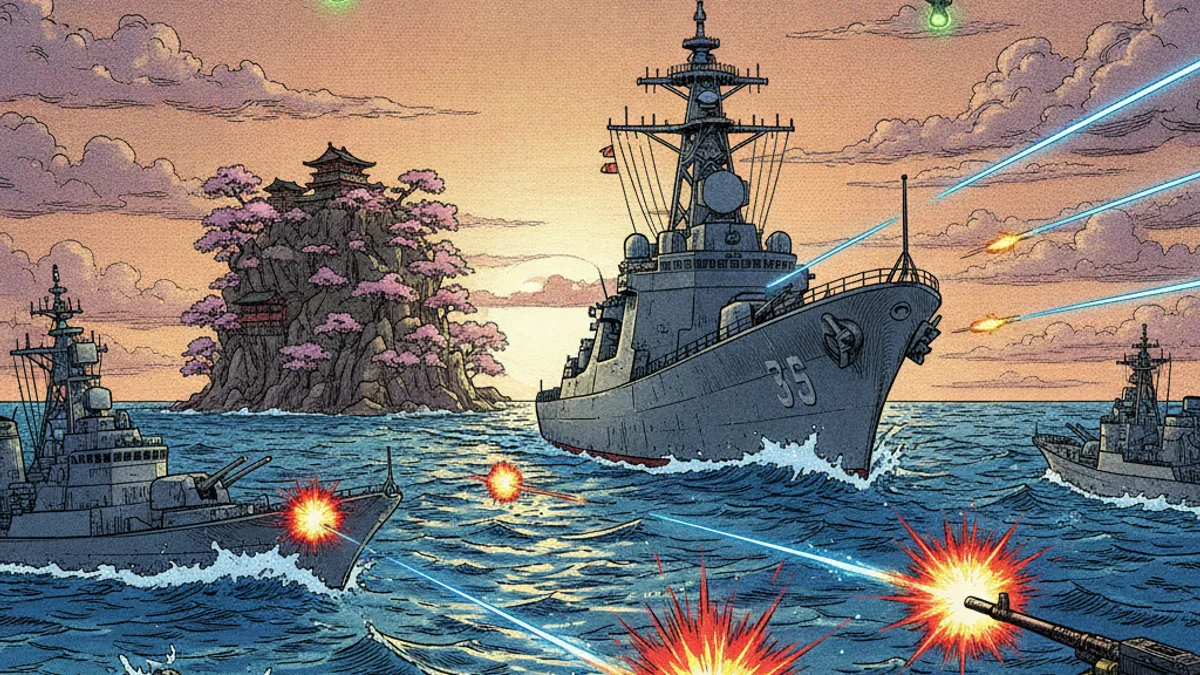
China and Russia Conduct Live-Fire Drills in Japan's Economic Waters
Chinese naval vessels conducted live-fire machine gun drills inside Japan's EEZ near Okinotorishima on July 19, with Russian ships also present. Japan's Ministry of Defense is monitoring the situation closely.
Key Points
- • Chinese navy conducted machine gun drills in Japan's EEZ on July 19.
- • Russian naval vessels observed near Okinotorishima during Chinese exercises.
- • Ministry of Defense maintaining heightened surveillance and monitoring of regional waters.
- • No immediate threat to civilian safety or daily life in mainland Japan.
Foreign residents in Japan should be aware of heightened military tensions in waters surrounding the country following joint Chinese and Russian naval exercises conducted within Japan's exclusive economic zone (EEZ) near the Ogasawaran Islands.
According to NHK, Japan's Ministry of Defense confirmed on July 20, 2026, that Chinese naval vessels conducted machine gun firing drills on July 19 inside Japan's EEZ near Okinotorishima (also known as Parece Vela), a remote atoll located approximately 1,740 kilometers south of Tokyo in the Ogasawaran Islands chain. Russian naval vessels were also observed in the vicinity during the exercises, though the Ministry of Defense has not specified whether the two nations were conducting coordinated operations.
This development marks a significant escalation in regional military activity and represents an unusual assertion of military presence by both nations within waters where Japan holds economic rights. While an EEZ grants a country special rights regarding marine resources and economic activities, it does not constitute territorial waters, meaning foreign military vessels are legally permitted to transit through these areas under international law. However, conducting live-fire exercises within another nation's EEZ is considered provocative and is typically avoided to maintain diplomatic relations.
For expatriates living in Japan, this incident underscores the complex geopolitical environment of the region. Japan's Ministry of Defense has stated it is maintaining heightened surveillance and monitoring of the situation, indicating that authorities are taking the matter seriously. While there is no immediate threat to civilian safety or daily life for residents in mainland Japan, the exercises demonstrate the ongoing territorial and maritime disputes that characterize East Asian security dynamics.
The location of these drills near Okinotorishima is particularly significant. This remote atoll, which sits barely above sea level at high tide, is crucial to Japan's maritime claims. The island's status as land territory allows Japan to claim a vast EEZ in the Pacific Ocean, an area rich in potential mineral resources and strategically important for shipping lanes. China has previously disputed whether Okinotorishima qualifies as an island under international law, arguing it should be classified as rocks that cannot sustain human habitation and therefore cannot generate an EEZ.
The presence of both Chinese and Russian vessels suggests possible coordination between the two nations, reflecting their increasingly close military relationship amid tensions with Western allies. In recent years, China and Russia have conducted several joint naval exercises in the Pacific region, demonstrating their growing strategic partnership.
For foreign residents, particularly those in maritime industries or with business interests in shipping and trade, this development may have longer-term implications for regional stability and commercial navigation. While immediate disruptions are unlikely, the exercises signal that maritime tensions in the region remain high.
Japan's government is expected to lodge formal protests through diplomatic channels, as is standard procedure for such incidents. The Ministry of Defense continues to monitor the movements of both Chinese and Russian naval vessels in waters around Japan.
Expats should stay informed through official channels and reliable news sources about any developments in regional security situations. While these military exercises occurred far from populated areas and pose no direct threat to residents' daily lives, they reflect the broader security challenges Japan faces in its maritime domain. Understanding these dynamics is part of comprehending the geopolitical context of living in Japan, a nation that navigates complex relationships with its neighbors while maintaining strong alliances with Western powers.