Costco Nagoya Food Poisoning: Five Sickened, Child Critical with E. Coli
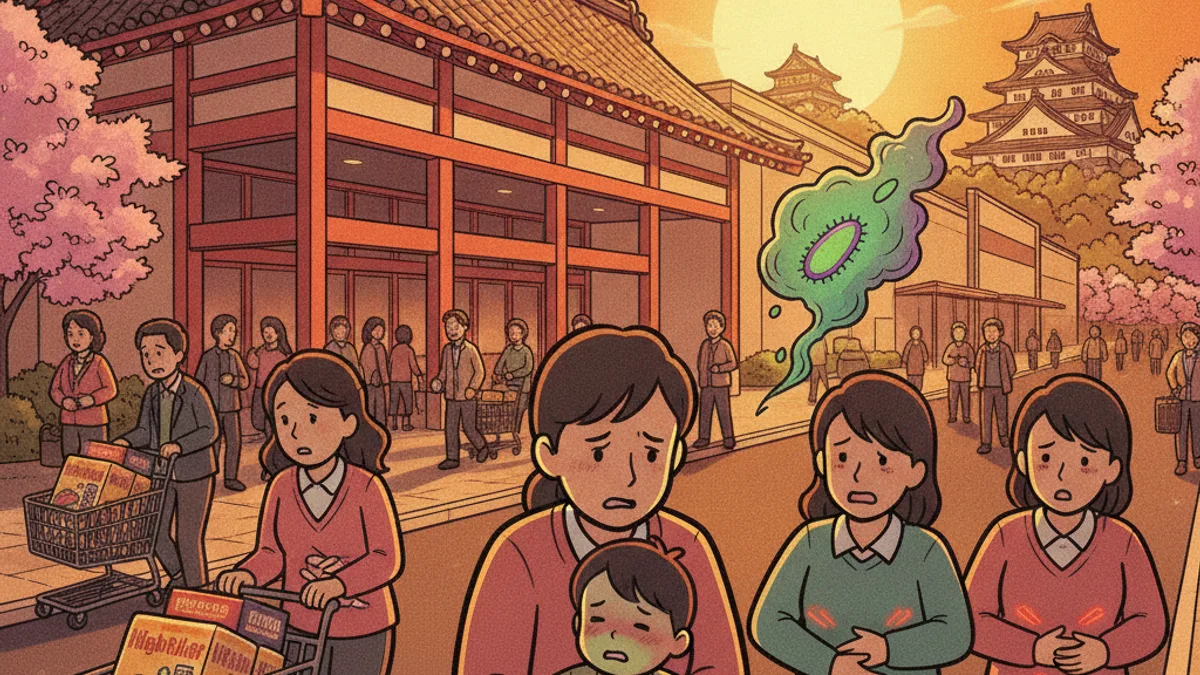
Five people, including a critically ill child, contracted E. coli O157 after eating High Roller products from Costco Nagoya. Health authorities confirmed the food poisoning outbreak on June 15, 2026.
Key Points
- • Five people sickened by O157 E. coli from Costco Nagoya High Roller product.
- • Child under 10 years old remains in serious condition from the outbreak.
- • Discard any High Roller products purchased from Nagoya Costco immediately.
- • Seek medical care if experiencing bloody diarrhea or severe abdominal pain.
A food poisoning outbreak linked to a Costco store in Nagoya has affected five people, including a child under 10 years old who remains in serious condition, according to reports from Livedoor News and Yahoo Japan Business published on June 15, 2026.
Nagoya city health authorities have confirmed that all five victims—ranging in age from under 10 to their 40s—consumed a product called "High Roller (B.L.T)" purchased from the Nagoya Costco location. Laboratory tests detected the presence of enterohemorrhagic Escherichia coli O157 in stool samples from the affected individuals, leading city officials to officially classify the incident as a food poisoning outbreak.
The O157 strain is particularly dangerous, especially for young children, elderly individuals, and those with compromised immune systems. This pathogen can cause severe abdominal cramps, bloody diarrhea, and vomiting. In serious cases, it can lead to hemolytic uremic syndrome (HUS), a life-threatening condition that causes kidney failure—a particular concern given the young child's critical condition.
For foreign residents shopping at Costco locations throughout Japan, this incident serves as an important reminder about food safety practices. While Japan generally maintains high food safety standards, contamination incidents can occur at any retail establishment. The High Roller product mentioned in reports appears to be a prepared food item containing bacon, lettuce, and tomato—ingredients that require careful handling to prevent bacterial contamination.
Expats should be aware that Japanese health authorities take food poisoning incidents seriously and typically respond swiftly with investigations and public announcements. Nagoya city officials' quick identification of the contamination source and public disclosure demonstrates the robust food safety monitoring system in place across Japan.
If you have recently purchased prepared foods from the Nagoya Costco location, particularly any High Roller products, health experts recommend discarding them immediately, even if they appear and smell normal. O157 bacteria cannot be detected by sight or smell, making it impossible to determine contamination without laboratory testing.
Symptoms of E. coli O157 infection typically appear within three to four days after consuming contaminated food, though they can manifest anywhere from one to ten days post-exposure. Anyone experiencing severe abdominal pain, bloody diarrhea, or persistent vomiting after eating products from this location should seek immediate medical attention. When visiting a doctor, inform them about potential exposure to contaminated food, as early intervention can be crucial, particularly for vulnerable populations.
Foreign residents should also know that Japan's healthcare system is well-equipped to handle food poisoning cases. If you need medical attention, your National Health Insurance will cover treatment costs. Emergency services can be reached by calling 119, and many hospitals in major cities have English-speaking staff or translation services available.
Costco Japan has not yet released an official statement regarding the incident at the time of these reports. However, the company typically cooperates fully with health authority investigations and issues recalls when necessary. Customers who purchased the implicated product should monitor Costco's official website and in-store announcements for updates on potential recalls or refund procedures.
This outbreak highlights the importance of proper food handling even after purchase. Prepared foods should be refrigerated promptly, consumed before expiration dates, and thoroughly reheated when appropriate. Cross-contamination can be prevented by using separate cutting boards for raw meats and vegetables, washing hands frequently during food preparation, and ensuring all surfaces are properly sanitized.
As investigations continue, Nagoya health authorities will likely provide additional updates about the outbreak's scope and any preventive measures being implemented. Foreign residents are encouraged to stay informed through official channels and exercise appropriate caution when purchasing prepared foods from any retailer during this period.