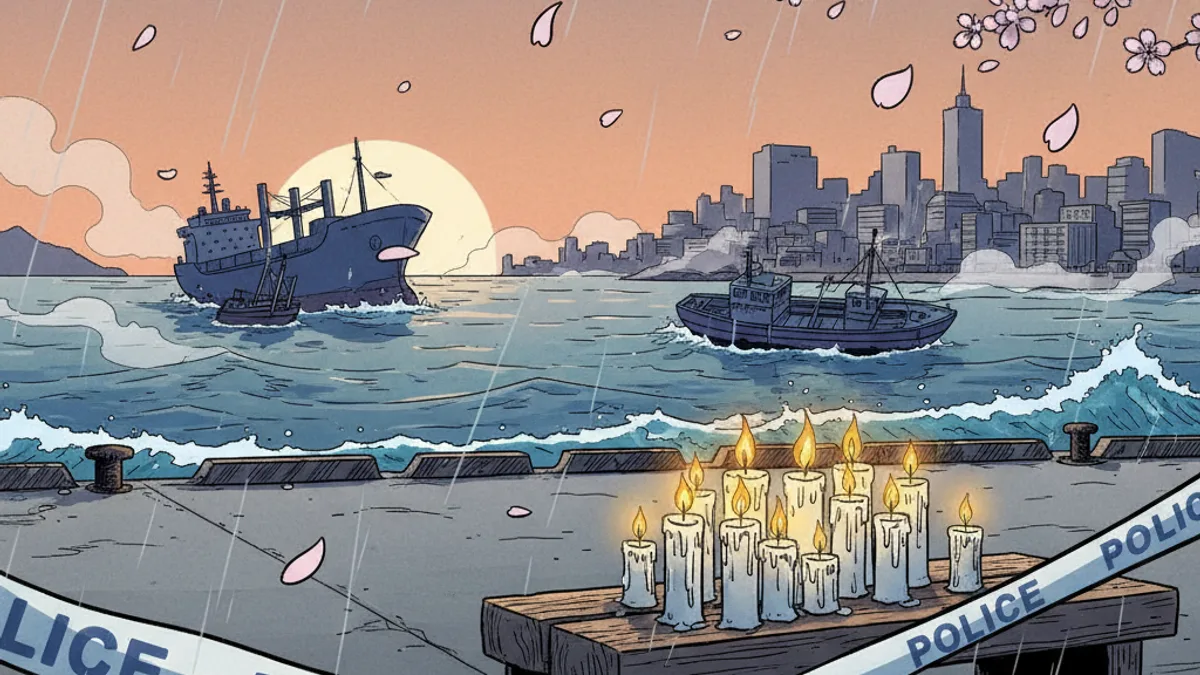
Fatal Collision Off Toba Coast: Cargo Ship Strikes Fishing Boat
A cargo ship collided with a stationary fishing boat off Toba, Mie Prefecture on February 20, killing two and injuring ten. The Coast Guard is investigating the incident involving the anchored recreational vessel.
Key Points
- • Cargo ship struck stationary fishing boat off Toba on February 20, 2026.
- • Two passengers died and ten injured when all thirteen were thrown overboard.
- • Coast Guard investigating why cargo ship hit anchored recreational fishing vessel.
- • Verify charter operators have proper licenses and safety equipment before booking.
A tragic maritime collision off the coast of Toba City in Mie Prefecture has claimed two lives and injured ten others, raising concerns about maritime safety in Japan's busy coastal waters. The incident occurred on the afternoon of February 20, 2026, when a cargo ship collided with a recreational fishing boat, throwing all 13 passengers aboard the smaller vessel into the water.
According to NHK, the collision took place in waters off Toba City, a popular fishing destination located on the eastern coast of the Kii Peninsula. The recreational fishing boat, known in Japan as a "yugyosen," was reportedly stationary at a fishing ground when the cargo ship struck its starboard (right) side. The impact was severe enough to capsize the smaller vessel, causing all passengers to be thrown overboard.
Emergency services responded quickly to the scene, rescuing all 13 individuals from the water. However, two passengers were found in cardiopulmonary arrest and were later pronounced dead. Ten others sustained injuries of varying severity and received medical treatment. One passenger escaped without injury. The Japan Coast Guard has launched a full investigation into the circumstances surrounding the collision.
Preliminary findings from the Coast Guard investigation suggest that the cargo ship collided with the recreational fishing boat while it was anchored at the fishing grounds. This detail raises important questions about navigation protocols and visibility conditions at the time of the accident. Investigators are examining whether proper lookout procedures were followed aboard the cargo ship and whether the stationary fishing vessel was displaying appropriate signals or lights to indicate its position.
The incident highlights ongoing safety concerns in Japan's coastal waters, where commercial shipping traffic frequently intersects with recreational and commercial fishing activities. The waters around Mie Prefecture are particularly busy, serving both as important shipping lanes and popular fishing destinations. For foreign residents who enjoy recreational fishing or boating in Japan, this accident serves as a sobering reminder of the importance of maritime safety protocols.
Recreational fishing is a popular activity among both Japanese residents and the expat community, with charter fishing boats operating from numerous ports throughout the country. These vessels, typically carrying groups of anglers to productive fishing grounds, are smaller and more vulnerable than commercial vessels. Passengers on such boats should always verify that operators maintain proper safety equipment, including life jackets for all passengers, communication devices, and appropriate navigation lights.
The Japan Coast Guard continues to investigate the exact cause of the collision, including factors such as weather conditions, visibility, and the actions of both vessel operators leading up to the impact. Maritime accident investigations in Japan are thorough and can take several months to complete. The findings will likely result in safety recommendations for both commercial and recreational vessel operators.
For expats living in Japan, particularly those in coastal areas or those who participate in recreational boating and fishing activities, this incident underscores the importance of choosing reputable operators with strong safety records. When booking fishing charters or other maritime activities, foreign residents should ensure that operators are properly licensed, maintain adequate insurance, and provide comprehensive safety briefings in a language they can understand.
The tragedy also serves as a reminder that even in a country known for its rigorous safety standards, maritime accidents can and do occur. The Japan Coast Guard maintains emergency response capabilities along all of Japan's coastlines, but prevention through proper navigation and safety awareness remains the most effective approach to avoiding such incidents.
As the investigation continues, the maritime community in Mie Prefecture and throughout Japan will be watching closely for lessons that can prevent similar tragedies in the future.