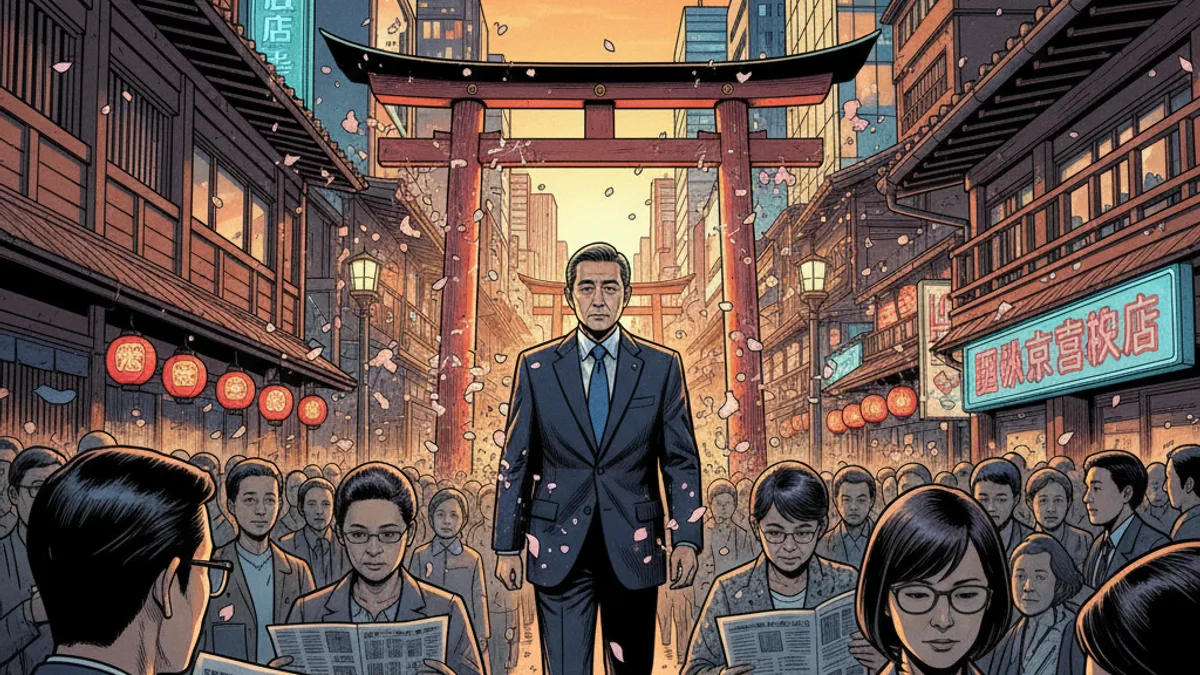
Former Democratic Party Leader Otsuka Kohei Dies at 66
Former House of Councillors member and Democratic Party leader Otsuka Kohei died at 66. He served as Cabinet Office Vice Minister during the DPJ administration and led the party through significant reorganization.
Key Points
- • Otsuka Kohei served as Cabinet Office Vice Minister from 2009 to 2012.
- • He led the Democratic Party through its 2018 reorganization and split.
- • His policies during DPJ rule still influence current foreign resident services.
- • Understanding opposition party history helps expats navigate Japan's political landscape.
Otsuka Kohei, a former member of Japan's House of Councillors and leader of the now-defunct Democratic Party (Minshinto), has died at age 66, according to NHK. The announcement, made on March 4, 2026, marks the passing of a significant figure in Japan's political landscape who played key roles during the Democratic Party of Japan's time in power and through subsequent party reorganizations.
Otsuka served as a representative of the Democratic Party (Minshinto), which was formed in 2016 through a merger of the Democratic Party and Japan Innovation Party, and later reorganized into the Constitutional Democratic Party and Democratic Party for the People in 2018. His political career spanned critical periods of Japan's modern political history, including service as Vice Minister of the Cabinet Office during the Democratic Party of Japan's administration from 2009 to 2012.
During his tenure as Vice Minister of the Cabinet Office, Otsuka was involved in economic and financial policy during a turbulent period that included the aftermath of the 2008 global financial crisis and the lead-up to the 2011 Great East Japan Earthquake. The Cabinet Office oversees crucial policy areas including economic and fiscal policy, gender equality, disaster management, and coordination between government ministries—making his role significant for both Japanese citizens and foreign residents navigating government services during that era.
For expats living in Japan, understanding the political figures who shaped recent policy is valuable context for comprehending the current governance structure. The Democratic Party of Japan's time in power from 2009 to 2012 represented a significant shift in Japanese politics, ending the Liberal Democratic Party's nearly uninterrupted dominance since 1955. Policies implemented during this period, including changes to social welfare programs, education funding, and administrative reform efforts, continue to influence the systems foreign residents interact with today.
Otsuka's role as leader of the Democratic Party (Minshinto) came during a period of significant realignment in Japan's opposition politics. The party he led eventually split into two main factions: the Constitutional Democratic Party, which became the primary opposition force, and the Democratic Party for the People, which positioned itself as a more centrist alternative. Understanding these political divisions helps expats make sense of current Diet debates and policy proposals that may affect foreign resident services, immigration policy, and social programs.
The fragmentation of Japan's opposition parties following the Democratic Party of Japan's electoral defeat has been a defining feature of Japanese politics over the past decade. This has resulted in the Liberal Democratic Party maintaining dominant control, which has implications for policy continuity and the pace of reforms affecting foreign residents, from visa regulations to healthcare access and pension systems.
While Otsuka's death is primarily a political and historical note, it serves as a reminder of the ongoing evolution of Japan's political landscape. For foreign residents, staying informed about political developments, even historical ones, provides important context for understanding how current policies came to be and how they might change in the future.
As Japan continues to grapple with demographic challenges, economic pressures, and the need to attract and retain foreign talent, the political debates shaped by figures like Otsuka remain relevant. His passing marks the end of a chapter in Japan's political history, but the policy discussions and structural changes that occurred during his time in office continue to influence the environment in which expats live and work today.
No information has been released regarding funeral arrangements or memorial services. The cause of death was not disclosed in the initial reports from NHK and other Japanese media outlets.