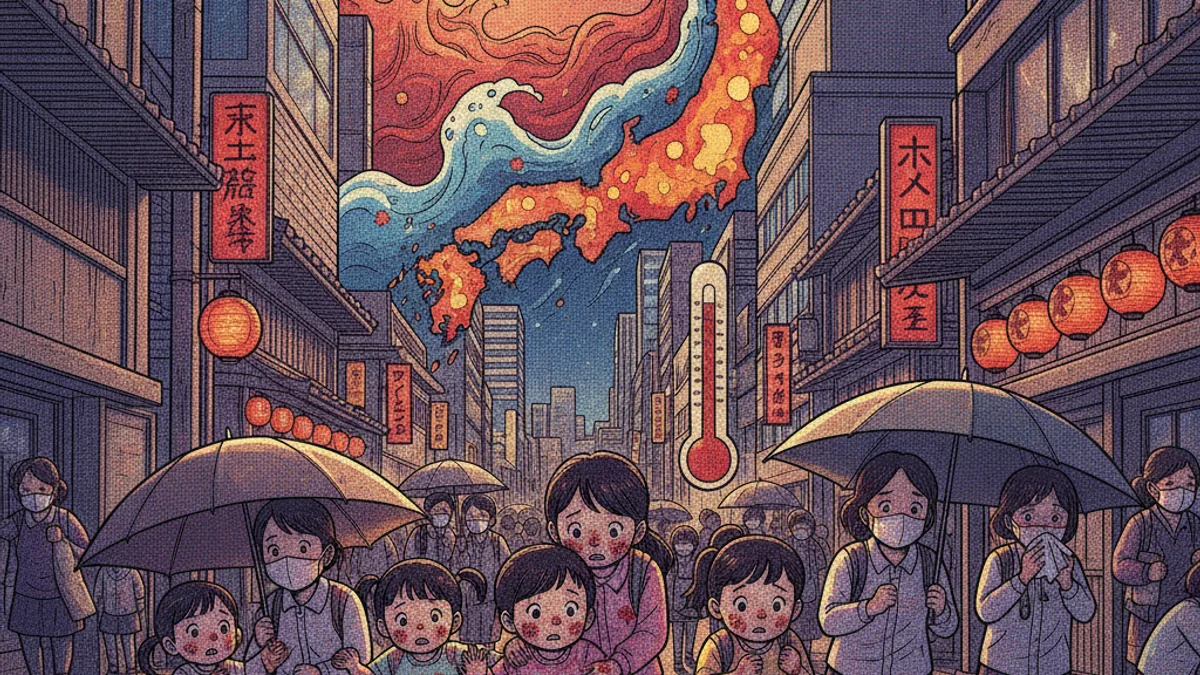
Hand, Foot and Mouth Disease Surges Across Japan: 35 Prefectures on Alert
Hand, foot and mouth disease cases have surged 1.3 times in one week, with 35 prefectures exceeding warning levels. Experts warn northern regions may see further increases as temperatures rise.
Key Points
- • HFMD cases increased 1.3 times in one week across Japan.
- • 35 prefectures now exceed official warning levels for the disease.
- • Northern regions may see further increases as summer temperatures rise.
- • Frequent handwashing is the most effective prevention for this viral illness.
Foreign residents with young children in Japan should be aware of a significant surge in hand, foot and mouth disease (HFMD) cases, with 35 prefectures now exceeding official warning levels as of mid-July 2024, according to reports from NHK and other Japanese media outlets.
The viral infection, which primarily affects children, has seen cases increase by 1.3 times compared to the previous week, prompting health authorities to issue alerts across most of the country. The sharp rise comes as Japan enters the peak summer season, when HFMD typically spreads more rapidly.
What is Hand, Foot and Mouth Disease?
HFMD is a common viral illness that predominantly affects infants and children under five years old, though adults can occasionally contract it as well. The disease is characterized by painful sores in the mouth and a rash on the hands and feet. While typically mild, the condition can cause significant discomfort, particularly when mouth sores make eating and drinking difficult.
The infection spreads easily through direct contact with an infected person's nasal secretions, saliva, fluid from blisters, or stool. This makes daycare centers, kindergartens, and other environments where young children gather particularly vulnerable to outbreaks.
Current Situation and Geographic Spread
According to NHK, 35 prefectures across Japan have now surpassed the warning threshold for HFMD cases. Health experts quoted in the report express particular concern about regions in Tohoku and Hokkaido, where warmer weather is just beginning. These northern areas may see further increases in cases as temperatures rise in the coming weeks, creating conditions more favorable for viral transmission.
The warning level system used by Japanese health authorities indicates when disease prevalence reaches a point requiring heightened public awareness and preventive measures. When prefectures exceed this threshold, it signals that the infection is spreading rapidly enough to warrant special attention from parents, schools, and medical facilities.
Implications for Foreign Families
For expat families with children enrolled in Japanese daycare centers, kindergartens, or elementary schools, this outbreak requires vigilance. Many international schools and childcare facilities follow Japanese public health guidelines and may implement enhanced screening or temporary closures if cases appear among students.
Parents should be prepared for possible disruptions to childcare arrangements if their child contracts HFMD or if facilities take preventive measures. Japanese daycare centers typically require children to stay home until symptoms resolve and fever subsides, which usually takes about a week.
Prevention and Response
While there is no vaccine for HFMD and no specific treatment beyond symptom management, prevention focuses on good hygiene practices. Frequent handwashing with soap and water, especially after using the toilet and before eating, is the most effective preventive measure. Disinfecting commonly touched surfaces and toys can also help limit transmission.
Parents should monitor their children for early symptoms, which include fever, reduced appetite, sore throat, and general malaise. The characteristic rash typically appears one to two days after fever onset. If symptoms develop, consulting a pediatrician is advisable, particularly if the child shows signs of dehydration from refusing to drink due to mouth pain.
Looking Ahead
Health experts warn that as summer progresses and temperatures continue to rise, particularly in northern regions, case numbers may climb further. Foreign residents should stay informed through local health announcements and maintain communication with their children's schools regarding any outbreak developments.
While HFMD is generally a mild illness that resolves without complications, awareness and proper hygiene practices remain the best defense against this highly contagious disease during Japan's current outbreak.