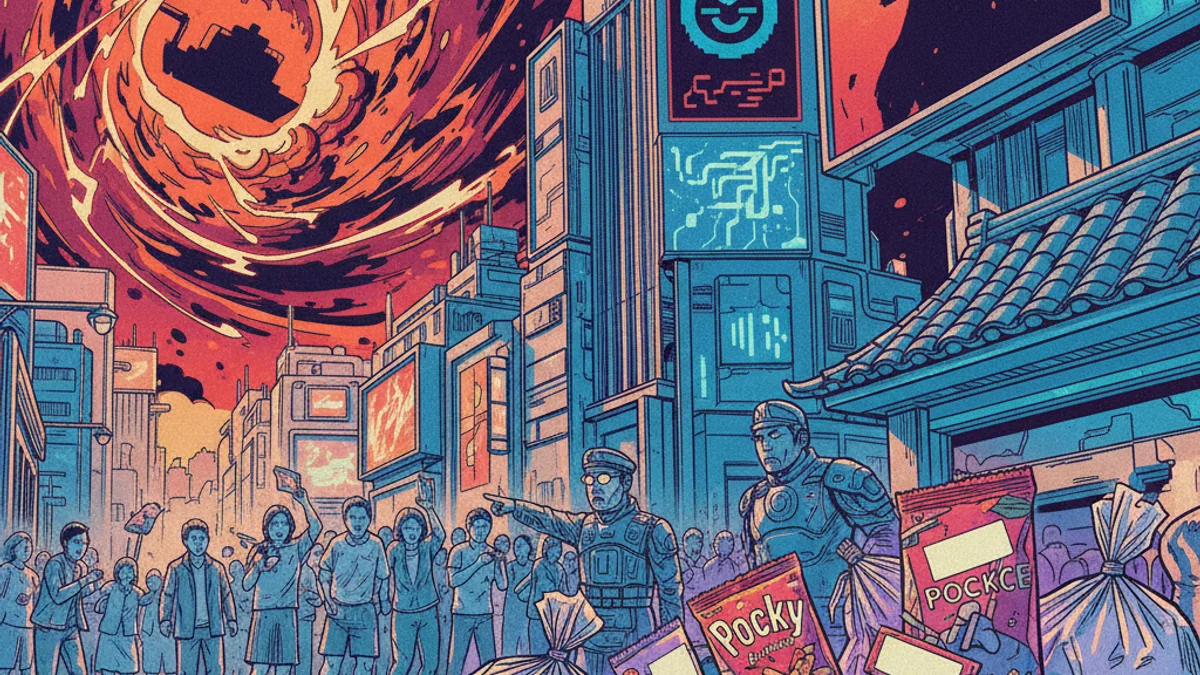
Iran Crisis Triggers Product Shortages: Garbage Bags, Snack Packaging Affected
Middle East tensions are causing packaging material shortages in Japan, affecting garbage bags and snack food designs. Municipalities are relaxing waste rules temporarily while the government investigates supply chain impacts.
Key Points
- • Calbee switching to black-and-white packaging later this month due to ink shortages.
- • Municipal garbage bags scarce; some cities temporarily accepting non-designated bags.
- • Government conducting corporate hearings to assess Middle East supply chain disruptions.
- • New condominium deliveries may face delays due to building material procurement issues.
Foreign residents across Japan are facing unexpected supply chain disruptions as the escalating Middle East crisis impacts everyday products, from municipal garbage bags to popular snack foods. The Iranian situation has created a ripple effect through Japan's packaging industry, prompting government intervention and emergency municipal measures.
According to NHK, major snack manufacturer Calbee announced on May 12th that it will temporarily switch several product packages to simple black-and-white designs starting later this month. The company cited concerns about unstable procurement of printing inks due to Middle East tensions. This affects flagship products including potato chips and the popular Kappa Ebisen shrimp-flavored snacks, which typically feature colorful, recognizable packaging.
The packaging crisis extends beyond commercial products. Social media posts have reported widespread shortages of municipally-designated garbage bags across Japan, according to NHK reports. These specialized bags, required by many local governments for waste collection, have become difficult to find in stores as suppliers struggle to maintain delivery schedules. The shortage stems from the same supply chain disruptions affecting packaging materials and plastics production.
In response to the garbage bag shortage, several municipalities have implemented temporary emergency measures. Local governments are now accepting household waste in non-designated bags to prevent garbage accumulation in homes and streets. This represents a significant policy shift, as most Japanese cities strictly enforce the use of specific colored or branded bags for different waste categories.
The Japanese government is taking the situation seriously. Chief Cabinet Deputy Secretary Sato announced on May 12th that officials will conduct hearings with affected companies, including Calbee and related businesses, to assess the full scope of the supply chain disruptions. This investigation aims to understand the extent of the crisis and develop appropriate policy responses.
The Iran-related disruptions are also affecting Japan's construction sector. Major real estate developers have begun notifying condominium buyers of potential delivery delays, according to NHK. Companies are concerned that continued Middle East instability could impact procurement of building materials and equipment, potentially pushing back move-in dates for new residential properties.
For foreign residents, these developments highlight Japan's vulnerability to international supply chain shocks. The country imports significant quantities of petrochemical products, including materials used in plastic packaging, inks, and construction supplies. Disruptions in the Middle East, a major source of petroleum and related products, quickly translate into domestic shortages.
Experts suggest the situation could persist depending on how Middle East tensions evolve. While Calbee's black-and-white packaging is temporary, the company has not specified when normal designs will resume. Similarly, municipalities have not indicated how long emergency garbage collection measures will remain in place.
Practical implications for daily life include potential difficulty purchasing specific snack brands in familiar packaging—though product availability itself is not affected—and temporary flexibility in garbage disposal rules. Residents should check their local municipal websites for updated waste collection guidelines, as policies may vary by city.
The crisis also serves as a reminder for foreign residents to stay informed about supply chain issues that might affect housing purchases or renovations. Those awaiting new condominium deliveries should maintain close communication with developers regarding potential schedule changes.
While these disruptions may seem minor compared to previous supply shocks, they demonstrate how quickly international events can impact daily life in Japan. The government's proactive approach in conducting corporate hearings suggests authorities are monitoring the situation closely to prevent more serious shortages from developing.