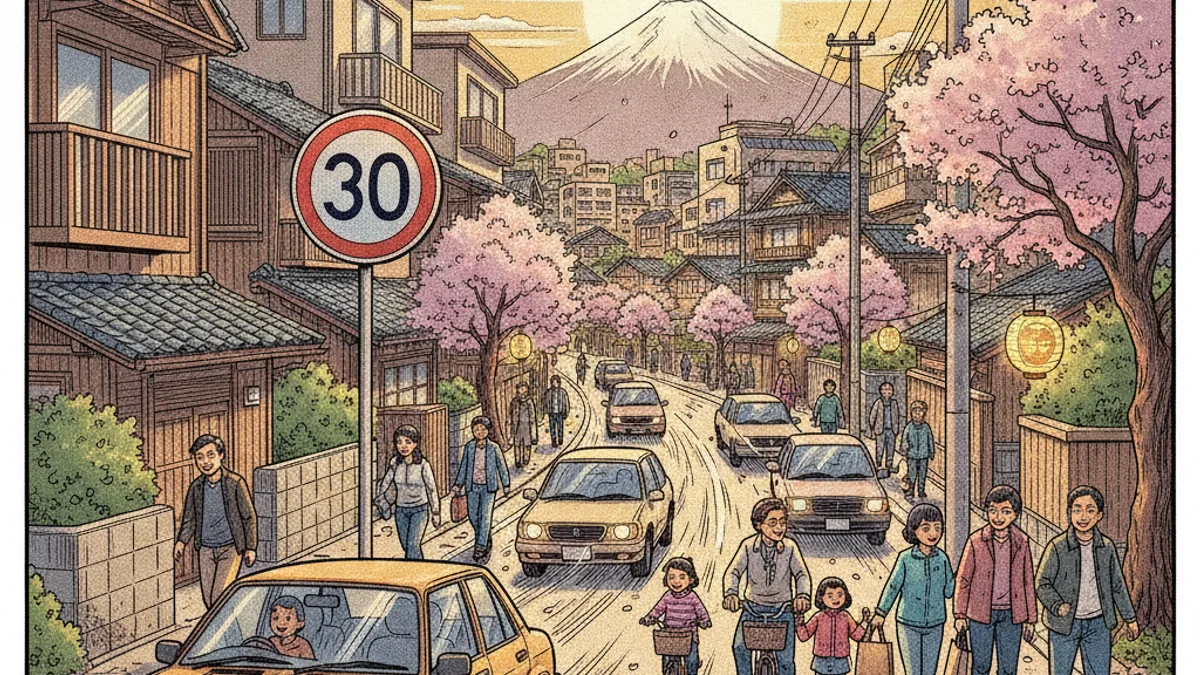
Japan Cuts Speed Limit to 30 km/h on Residential Roads from September 1
Japan reduced the legal speed limit on narrow residential "living roads" to 30 km/h starting September 1, 2026. The change affects residential streets nationwide with some exceptions.
Key Points
- • Speed limit on narrow residential roads reduced to 30 km/h from September 1.
- • Applies to most residential streets lacking clear lane markings and sidewalks nationwide.
- • Drivers must exercise greater caution in areas with mixed pedestrian and vehicle traffic.
- • Check for posted signs as some roads may have specific exceptions.
Foreign residents driving in Japan need to be aware of a significant change to traffic regulations that took effect on September 1, 2026. The legal speed limit on narrow residential streets, known as "seikatsu dōro" or "living roads," has been reduced from 60 km/h to 30 km/h across most of the country, according to NHK.
This nationwide regulation change affects the countless narrow streets that wind through residential neighborhoods in Japanese cities and towns. These roads, which typically lack clear lane markings and are used by pedestrians, cyclists, and vehicles simultaneously, are now subject to the lower speed restriction with limited exceptions.
What Are "Living Roads"?
The term "seikatsu dōro" refers to narrow roads primarily found in residential areas where local residents conduct their daily activities. Unlike major thoroughfares, these streets often lack sidewalks and serve multiple purposes—children walk to school on them, elderly residents use them for daily errands, and they provide access to homes and small businesses. The roads are characterized by their narrow width and the close proximity of buildings on either side.
According to Yahoo Japan Business, these living roads form the backbone of residential neighborhoods throughout Japan, particularly in older urban areas where modern road planning was not implemented. For expats unfamiliar with Japanese residential layouts, these are typically the streets you encounter once you turn off main roads into housing areas.
Why the Change?
The speed limit reduction is part of ongoing efforts to improve pedestrian safety in residential areas. Japan has been working to reduce traffic accidents involving vulnerable road users, particularly children and elderly people who frequently use these narrow streets. The previous 60 km/h default speed limit was considered too high for roads where vehicles, pedestrians, and cyclists share limited space with minimal separation.
NHK reports that drivers must now pay even greater attention to road conditions and practice enhanced safe driving practices on these residential streets. The regulation acknowledges that the physical characteristics of these roads—their narrowness, limited visibility, and mixed use—require lower speeds to prevent accidents.
What Drivers Need to Know
For expats driving in Japan, this change requires increased vigilance when navigating residential areas. The 30 km/h limit applies broadly to narrow residential streets, though some exceptions exist where different speed limits may be posted. Drivers should always check for posted speed limit signs, as certain roads may have specific designations.
The reduced speed limit means that travel times through residential areas may increase slightly. However, given the typically short distances involved on these roads before rejoining main streets, the practical impact on most journeys should be minimal.
Enforcement and Penalties
While specific enforcement details were not outlined in the initial announcements, speed limit violations in Japan carry standard penalties including fines and points against your driver's license. Foreign residents should be particularly careful to comply, as traffic violations can affect visa renewals and create complications with immigration authorities.
Practical Implications
Expats should update their driving habits when entering residential neighborhoods. Using navigation apps set to Japanese road regulations can help, though drivers remain responsible for observing posted limits and adjusting speed to road conditions. The change also emphasizes the importance of defensive driving in areas where children may suddenly appear from between parked cars or narrow alleyways.
This regulation change reflects Japan's commitment to creating safer residential environments and aligns with similar "Zone 30" initiatives that have been implemented in specific neighborhoods in recent years. For foreign residents, understanding and complying with this new speed limit is essential for safe, legal driving in Japan's residential areas.
Sources
This article was written by AI from these Japanese-language reports. Check them before acting on anything here.
- [1] NHK — original report (Japanese)
- [2] Yahoo! Japan News — original report (Japanese)
AI-written summary of Japanese reports; not human-reviewed; check the linked sources. How we write articles