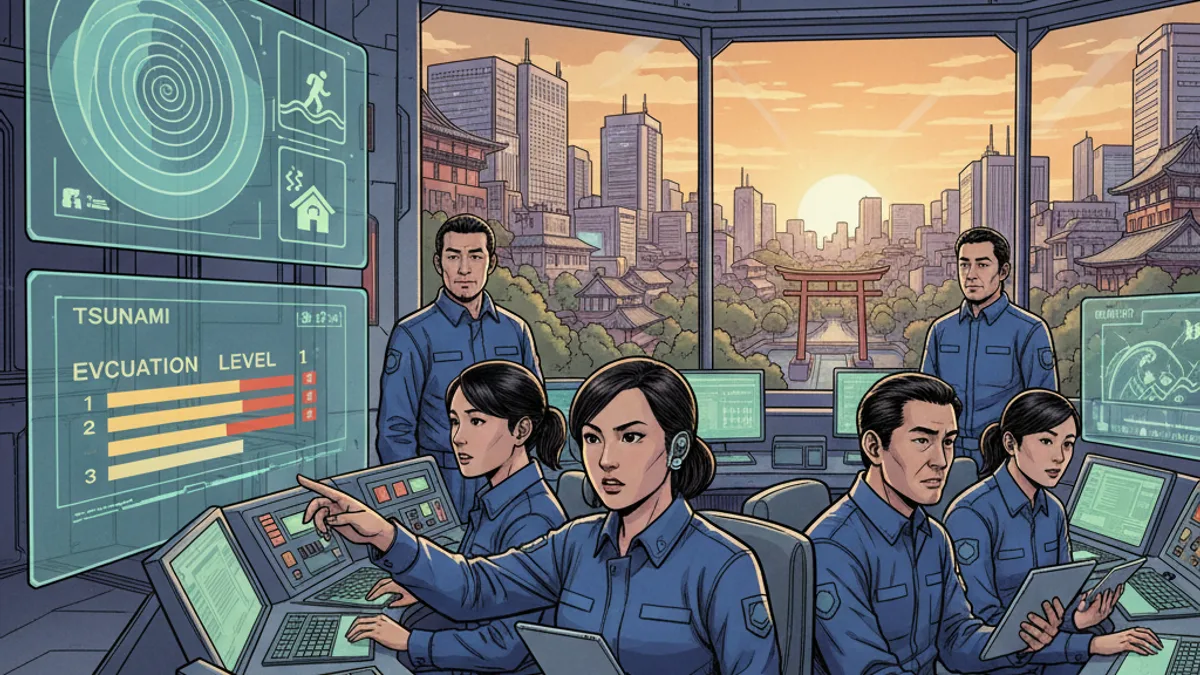
Japan Launches Reorganized Disaster Warning System for Clearer Evacuations
Japan launched a reorganized disaster warning system on May 28, 2026, categorizing alerts by specific hazard types and evacuation levels for clearer emergency response guidance.
AI-written summary of Japanese reports; not human-reviewed; check the linked sources. How we write articles
Key Points
- • New disaster alerts launched May 28, categorized by hazard type and evacuation level.
- • Residents should check local hazard maps to understand area-specific disaster risks.
- • Alerts link to Japan's five-level evacuation system for clearer action guidance.
- • Register for municipal emergency notifications; some cities offer multilingual alerts.
Japan implemented a comprehensive overhaul of its disaster warning system on May 28, 2026, reorganizing weather alerts by hazard type and evacuation level to help residents respond more effectively to emergencies. The new system, which began issuing alerts in the afternoon of May 28, represents a significant change in how the Japan Meteorological Agency communicates disaster risks to the public, according to NHK.
The restructured system categorizes warnings and advisories based on specific disaster types—such as flooding, landslides, and storm surges—rather than general weather conditions. This approach allows residents to quickly understand which particular hazards threaten their area and what actions they should take. The alerts are now explicitly linked to Japan's five-level evacuation system, making it clearer when residents should prepare, consider leaving, or immediately evacuate.
Under the previous system, weather warnings often combined multiple hazards, making it difficult for residents to assess their personal risk level. The new format separates these hazards, enabling people to focus on threats most relevant to their specific location. For foreign residents who may be less familiar with Japan's geography and local disaster risks, this clarity is particularly valuable.
Experts emphasize that the effectiveness of this new system depends heavily on advance preparation. According to NHK, disaster preparedness specialists are urging residents to research their local disaster risks before emergencies occur. This means understanding whether your neighborhood is prone to flooding, located in a landslide risk zone, or vulnerable to other specific hazards.
For expats living in Japan, taking proactive steps is essential. Local governments provide hazard maps (ハザードマップ, hazādo mappu) that show flood zones, landslide areas, and designated evacuation centers. These maps are typically available on municipal websites and at city halls, with some municipalities offering English versions. Residents should identify their nearest evacuation center and understand multiple routes to reach it, as primary routes may become impassable during disasters.
The reorganized alert system is accessible through multiple channels. NHK reports that current warnings and advisories for all regions can be checked through the Japan Meteorological Agency's website and the NHK disaster information portal. Many municipalities also send alerts through emergency email systems and smartphone apps. Foreign residents should register for their local government's emergency notification service, which may offer multilingual options in major cities.
Understanding the five-level evacuation system is crucial for interpreting the new alerts. Level 1 indicates residents should be aware of potential risks and prepare. Level 2 means elderly people and those requiring assistance should begin preparing to evacuate. Level 3 is a formal evacuation order for vulnerable populations and preparation for others. Level 4 requires immediate evacuation for all residents, while Level 5 indicates disaster conditions are already occurring and residents should take life-saving actions immediately.
The timing of this system launch, at the start of Japan's rainy season and ahead of typhoon season, is strategic. These periods typically see the highest frequency of weather-related disasters. The reorganized alerts aim to reduce confusion during critical moments when every minute counts.
Foreign residents should take this opportunity to review their disaster preparedness plans. Beyond understanding the new alert system, this includes maintaining emergency supplies, knowing how to shut off utilities, and establishing communication plans with family and employers. Language barriers can complicate emergency situations, so identifying English-speaking support resources in advance is advisable.
The new disaster warning system represents Japan's ongoing commitment to protecting residents through clearer, more actionable information. For the foreign community, familiarizing yourself with these changes and your local disaster risks could prove life-saving when the next emergency strikes.
Sources
This article was written by AI from these Japanese-language reports. Check them before acting on anything here.
- [1] NHK — original report (Japanese)
- [2] Yahoo! Japan News — original report (Japanese)
- [3] NHK — original report (Japanese)
- [4] Yahoo! Japan News — original report (Japanese)