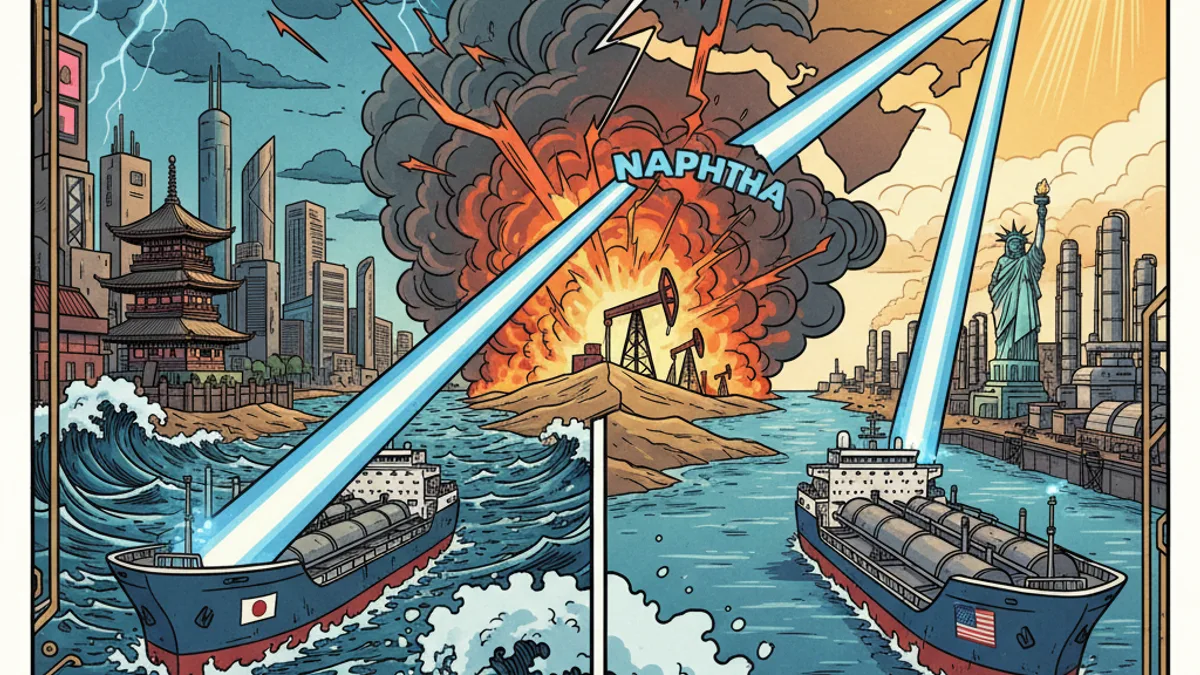
Japan Pivots to US Naphtha Imports as Middle East Crisis Disrupts Supply
Japan's naphtha imports from the Middle East dropped 47% in April 2026, but US imports surged 209 times to compensate. The government expects supply levels to normalize soon despite ongoing regional tensions.
Key Points
- • April 2026 naphtha imports fell 47% due to Middle East crisis.
- • US naphtha imports increased 209 times, replacing Middle Eastern supplies.
- • Government expects return to 100% normal supply levels soon.
- • Focus on distribution fixes, not production increases, suggests temporary disruption.
Foreign residents in Japan may soon see relief at the pump and in plastic product prices as the government works to resolve a critical naphtha supply disruption caused by the ongoing Middle East crisis. According to statements from Economy Minister Akazawa on May 31, 2026, naphtha supplies are expected to return to 100% normal levels in the coming months, despite April's dramatic import decline.
Naphtha, a petroleum product essential for manufacturing plastics, synthetic fibers, and various petrochemicals, experienced a severe supply shock in April 2026. Trade statistics reported by NHK reveal that Japan's total naphtha imports plummeted 47% compared to April 2025, primarily due to sharply reduced shipments from Middle Eastern suppliers amid regional instability.
However, the crisis has triggered a remarkable pivot in Japan's energy sourcing strategy. According to NHK's analysis of trade data, imports from the United States surged to 209 times their previous year levels in April 2026. This dramatic increase demonstrates Japan's rapid diversification away from traditional Middle Eastern suppliers, leveraging America's expanded shale oil production capacity to fill the gap.
For expats living in Japan, this supply disruption has broader implications beyond fuel prices. Naphtha serves as a critical feedstock for Japan's petrochemical industry, which produces everything from plastic packaging and clothing materials to automotive components and electronics parts. Any sustained shortage could have rippled through consumer goods prices and product availability.
The government's response has been multi-pronged. On May 31, Economy Minister Akazawa visited a strategic petroleum reserve facility in Kagoshima City to assess the situation firsthand. According to NHK, the minister emphasized the government's commitment to securing necessary petroleum supplies for the nation, indicating that strategic reserves may be deployed if needed to maintain stability.
Political leaders have sought to reassure the public about supply adequacy. Liberal Democratic Party Deputy Secretary-General Hagiuda stated that while distribution challenges exist, the overall volume of naphtha-derived petroleum products remains sufficient. According to NHK, Hagiuda emphasized that the government and ruling party are focusing efforts on resolving distribution bottlenecks rather than increasing production, suggesting the issue is primarily logistical rather than one of absolute shortage.
This "unclogging" approach indicates that refineries and petrochemical plants may be experiencing temporary processing or transportation constraints as they adapt to different crude oil and naphtha sources. American naphtha may have slightly different chemical properties than Middle Eastern varieties, potentially requiring adjustments to refining processes.
For foreign residents, the practical implications are cautiously optimistic. The government's confidence in returning to 100% supply levels suggests that any price increases or product shortages should be temporary. The successful pivot to American imports demonstrates Japan's supply chain resilience and its strong trade relationships beyond the Middle East.
Expats working in manufacturing, automotive, or petrochemical industries should stay informed about potential supply chain adjustments at their companies. Those in procurement roles may need to account for temporary price volatility in plastic components and petroleum-derived materials during this transition period.
The situation also highlights Japan's ongoing energy security challenges as an island nation heavily dependent on imported resources. The 209-fold increase in American imports represents not just a crisis response but potentially a long-term strategic shift in Japan's energy partnerships, with implications for future trade policy and international relations.
As Japan navigates this transition, foreign residents can expect continued government monitoring and intervention to maintain stable supplies of essential petroleum products, ensuring minimal disruption to daily life and economic activity.