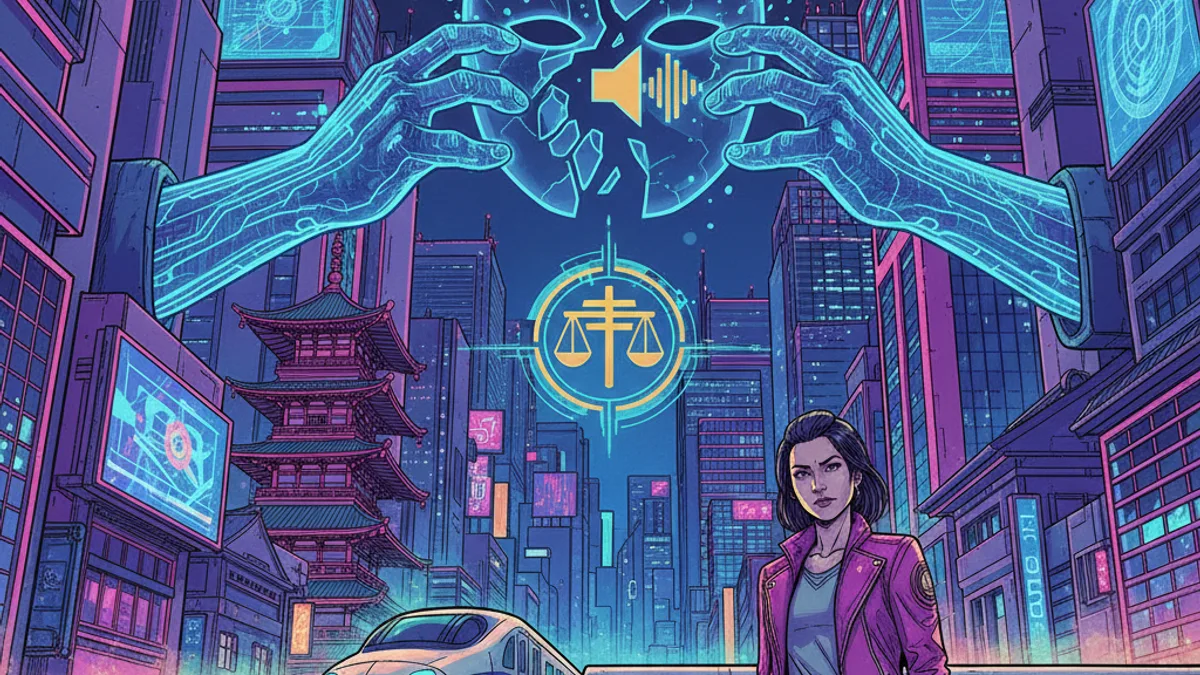
Japan's Justice Ministry to Tackle AI Misuse of Images and Voices
Japan's Justice Ministry is establishing an expert panel to create a legal framework addressing unauthorized AI use of personal images and voices, particularly affecting entertainment industry professionals.
Key Points
- • Justice Ministry creating expert panel to define AI-related rights violations.
- • Framework addresses unauthorized use of images and voices in AI content.
- • Particularly impacts actors, voice actors, and content creators in Japan.
- • Timeline for framework completion not yet announced by authorities.
Japan's Ministry of Justice is taking decisive action to address the growing problem of unauthorized use of personal images and voices in AI-generated content, according to recent reports from NHK. As generative AI technology becomes increasingly sophisticated and accessible, concerns have mounted over the misuse of actors', voice actors', and other individuals' likenesses without permission.
The ministry plans to establish an expert advisory panel to examine cases where AI-generated content infringes on personal rights. This initiative comes as Japan grapples with the rapid advancement of AI technology and its implications for personal rights protection. The panel will work to clarify which specific cases constitute rights violations and develop a legal framework to address these emerging challenges.
According to NHK, the situation has become particularly serious for professionals in the entertainment industry, including actors and voice actors, whose images and voices are being used without authorization to create AI-generated content. This technology allows users to create realistic videos, audio recordings, and other media that can convincingly mimic real people, raising significant concerns about consent, compensation, and reputation management.
For foreign residents working in Japan's creative industries or those who maintain an online presence, these developments carry important implications. The entertainment and content creation sectors have seen a surge in AI-related concerns, with professionals worried about their work being used to train AI models or their likenesses being reproduced without permission. Voice actors, in particular, have expressed alarm at the potential for AI to replicate their voices for commercial purposes without compensation.
The Justice Ministry's framework will need to balance several competing interests. On one hand, it must protect individuals' rights to control their own image and voice. On the other, it must consider the legitimate uses of AI technology for creative and commercial purposes. The challenge lies in distinguishing between rights violations and permissible uses of publicly available information.
Japan's existing legal framework includes protections for portrait rights and publicity rights, but these laws were developed before the advent of generative AI technology. The new framework being developed will likely need to address questions such as: What constitutes unauthorized use when AI is involved? How should consent be obtained for AI training data? What remedies are available to those whose rights have been violated?
For expats living and working in Japan, particularly those in creative fields, media, or technology sectors, this initiative signals that Japan is taking AI-related rights issues seriously. Foreign residents who create content, work as performers, or maintain professional online profiles should stay informed about the framework as it develops. The guidelines emerging from this expert panel could establish important precedents for how personal rights are protected in the age of AI.
The timing of this initiative is significant. As AI technology continues to evolve at a rapid pace, legal frameworks worldwide are struggling to keep up. Japan's proactive approach in establishing clear guidelines could position the country as a leader in addressing these challenges and may influence how other nations approach similar issues.
While the expert panel has been announced, specific timelines for when the framework will be completed or implemented have not yet been disclosed. Those affected by or concerned about AI-generated content should monitor announcements from the Justice Ministry for updates on the panel's progress and any proposed legal changes.
As Japan works to establish this framework, foreign residents should be aware that unauthorized use of others' images or voices in AI-generated content could carry legal consequences. Conversely, those whose own likenesses are being misused may soon have clearer legal recourse to protect their rights.