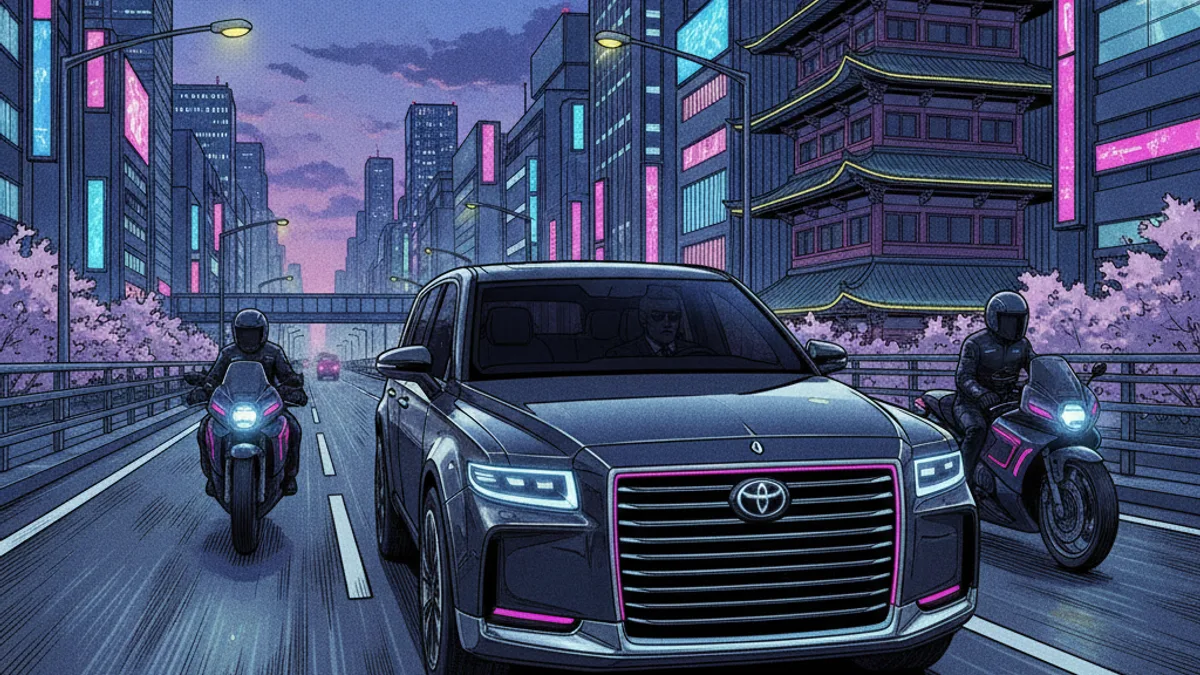
Japan's Prime Minister Upgrades Official Vehicle to Century SUV
Japan's Prime Minister switched from a sedan to an SUV-type Toyota Century on June 22, 2026, marking the first SUV official vehicle while maintaining the prestigious Century brand for security and modern needs.
Key Points
- • Prime Minister's official car changed to Century SUV on June 22, 2026.
- • First SUV used as Japan's prime ministerial vehicle, replacing traditional sedan.
- • Change reflects enhanced security needs while maintaining prestigious Century brand.
Japan's Prime Minister received a significant upgrade to the official government vehicle on June 22, 2026, transitioning from a traditional sedan to a new SUV-type Toyota Century, according to NHK. This marks a notable shift in the government's approach to official transportation, reflecting evolving security considerations and modern vehicle technology.
The new vehicle represents the first time Japan's Prime Minister will use an SUV as the primary official car. The Toyota Century, long regarded as Japan's most prestigious domestic luxury vehicle, has been the traditional choice for prime ministerial transportation for decades. However, the previous model was a classic sedan configuration. The switch to an SUV body style signals a deliberate change in how the government approaches executive protection and mobility.
While the sources do not provide extensive technical details about the specific security enhancements, the move to an SUV platform typically offers several advantages for official use. SUVs generally provide higher ground clearance, improved visibility for security personnel, more robust construction, and greater flexibility in challenging driving conditions. These features have made SUVs increasingly popular choices for government leaders worldwide in recent years.
The Toyota Century itself holds special significance in Japanese automotive history and government protocol. Manufactured by Toyota since 1967, the Century has been the vehicle of choice for Japan's imperial family, government officials, and corporate executives. The name "Century" commemorates the 100th anniversary of the birth of Toyota's founder, Sakichi Toyoda. The vehicle is known for its understated elegance, exceptional craftsmanship, and powerful yet quiet V8 engine—qualities that align with Japanese cultural values of humility and excellence.
For foreign residents in Japan, this development offers insight into how the Japanese government balances tradition with modernization. While maintaining the prestigious Century nameplate that symbolizes Japanese manufacturing excellence and governmental continuity, the adoption of an SUV body style demonstrates pragmatic adaptation to contemporary security requirements. This approach reflects broader patterns in Japanese governance, where respect for tradition coexists with willingness to embrace necessary changes.
The timing of this vehicle upgrade comes as governments worldwide reassess security protocols for their leaders. International security concerns, evolving threat assessments, and advances in protective vehicle technology have prompted many nations to enhance their official transportation fleets. Japan's decision to upgrade the Prime Minister's vehicle aligns with these global trends while maintaining the distinctly Japanese character embodied by the Century brand.
The transition also highlights Japan's domestic automotive industry capabilities. Toyota's ability to produce specialized, high-security vehicles for government use demonstrates the depth of Japanese manufacturing expertise. For expats working in automotive, security, or government-related sectors, this development underscores the continued importance of domestic production for sensitive government applications, even in an increasingly globalized economy.
From a public policy perspective, the vehicle upgrade represents a relatively minor but symbolically significant government expenditure. Japanese taxpayers, including foreign residents who pay taxes in Japan, indirectly fund such official equipment. While the specific cost of the new Century SUV has not been disclosed in the available sources, government vehicle purchases typically undergo scrutiny to ensure appropriate use of public funds.
This change in the Prime Minister's official vehicle may seem like a small detail in Japan's vast governmental operations, but it reflects important considerations about security, tradition, and modernization that characterize contemporary Japanese governance. For expats seeking to understand how Japan's government operates and makes decisions, such developments provide valuable windows into the country's institutional culture and priorities.