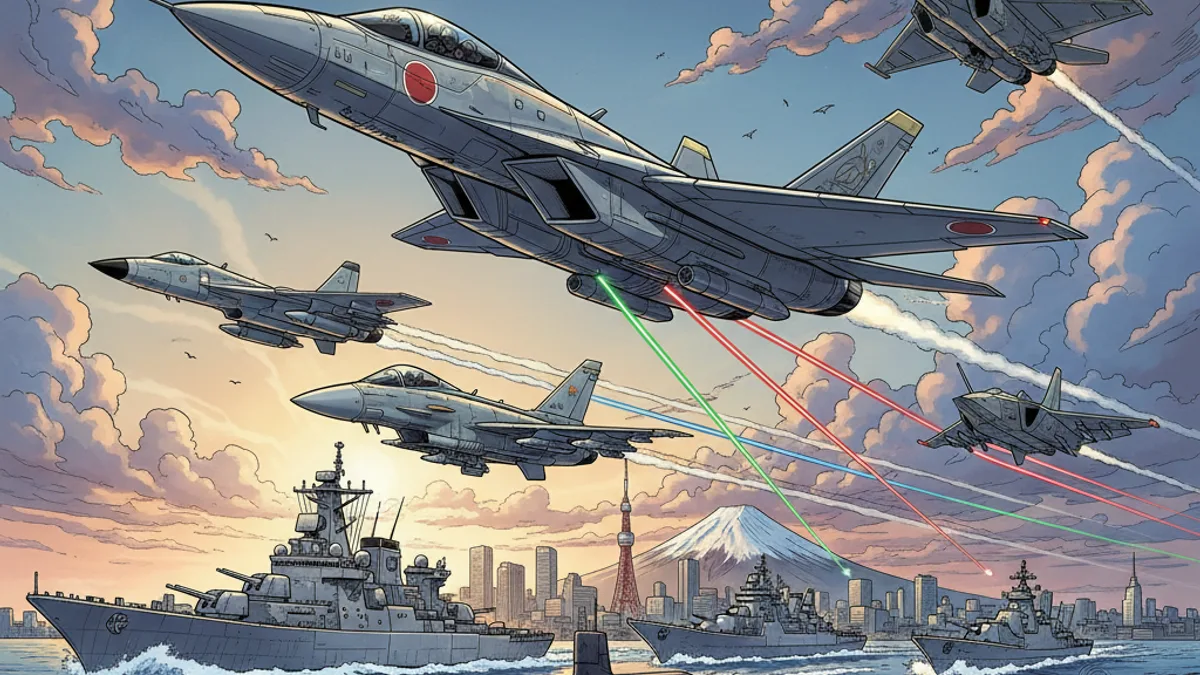
Japan Strengthens Defense Ties with Allies Amid Regional Tensions
Japan strengthened defense cooperation with the US, UK, Australia, and South Korea during May 2026 meetings, confirming fighter jet development, missile projects, and resuming maritime exercises after nine years.
Key Points
- • Japan-UK-Italy next-generation fighter jet development partnership reaffirmed in Singapore talks.
- • Japan-South Korea maritime rescue training resumes June 2026 after nine-year hiatus.
- • US-Japan agreed to accelerate joint missile development amid regional security concerns.
- • New Zealand considering Japanese destroyers, enhancing Pacific defense interoperability.
Japan is significantly expanding its defense cooperation with key allies including the United States, United Kingdom, Australia, and South Korea, as revealed through a series of bilateral meetings held during the Asia Security Conference in Singapore in late May 2026. For foreign residents in Japan, these developments signal the country's increasingly active role in regional security architecture and its deepening integration with Western defense networks.
According to NHK, Japanese Defense Minister Koizumi held multiple high-level meetings with counterparts from allied nations, confirming several major defense initiatives. A central focus was the trilateral next-generation fighter jet development project between Japan, the United Kingdom, and Italy. During talks with UK Defense Secretary Healey, Minister Koizumi reaffirmed both countries' commitment to strengthening defense cooperation through this ambitious aircraft program, which represents one of Japan's most significant military technology partnerships in decades.
The United States and Japan also agreed to accelerate their joint missile development efforts, according to Yahoo Japan. This collaboration reflects growing concerns about regional security challenges and the need for enhanced defensive capabilities. The partnership builds on existing defense technology cooperation under the U.S.-Japan Security Treaty, which forms the cornerstone of Japan's defense posture.
In a notable development for regional diplomacy, Japan and South Korea confirmed plans to resume joint maritime search and rescue training in June 2026, marking the first such exercise in approximately nine years, NHK reported. Defense Minister Koizumi and South Korean Defense Minister Ahn Kyu-baek reached this agreement during their Singapore meeting, signaling improved bilateral relations despite historical tensions. The resumption of these exercises between the Japan Maritime Self-Defense Force and the Republic of Korea Navy demonstrates a pragmatic approach to security cooperation in Northeast Asia.
Japan is also expanding defense ties with Pacific partners. During discussions with Australian and New Zealand defense ministers, Minister Koizumi expressed that if New Zealand selects Japanese Maritime Self-Defense Force destroyers for its new naval vessels, it would significantly enhance interoperability between the two nations' forces, according to NHK. This potential deal would represent a concrete example of Japan's growing defense export capabilities following the relaxation of its arms export restrictions in recent years.
These developments occurred against the backdrop of broader regional security dynamics. The Asia Security Conference also saw the United States, United Kingdom, and Australia confirm strengthened cooperation on unmanned submarine development and other technologies under the AUKUS partnership framework. China responded by criticizing these alliances and making statements regarding Taiwan and Japan, according to NHK, highlighting the competitive security environment driving Japan's enhanced defense partnerships.
For expats living in Japan, these defense initiatives reflect the country's evolving security posture in response to regional challenges. While these developments primarily concern military and diplomatic relations, they indicate Japan's commitment to maintaining stability in the Indo-Pacific region through alliance cooperation. The strengthening of ties with traditional allies like the United States and the United Kingdom, combined with improved relations with South Korea and expanded partnerships with Australia and New Zealand, demonstrates a comprehensive approach to regional security.
The practical implications for foreign residents remain limited to general awareness of Japan's foreign policy direction. These defense partnerships do not directly affect visa status, employment, or daily life for expats. However, understanding Japan's security relationships provides valuable context for the country's international position and its priorities in an increasingly complex regional environment. As Japan continues to play a more active role in regional security affairs, these partnerships will likely deepen further in the coming years.