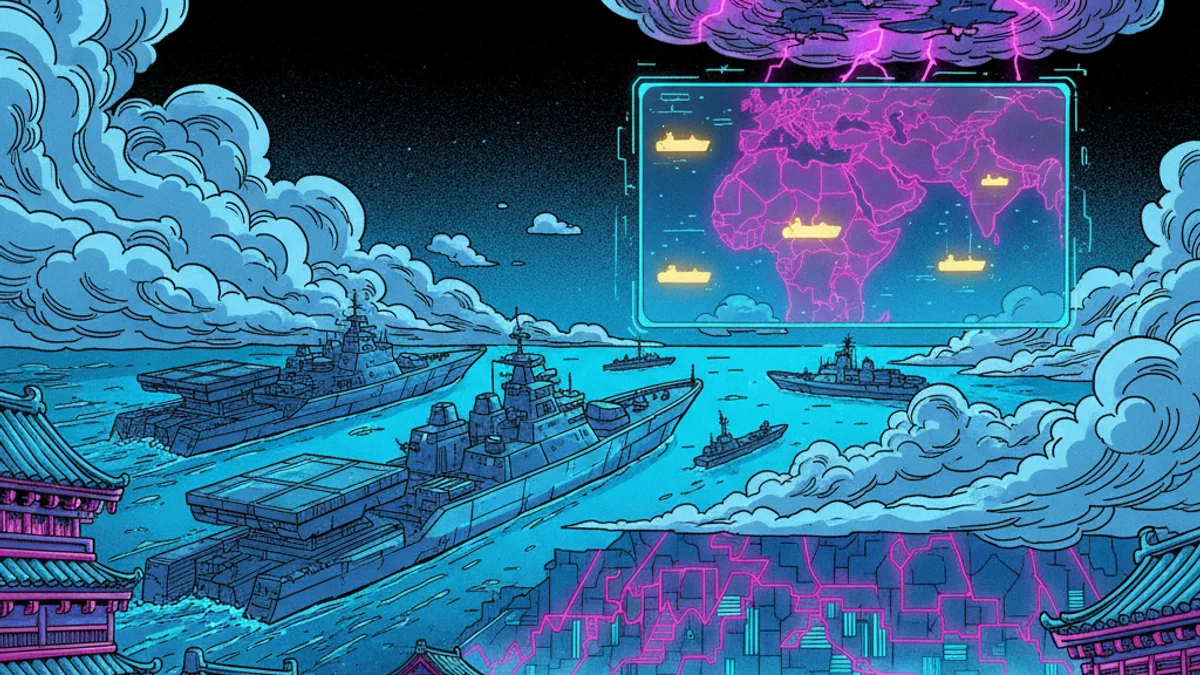
Japan Weighs Self-Defense Force Deployment to Hormuz Strait Amid US-Iran Crisis
Japan considers deploying Self-Defense Forces to Hormuz Strait as US-Iran tensions threaten critical oil shipping routes. Expats should prepare for potential fuel and utility price increases.
Key Points
- • Trump's 48-hour ultimatum threatens Iranian power plants over Hormuz Strait closure.
- • Japan examining Self-Defense Force deployment to protect vital energy supply routes.
- • Expats should anticipate gasoline and utility price increases if crisis escalates.
- • Japan imports 90 percent of crude oil, mostly through Hormuz Strait.
Japan is considering deploying Self-Defense Forces to the Hormuz Strait as tensions between the United States and Iran escalate to dangerous levels, raising concerns about global energy security and regional stability that could directly impact foreign residents in Japan.
According to NHK, the crisis intensified when U.S. President Donald Trump issued a stark 48-hour ultimatum to Iran, warning that American forces would attack Iranian power plants unless the Hormuz Strait is reopened to international shipping. Iran responded with an equally forceful counter-threat, stating that any attack on its electrical infrastructure would result in the complete and permanent closure of the strategic waterway.
The Hormuz Strait serves as one of the world's most critical energy chokepoints, with approximately one-fifth of global oil supplies passing through its narrow waters. For Japan, which imports roughly 90 percent of its crude oil and depends heavily on Middle Eastern suppliers, any disruption to shipping through the strait poses severe economic risks. The potential closure would immediately affect fuel prices, electricity costs, and overall economic stability in Japan.
Livedoor News reports that Japanese government officials are now actively examining options for Self-Defense Force deployment to the region. While specific details of the proposed mission remain under discussion, such a deployment would represent a significant step in Japan's evolving security posture and its interpretation of constitutional limitations on military operations abroad.
For foreign residents in Japan, the implications of this crisis extend beyond geopolitical concerns. A prolonged closure of the Hormuz Strait would likely trigger immediate increases in gasoline and heating fuel prices across Japan. The country's heavy reliance on imported energy means that any supply disruption translates quickly into higher costs for consumers. Expats should anticipate potential price increases at the pump and in monthly utility bills if the situation deteriorates.
The Japanese government has historically maintained a cautious approach to overseas military deployments, with constitutional restrictions limiting the Self-Defense Forces to defensive operations and specific peacekeeping roles. However, recent years have seen gradual expansion of permissible activities under revised security legislation. A deployment to the Hormuz Strait would test these expanded parameters and could signal Japan's willingness to take more proactive measures in protecting its vital national interests.
The timing of this crisis is particularly sensitive, as it coincides with broader regional instability and ongoing debates within Japan about defense spending and military capabilities. The government faces the challenge of balancing public skepticism about military engagement with the practical necessity of securing energy supplies that power the nation's economy.
Experts suggest that any Japanese deployment would likely focus on intelligence gathering, surveillance operations, and protection of Japanese-flagged vessels rather than direct combat operations. Such a mission would probably involve Maritime Self-Defense Force ships and reconnaissance aircraft, operating in coordination with U.S. and potentially other allied forces in the region.
Foreign residents should monitor developments closely, as the situation remains fluid and could evolve rapidly. The Japanese government has not yet made a final decision on deployment, and diplomatic efforts to de-escalate tensions continue. However, the seriousness of the current crisis and Japan's vulnerability to energy supply disruptions make some form of response increasingly likely.
For expats living in Japan, staying informed through reliable news sources and understanding the potential economic impacts will be essential in the coming weeks. While direct security threats to residents in Japan remain minimal, the indirect effects through energy prices and economic uncertainty could affect household budgets and business operations. Those in energy-intensive industries or with significant commuting costs should particularly prepare for possible price fluctuations.