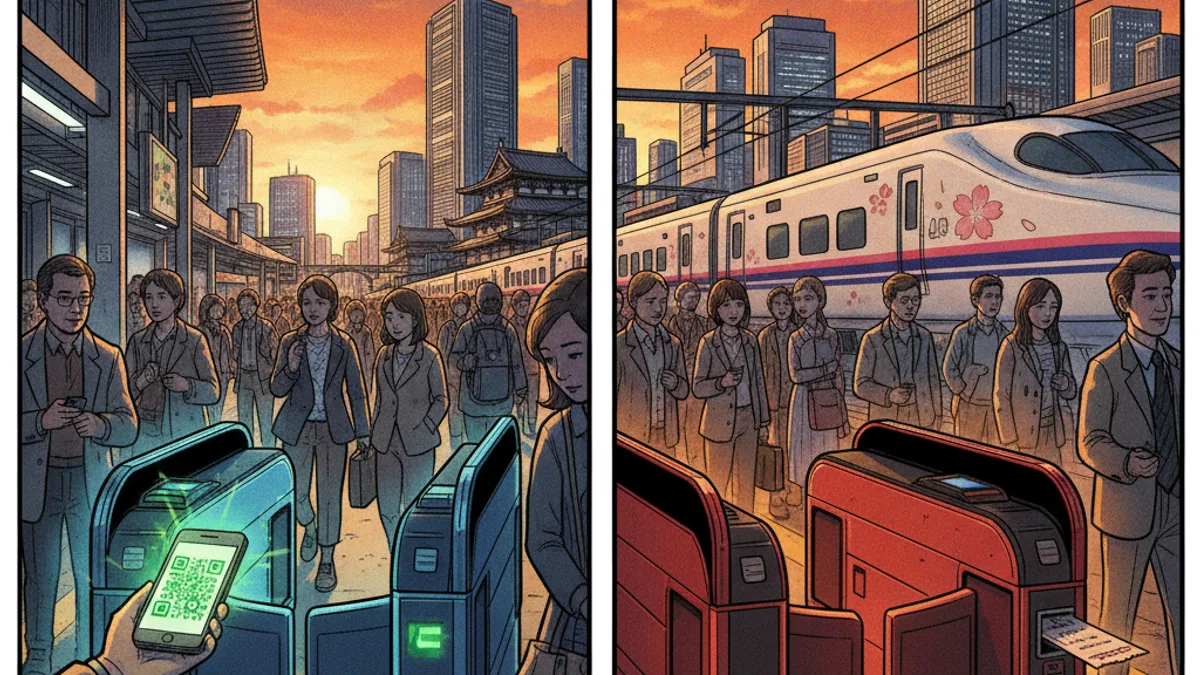
JR East Switches to QR Code Tickets, Ending Magnetic System in Spring 2027
JR East will replace magnetic stripe tickets with QR code tickets starting spring 2027. The change affects paper tickets but not IC cards like Suica, with implementation expected across the Tokyo area and eastern Japan.
Key Points
- • JR East discontinues magnetic tickets for QR code system in spring 2027.
- • IC cards like Suica and Pasmo remain unaffected by the change.
- • Paper tickets will require QR code scanning at station gates.
- • Mobile ticketing apps continue operating alongside new QR code tickets.
Foreign residents traveling on JR East trains will need to familiarize themselves with a new ticketing system as the railway company announced plans to replace traditional magnetic tickets with QR code-based alternatives starting spring 2027. The change, reported by NHK in June 2026, represents a significant modernization of Japan's railway infrastructure that will affect millions of daily commuters and travelers.
According to NHK, JR East—one of Japan's largest railway operators serving the Tokyo metropolitan area and eastern regions—will discontinue its current magnetic stripe ticket system and transition entirely to tickets featuring QR codes. This marks the end of the magnetic ticket technology that has been a fixture of Japanese rail travel for decades.
The new QR code tickets will function differently from the magnetic tickets currently in use at station gates. While specific technical details about the implementation remain limited in available reporting, the shift suggests passengers will need to scan QR codes at ticket gates rather than inserting tickets into machines as they do now. This change aligns with broader digitalization trends in Japan's transportation sector and could potentially speed up passenger flow through busy stations.
For expats living in Japan, this transition should not significantly disrupt daily travel routines, particularly for those already using IC cards like Suica or Pasmo for most journeys. These rechargeable smart cards, which use contactless technology, will continue to function as normal and remain unaffected by the magnetic ticket phase-out. However, the change will impact situations where physical tickets are necessary, such as purchasing reserved seats on limited express trains, using certain discount tickets, or traveling to stations not covered by IC card networks.
The timing of spring 2027 gives passengers approximately one year to become accustomed to the new system once implementation begins. JR East will likely introduce the QR code tickets gradually across its network, though the company has not publicly detailed a specific rollout schedule for different stations or regions. Major stations in Tokyo and surrounding areas will presumably transition first, followed by smaller stations throughout JR East's service area.
This modernization effort may offer several advantages over the current magnetic system. QR codes can store more information than magnetic stripes, potentially enabling more sophisticated fare structures or additional passenger services. The technology is also generally more reliable, as magnetic stripes can become demagnetized or damaged, rendering tickets unusable. Additionally, QR code tickets could reduce maintenance costs for ticket gates and related equipment.
Passengers should note that while the magnetic ticket system will be discontinued, alternative ticketing options will remain available. Mobile ticketing applications, which already allow passengers to purchase and display tickets on smartphones, will continue to operate alongside the new paper QR code tickets. These digital options may become increasingly important as Japan's railways move away from traditional magnetic technology.
For foreign visitors and residents unfamiliar with Japanese railway systems, the QR code transition could actually simplify the ticket-buying experience. QR codes are internationally recognized technology, potentially making the system more intuitive for newcomers compared to the current magnetic ticket machines, which can be challenging to navigate even with English language options.
As the spring 2027 implementation date approaches, expats should watch for additional announcements from JR East regarding specific procedures, station-by-station rollout schedules, and any temporary service adjustments during the transition period. The company will likely provide multilingual guidance to ensure smooth adoption of the new system across its diverse passenger base.
Sources
This article was written by AI from these Japanese-language reports. Check them before acting on anything here.
- [1] NHK — original report (Japanese)
- [2] Yahoo! Japan News — original report (Japanese)
- [3] Yahoo! Japan News — original report (Japanese)
AI-written summary of Japanese reports; not human-reviewed; check the linked sources. How we write articles