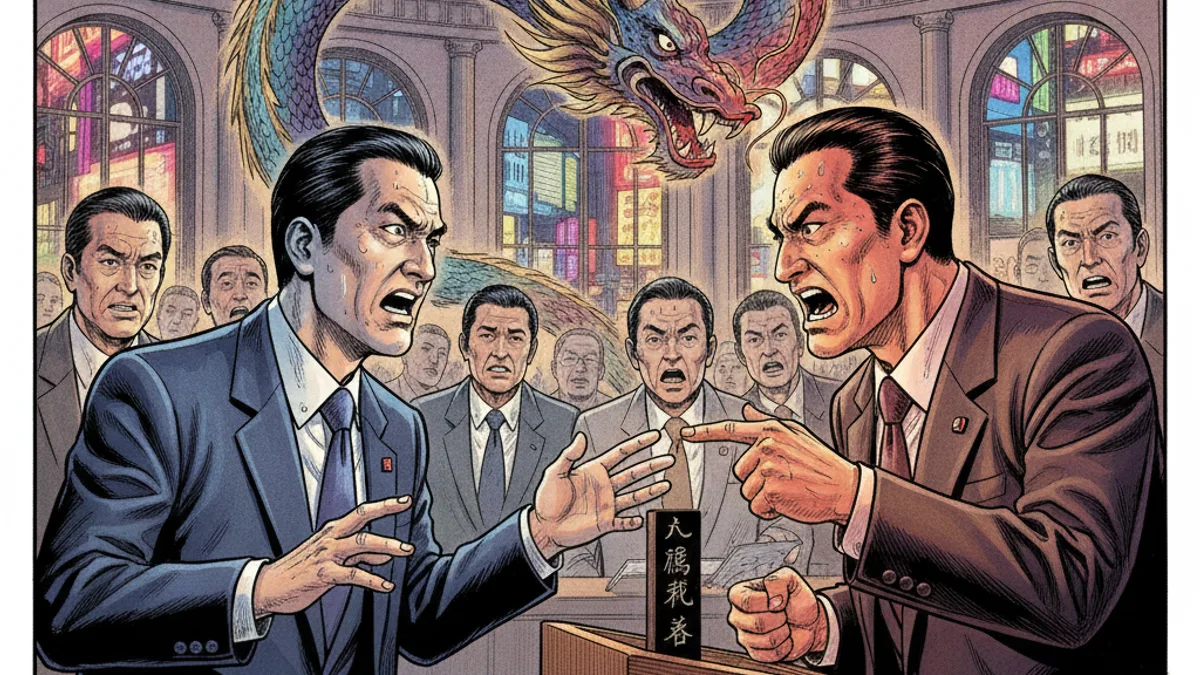
Lawmaker's Self-Defense Force Comments Ignite Political Firestorm
A CDP lawmaker sparked controversy by suggesting SDF recruits face economic hardship, prompting Defense Minister Koizumi's angry rebuttal and immediate retraction during a June 15 parliamentary session.
Key Points
- • CDP lawmaker retracted June 15 comments linking SDF recruitment to economic struggles.
- • Defense Minister Koizumi condemned remarks as factually incorrect during parliamentary session.
- • Incident highlights political sensitivity surrounding Self-Defense Forces and recruitment challenges.
- • Controversy reflects broader debates about economic opportunity and military service perceptions.
A controversial statement by a Japanese lawmaker regarding Self-Defense Force (SDF) recruitment has triggered a significant political controversy, highlighting ongoing debates about economic inequality and military service in Japan. The incident, which unfolded during a June 15 parliamentary session, has implications for how Japanese society views its defense forces and raises questions about political discourse surrounding economic opportunity.
During questioning at the House of Councillors Budget Committee on June 15, Constitutional Democratic Party (CDP) lawmaker Koga made remarks suggesting that young people joining the Self-Defense Forces come from economically disadvantaged backgrounds. According to NHK, Koga stated that "children who join the Self-Defense Forces are economically struggling," a characterization that immediately drew sharp criticism from government officials and defense advocates.
Defense Minister Shinjiro Koizumi responded forcefully to the comments during the same session, describing them as factually incorrect and dismissive of SDF personnel. Multiple news outlets, including Yahoo Japan, reported that Koizumi expressed visible anger at the characterization, emphasizing that it misrepresented both the motivations of SDF recruits and the diverse backgrounds from which they come. The Defense Minister's reaction underscored the sensitivity surrounding public perceptions of Japan's military forces, particularly as the country faces ongoing recruitment challenges amid demographic decline.
Recognizing the controversy, Koga apologized and retracted the statement during the same committee session. However, the incident has already sparked broader discussions about economic mobility, career opportunities for young Japanese people, and the role of the Self-Defense Forces in society. For foreign residents observing Japanese politics, this controversy reflects deeper societal conversations about class, opportunity, and national service that periodically surface in public discourse.
The Self-Defense Forces have faced recruitment difficulties in recent years as Japan's aging population shrinks the pool of eligible candidates. The government has implemented various initiatives to attract recruits, including improved benefits, expanded career development opportunities, and enhanced public relations campaigns. Any suggestion that SDF service represents a last resort for economically disadvantaged youth potentially undermines these recruitment efforts and may perpetuate stereotypes that defense officials have worked to dispel.
For expats living in Japan, this incident offers insight into several aspects of Japanese society. First, it demonstrates the political sensitivity surrounding the Self-Defense Forces, which operate under constitutional constraints and continue to generate debate despite broad public acceptance. Second, it highlights ongoing concerns about economic inequality and youth employment opportunities, issues that affect both Japanese citizens and long-term foreign residents navigating Japan's job market.
The controversy also illustrates the accountability mechanisms within Japan's parliamentary system. The immediate retraction and apology, while not preventing political fallout, demonstrate how lawmakers respond to public and governmental pressure. This stands in contrast to political cultures where controversial statements might be defended or downplayed rather than quickly withdrawn.
Political observers note that such incidents can have lasting impacts on party reputations and individual political careers. The Constitutional Democratic Party, as Japan's largest opposition party, faces ongoing challenges in presenting itself as a credible alternative government. Controversies involving its lawmakers' statements about institutions like the Self-Defense Forces can complicate efforts to build broader public support.
For foreign residents, understanding these political dynamics matters particularly for those working in defense-related industries, education sectors that interact with SDF recruitment, or businesses that contract with defense facilities. The incident serves as a reminder that discussions about Japan's military remain politically charged, requiring sensitivity and awareness of historical and contemporary contexts.
As Japan continues to navigate regional security challenges and demographic pressures, debates about the Self-Defense Forces' role, recruitment, and public perception will likely continue. This latest controversy underscores that even seemingly straightforward comments about military service can quickly become flashpoints in Japan's carefully balanced political landscape.