Level 5 Emergency: Ishikawa and Toyama Face Catastrophic Heavy Rain
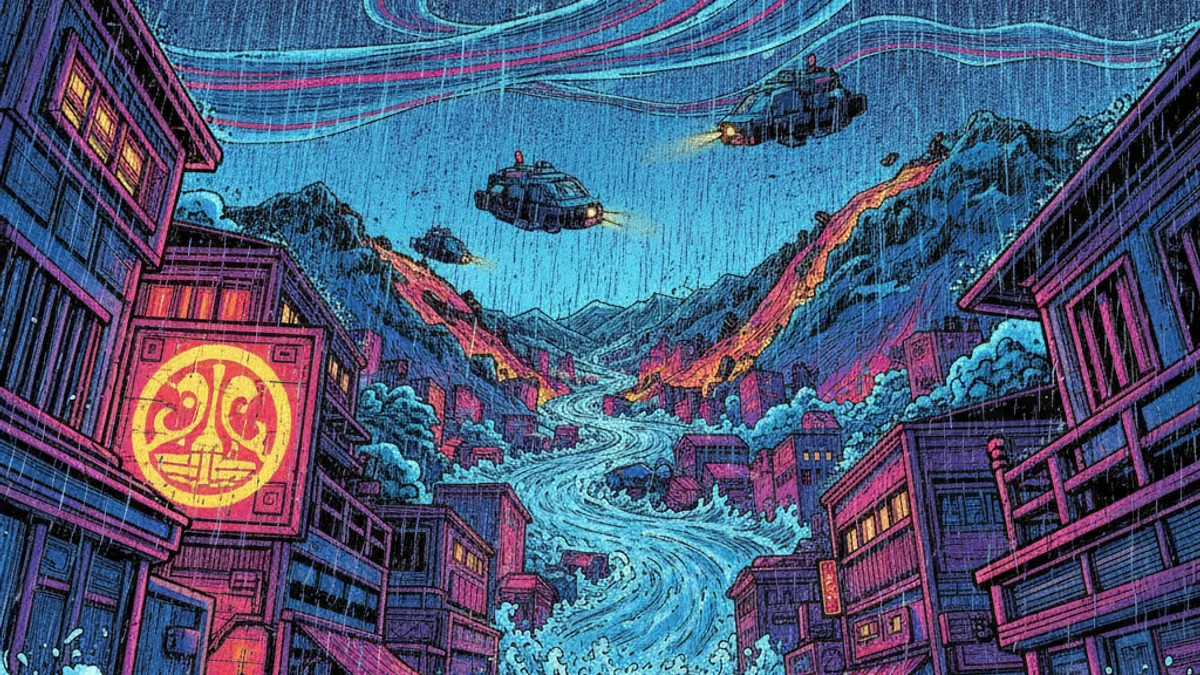
JMA issued Level 5 emergency warnings for Ishikawa and Toyama on August 27 due to catastrophic rainfall from linear rainbands, causing flooding, landslides, and river overflow with immediate danger to life.
Key Points
- • Level 5 special heavy rain warnings issued for Ishikawa and Toyama prefectures.
- • Rivers overflowing, landslides occurring, and multiple residents stranded by flooding.
- • Avoid all vehicle travel; cars can stall in shallow floodwater.
- • Monitor NHK World and JMA websites for multilingual emergency updates continuously.
The Japan Meteorological Agency (JMA) issued its highest-level emergency warning on August 27, 2026, at 6:20 AM, designating Level 5 special heavy rain alerts for Ishikawa and Toyama prefectures. This represents the most severe weather warning available in Japan's five-tier alert system, indicating that catastrophic disasters are already occurring or imminent.
According to NHK reports, the crisis stems from successive linear rainband formations—a weather phenomenon where developed cumulonimbus clouds align to produce intense, prolonged rainfall over specific areas. The JMA issued a linear rainband alert for the Kaga region of Ishikawa Prefecture at 8:48 AM, warning that life-threatening landslides and flooding are highly likely.
The situation has already resulted in severe infrastructure damage and dangerous conditions across both prefectures. In Hakui City, Ishikawa Prefecture, the Iiyama River overflowed its banks at approximately 5:10 AM near Iiyama Bridge, with water levels exceeding the embankment height. Local authorities report significant road flooding in surrounding areas, with multiple residents reportedly stranded due to water accumulation.
Footage from Himi City in Toyama Prefecture reveals the extent of the flooding. Video captured around 6:30 AM shows multiple vehicles submerged up to their wheel arches in brown, muddy floodwater, rendering them immobile. Earlier footage from 4:00 AM documented a landslide in the same city, with exposed hillside soil flowing dangerously close to residential buildings. Emergency responders wearing helmets were visible at the scene, and rainwater could be seen flowing like rivers through affected areas.
The JMA and Ministry of Land, Infrastructure, Transport and Tourism held a joint press conference at 7:20 AM to address the emergency. Takuya Hosomi, Chief of the JMA's Atmospheric and Oceanic Department, emphasized the unprecedented nature of the rainfall, stating that residents are experiencing "rainfall unlike anything experienced before." Officials stressed that the danger to life is immediate and urged residents to take protective action without delay.
For foreign residents in or near the affected areas, understanding Japan's emergency alert system is critical. Level 5 warnings represent the highest tier, indicating that disaster has already occurred or is occurring. At this level, authorities emphasize that evacuation may no longer be safe, and residents should focus on immediate survival measures—moving to the highest floor of their building, away from slopes or waterways.
The meteorological conditions driving this emergency involve moist air flowing toward a weather front over the Hokuriku region, creating ideal conditions for linear rainband development. Some areas recorded approximately 100 millimeters of rainfall per hour—classified as "violent rain" that can cause zero visibility and make driving extremely dangerous.
Experts warn that attempting to drive during such conditions poses severe risks. Vehicles can become waterlogged and stall in surprisingly shallow water, and drivers may be unable to assess road damage or missing sections beneath floodwaters. The recommendation is clear: avoid all non-essential travel and remain in a safe location.
Authorities have indicated that additional municipalities may be added to the special warning zone as conditions evolve. Foreign residents should monitor official channels continuously, including NHK World for English-language updates, local government emergency apps, and the JMA website, which offers multilingual information.
This emergency highlights the importance of disaster preparedness for all residents of Japan, regardless of nationality. Having an emergency kit, understanding evacuation routes, and knowing how to access multilingual emergency information can prove life-saving during such events. As climate patterns continue to produce more intense weather phenomena, familiarity with Japan's alert systems and appropriate response protocols becomes increasingly essential for the foreign resident community.
Sources
This article was written by AI from these Japanese-language reports. Check them before acting on anything here.
- [1] NHK — original report (Japanese)
- [2] NHK — original report (Japanese)
- [3] NHK — original report (Japanese)
- [4] Yahoo! Japan News — original report (Japanese)
- [5] Yahoo! Japan News — original report (Japanese)
- [6] Livedoor News — original report (Japanese)
- [7] NHK — original report (Japanese)
- [8] NHK — original report (Japanese)
- [9] Yahoo! Japan News — original report (Japanese)
- [10] NHK — original report (Japanese)
- [11] Yahoo! Japan News — original report (Japanese)
- [12] Livedoor News — original report (Japanese)
- [13] NHK — original report (Japanese)
- [14] Yahoo! Japan News — original report (Japanese)
- [15] Livedoor News — original report (Japanese)
AI-written summary of Japanese reports; not human-reviewed; check the linked sources. How we write articles