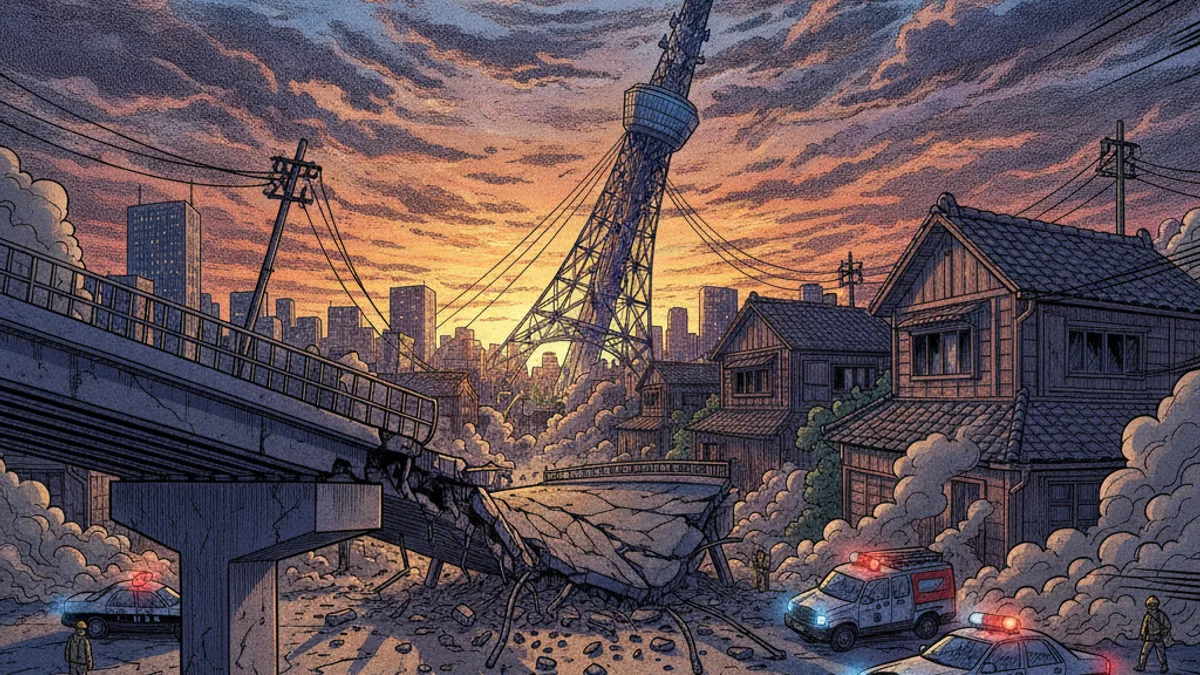
Magnitude 5.9 Earthquake Strikes Kanto: Infrastructure Damage Reported
A magnitude 5.9 earthquake struck Kanto at 2:00 AM August 23, causing infrastructure damage and injuries. Authorities warn of possible aftershocks for one week.
Key Points
- • Magnitude 5.9 earthquake hit southern Ibaraki at 2:00 AM August 23, 2026.
- • Similar intensity aftershocks possible for one week; prepare emergency supplies now.
- • Infrastructure damage reported including ceiling collapse, water main rupture, equipment malfunctions.
- • Mobile networks and highways operational; no fatalities reported as of initial assessments.
A magnitude 5.9 earthquake struck southern Ibaraki Prefecture at approximately 2:00 AM on August 23, 2026, causing widespread disruption across the Kanto region and registering shindo 5-lower (strong shaking) in parts of Ibaraki, Tokyo, Saitama, and Chiba prefectures, according to NHK reports.
The Japan Meteorological Agency has issued warnings that residents should remain vigilant for aftershocks of similar intensity over the next week. This advisory is particularly important for foreign residents who may be less familiar with Japan's earthquake protocols and should take precautions to secure their living spaces and prepare emergency supplies.
Structural damage was reported at the Ushiku City Hall in Ibaraki Prefecture, where a section of ceiling approximately two meters long and 50 centimeters wide collapsed on the second floor. While this represents significant structural damage, no injuries were reported at the facility. The incident highlights the potential dangers of falling debris during strong earthquakes, even in modern buildings.
Infrastructure disruptions affected multiple areas across the Kanto region. In Tokyo's Koto Ward, which experienced shindo 4 shaking, a water main ruptured in the Kiyosumi area, causing water to overflow onto roadways. The Tokyo Water Bureau responded to the incident, and the situation was brought under control approximately 90 minutes after the earthquake, according to NHK reports. Such water main breaks can affect local water supply and create hazardous road conditions.
In Adachi Ward, Tokyo, a supermarket experienced equipment malfunction when fire suppression sprinklers activated incorrectly, releasing large quantities of fire suppressant throughout the store. Police believe the earthquake's shaking triggered the false activation. This type of incident demonstrates how seismic activity can cause unexpected secondary effects in commercial facilities.
Multiple injuries were reported across Saitama and Kanagawa prefectures, though specific details about the nature and severity of these injuries were not immediately available. Prime Minister Takaichi posted on social media at approximately 2:50 AM that while no fatalities or residential building damage had been reported at that time, authorities were continuing to assess the situation. The government established an immediate response protocol following the earthquake.
For foreign residents, the positive news is that critical infrastructure largely remained operational. All major mobile carriers—NTT Docomo, KDDI, SoftBank, and Rakuten Mobile—reported no disruptions to phone or data services as of 2:30 AM, ensuring communication channels remained open for emergency contacts and information gathering.
The Ibaraki Prefectural Police Highway Division confirmed that no damage was detected on expressways within the prefecture as of 3:00 AM, and officers were conducting thorough inspections to verify road safety and check for accidents. This suggests that major transportation routes remained passable, though residents should always verify current conditions before traveling after significant seismic events.
Experts emphasize that the one-week warning period for potential aftershocks is critical. Foreign residents should ensure their emergency kits are stocked with water, non-perishable food, flashlights, batteries, and first aid supplies. It's also advisable to identify safe spaces within homes and workplaces, secure heavy furniture and appliances, and review evacuation routes.
For those unfamiliar with Japan's shindo scale, level 5-lower represents strong shaking where most people feel the need to hold onto something stable, unsecured furniture may move, and dishes or books may fall from shelves. Understanding this scale helps residents gauge appropriate responses to earthquake warnings and actual events.
Foreign residents should monitor NHK World and other English-language emergency information sources, ensure their phones are charged, and stay informed about any developing situations in their specific areas during this heightened alert period.
Sources
This article was written by AI from these Japanese-language reports. Check them before acting on anything here.
- [1] NHK — original report (Japanese)
- [2] NHK — original report (Japanese)
- [3] NHK — original report (Japanese)
- [4] NHK — original report (Japanese)
- [5] NHK — original report (Japanese)
- [6] NHK — original report (Japanese)
- [7] NHK — original report (Japanese)
- [8] NHK — original report (Japanese)
- [9] Yahoo! Japan News — original report (Japanese)
AI-written summary of Japanese reports; not human-reviewed; check the linked sources. How we write articles