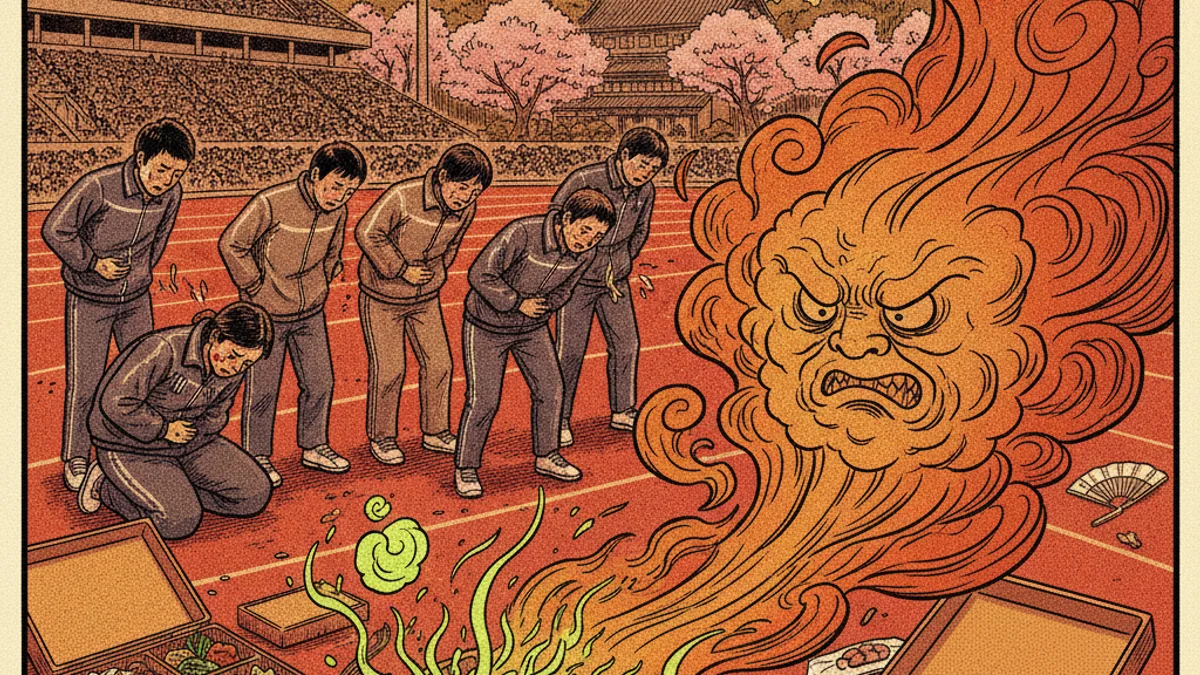
Mass Food Poisoning Strikes Kyoto Athletics Championship, 28 Hospitalized
Twenty-eight staff members were hospitalized with food poisoning at Kyoto's athletics championship on September 12, 2026, after consuming contaminated bento boxes, prompting a health investigation.
Key Points
- • 28 staff hospitalized with diarrhea and vomiting at Kyoto athletics stadium.
- • Victims consumed same type of bento box, suggesting contaminated catering source.
- • Health authorities investigating food samples to identify pathogen and contamination source.
- • Exercise caution with pre-prepared meals at events, especially during warm weather.
A major food poisoning incident occurred on September 12, 2026, at a Kyoto athletics stadium hosting the All-Japan Corporate Track and Field Championships, resulting in 28 staff members being hospitalized with symptoms of diarrhea and vomiting. The incident highlights ongoing food safety concerns at large-scale events in Japan and serves as a reminder for foreign residents to exercise caution when consuming prepared meals at sporting venues and public gatherings.
According to NHK, the incident took place at a Kyoto City athletics stadium during the All-Japan Corporate Track and Field Championships, one of Japan's premier corporate athletics events. Multiple staff members involved in operating the event began experiencing gastrointestinal symptoms throughout the day. By evening, 28 individuals had been transported to local hospitals for treatment.
Investigators quickly identified a common factor among the victims: nearly all affected individuals had consumed the same type of bento box lunch provided at the venue. This discovery immediately raised suspicions of collective food poisoning, prompting health authorities to launch an investigation into the source and cause of contamination.
The Kyoto City Fire Department confirmed that all transported individuals exhibited similar symptoms, including diarrhea and vomiting, which are classic indicators of foodborne illness. While the exact pathogen responsible has not yet been identified, health officials are conducting laboratory tests on food samples and interviewing affected staff to determine the contamination source.
For foreign residents living in Japan, this incident underscores several important considerations regarding food safety at public events. Japan generally maintains high food safety standards, but mass catering situations—where large quantities of food are prepared in advance—can occasionally present risks, particularly during warmer months when bacteria multiply more rapidly.
Expats attending sporting events, festivals, or conferences should be aware that bento boxes and pre-prepared meals, while convenient and typically safe, can pose risks if not properly handled or stored at correct temperatures. The incident occurred in mid-September, when temperatures in Kyoto can still be relatively warm, potentially contributing to bacterial growth if food was not adequately refrigerated.
Japanese health authorities take food poisoning incidents seriously, and investigations typically result in thorough inspections of catering facilities and food preparation processes. The catering company involved will likely face scrutiny from Kyoto's public health department, which will examine everything from ingredient sourcing to preparation methods and storage conditions.
For those working at or attending large events in Japan, several precautions can minimize food poisoning risks. First, observe how food is stored and displayed—items should be kept at appropriate temperatures, either hot or cold, rather than at room temperature. Second, check the appearance and smell of food before consuming it; any unusual odors or discoloration should raise concerns. Third, be particularly cautious with high-risk foods like raw fish, eggs, dairy products, and mayonnaise-based items during warm weather.
The incident also serves as a reminder that even in countries with rigorous food safety standards, mass catering situations require extra vigilance. Event organizers and caterers must ensure proper food handling protocols, including adequate refrigeration, appropriate cooking temperatures, and sanitary preparation conditions.
While no fatalities have been reported and most victims are expected to recover fully, the incident disrupted a major sporting event and caused significant concern among participants and spectators. Authorities continue investigating to prevent similar occurrences at future events.
Foreign residents should remain informed about food safety practices in Japan and not hesitate to report concerns to event organizers or local health authorities if they observe questionable food handling practices at public venues.