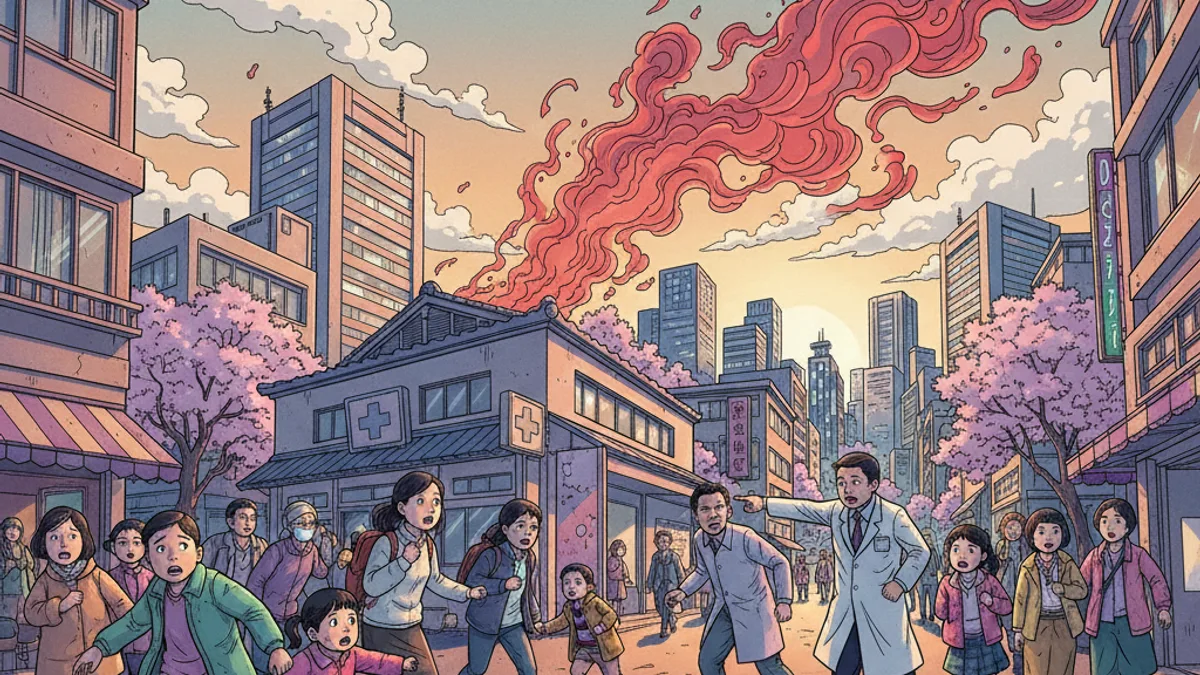
Measles Cases Exceed 200 in Japan, Fastest Spread Since 2020
Measles cases in Japan have reached 236, the fastest increase since 2020. Health authorities urge vaccination verification, especially for children and unvaccinated adults.
Key Points
- • Japan reports 236 measles cases, fastest spread since 2020 outbreak.
- • Check children's vaccination records in Mother and Child Health Handbook immediately.
- • Adults uncertain about immunity should consult local health centers for testing.
- • Contact medical facilities by phone before visiting if symptoms appear.
Japan is experiencing its most rapid increase in measles cases since 2020, with infections surpassing 200 people as of mid-April 2026, according to the Ministry of Health, Labour and Welfare. The outbreak has prompted health authorities to urge parents and guardians to verify vaccination records and ensure children receive proper immunization.
NHK reports that 236 measles cases have been confirmed nationwide so far this year, marking the fastest spread rate in six years. The highly contagious viral disease, known as "hashika" in Japanese, has been reported across multiple prefectures, raising concerns among public health officials and residents alike.
Measles is one of the most infectious diseases known to medical science, with the virus capable of remaining airborne for up to two hours after an infected person leaves a room. The disease spreads through respiratory droplets and can cause serious complications, including pneumonia, encephalitis, and in rare cases, death. Children under five and adults over twenty are particularly vulnerable to severe complications.
For foreign residents in Japan, understanding the country's vaccination schedule and requirements is crucial. Japan's routine immunization program includes two doses of the measles-mumps-rubella (MMR) vaccine for children. The first dose is typically administered between 12 and 24 months of age, while the second dose is given before elementary school entry, usually between ages five and seven.
The Ministry of Health, Labour and Welfare is actively encouraging parents to confirm their children's vaccination status. Expat families should check their children's vaccination records, which in Japan are documented in the Mother and Child Health Handbook (boshi techo). This handbook is provided to all pregnant women in Japan and serves as the official record of a child's health and immunizations.
For adults who are uncertain about their vaccination history, the situation requires particular attention. Many countries have different vaccination schedules, and some adults may have received only one dose or no measles vaccination at all. According to health experts, individuals born before widespread measles vaccination programs began may not have immunity unless they contracted the disease naturally during childhood.
Foreign residents concerned about their vaccination status can consult with their local health center (hokenjo) or visit a medical clinic to discuss testing for measles immunity. Blood tests can determine whether a person has antibodies against the virus. If immunity is insufficient, vaccination is recommended, especially for those planning to travel internationally or working in healthcare, education, or other settings with high human contact.
The current outbreak underscores the importance of maintaining high vaccination coverage rates. When vaccination rates drop, communities become vulnerable to outbreaks of preventable diseases. Japan has generally maintained strong immunization programs, but pockets of lower coverage can allow diseases like measles to spread rapidly.
Expats should be aware that measles symptoms typically appear 10 to 14 days after exposure and include high fever, cough, runny nose, and red eyes, followed by a characteristic rash that starts on the face and spreads downward. Anyone experiencing these symptoms should contact a medical facility by phone before visiting in person to prevent potential transmission in waiting rooms.
Local health centers throughout Japan provide vaccination services, often at reduced costs or free of charge for children within the recommended age ranges. Adult vaccinations may require out-of-pocket payment, though costs are generally reasonable, typically ranging from 5,000 to 10,000 yen per dose.
As Japan continues to monitor this outbreak, foreign residents should remain vigilant, ensure their families are properly vaccinated, and stay informed through official channels such as local health departments and the Ministry of Health, Labour and Welfare website, which provides information in multiple languages for the international community.