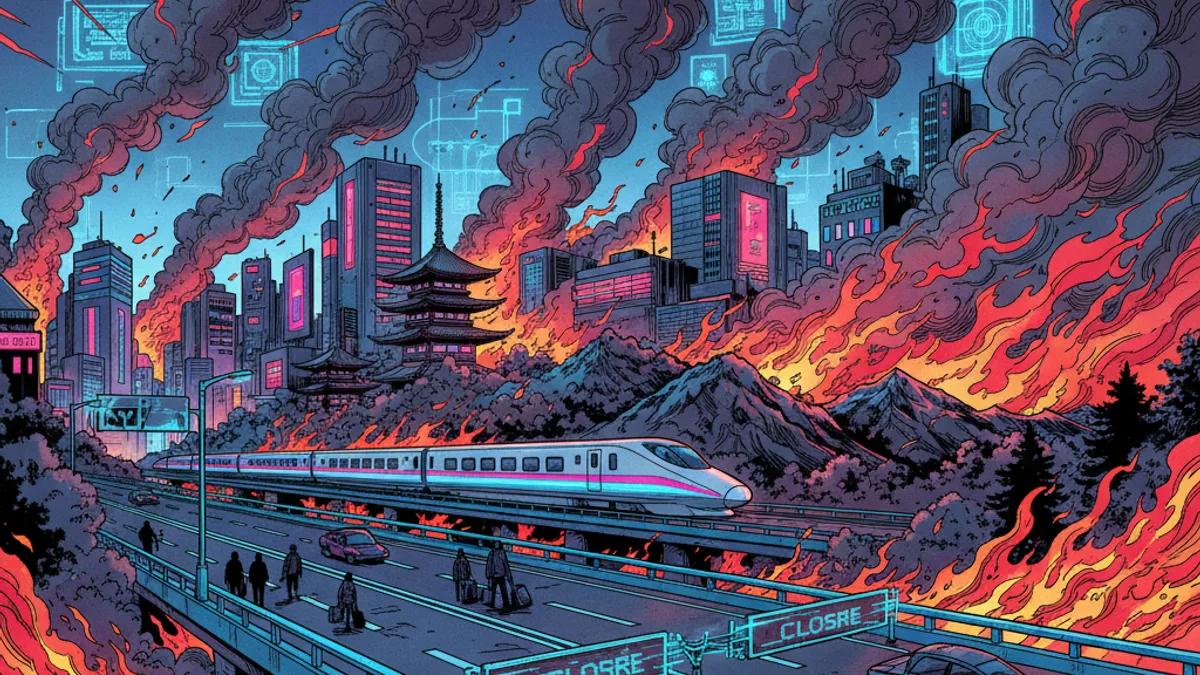
Multiple Wildfires Rage Across Northern Japan, Affecting Major Routes
Forest fires burn across Iwate, Fukushima, and Niigata prefectures, forcing evacuations of 458 people and closing major highways. Expats should monitor local alerts and prepare for air quality issues.
AI-written summary of Japanese reports; not human-reviewed; check the linked sources. How we write articles
Key Points
- • Otsuchi fire closes Sanriku Expressway section; plan alternative routes when traveling.
- • Kitakata City evacuated 178 households; follow evacuation orders with residence cards immediately.
- • Install Safety Tips app for multilingual emergency alerts across Japan.
- • Air quality may worsen downwind; stay indoors if smoke present.
Multiple forest fires continue to burn across northern Japan, with significant blazes in Iwate, Fukushima, and Niigata prefectures forcing evacuations, road closures, and widespread disruption to daily life. Foreign residents in these regions should stay informed about evacuation orders and prepare for potential air quality issues and transportation delays.
In Iwate Prefecture's Otsuchi Town, a mountain forest fire entered its sixth day on April 27, according to NHK. The blaze, which ignited on April 22, continues to spread despite ongoing firefighting efforts. The fire is burning in forested areas directly behind a local high school and has forced the closure of a section of the Sanriku Expressway, a major transportation artery connecting coastal communities in the Tohoku region. While firefighters have successfully prevented the flames from spreading to residential areas, the fire has expanded northward into neighboring mountains. Weather forecasters predicted rain for the afternoon of April 27, which authorities hoped would assist containment efforts.
The Otsuchi fire represents a significant challenge for a community still recovering from the 2011 tsunami. The expressway closure affects not only local commuters but also commercial traffic and tourists traveling along the Pacific coast. Residents and visitors should plan alternative routes and expect delays when traveling through the region.
In Fukushima Prefecture, a separate forest fire broke out near Kitakata City on the morning of April 26. The situation escalated quickly, prompting municipal authorities to issue evacuation orders for 178 households comprising 458 residents, according to NHK reporting. Firefighters suspended operations at 6:00 PM on April 26 due to darkness and planned to resume efforts on the morning of April 27. As of the latest reports, the fire remained uncontained.
Evacuation orders in Japan are serious directives that residents, including foreign nationals, must follow immediately. Those affected should proceed to designated evacuation centers, bringing emergency supplies, identification documents, residence cards, and essential medications. Non-Japanese speakers facing evacuation should seek assistance from local international associations or contact their embassies if needed.
Adding to regional concerns, Niigata Prefecture's Uonuma City reported another forest fire on the morning of April 26. According to NHK, firefighting operations were underway, but the blaze continued to spread throughout the day. Police and fire officials confirmed no injuries had been reported as of April 26 evening, though the situation remained fluid.
These simultaneous wildfires highlight Japan's vulnerability to forest fires during dry spring conditions. April typically sees lower rainfall and stronger winds, creating ideal conditions for fires to ignite and spread rapidly. The mountainous terrain characteristic of these regions makes firefighting particularly challenging, as difficult access limits the deployment of equipment and personnel.
For foreign residents throughout Japan, these events underscore the importance of disaster preparedness. Expats should familiarize themselves with local evacuation procedures and emergency alert systems. Most municipalities offer emergency notifications through apps and email services, with some providing multilingual support. The Safety Tips app, developed by the Japan Tourism Agency, provides emergency warnings in multiple languages and should be installed by all foreign residents.
Air quality may deteriorate in areas downwind from these fires. Residents experiencing smoke should remain indoors with windows closed, use air purifiers if available, and avoid strenuous outdoor activities. Those with respiratory conditions should be particularly cautious and ensure they have adequate supplies of necessary medications.
As climate patterns shift and dry conditions become more common, Japan may face increased wildfire risks. Staying informed through reliable sources like NHK, following local government instructions, and maintaining emergency preparedness kits will help foreign residents navigate these challenging situations safely.
Sources
This article was written by AI from these Japanese-language reports. Check them before acting on anything here.
- [1] NHK — original report (Japanese)
- [2] NHK — original report (Japanese)
- [3] NHK — original report (Japanese)
- [4] Livedoor News — original report (Japanese)
- [5] NHK — original report (Japanese)