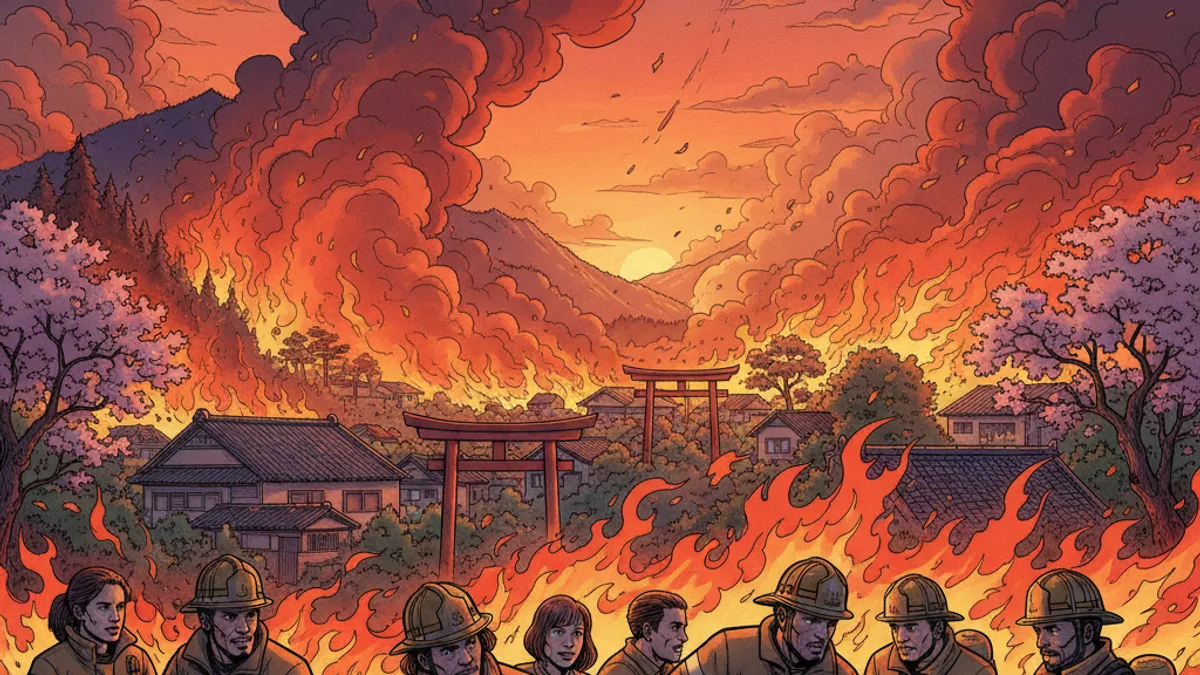
Otsuchi Wildfire Enters Fifth Day as 1,300 Personnel Battle Blaze
A wildfire in Otsuchi, Iwate Prefecture has entered its fifth day with 1,300 firefighters battling the blaze. Experts warn of prolonged emergency as flames spread beyond initial evacuation zones toward residential areas.
AI-written summary of Japanese reports; not human-reviewed; check the linked sources. How we write articles
Key Points
- • Wildfire ongoing since April 22 with 1,300 personnel deployed for firefighting operations.
- • Flames spreading beyond evacuation zones, approaching residential areas in multiple locations.
- • Experts warn of long-term firefighting effort due to widespread fire and terrain.
- • Government pledges increased national subsidies for recovery and evacuee support measures.
A massive wildfire in Otsuchi Town, Iwate Prefecture, has entered its fifth day with no end in sight, prompting warnings from experts about potential long-term impacts and raising concerns for residents in this northeastern coastal community still recovering from the 2011 tsunami.
According to NHK, approximately 1,300 firefighters and emergency personnel were deployed on April 26 to combat the blaze through ground-based firefighting operations. The fire, which began on April 22, has spread across extensive forested areas, with flames now approaching residential zones beyond the initial evacuation zones, according to local fire departments and town officials.
The scale of the firefighting effort is unprecedented for the region. Reports indicate that around 1,200 personnel are conducting water spraying operations from the ground, with some coastal areas utilizing seawater for firefighting due to limited freshwater resources in the mountainous terrain. The challenging topography and widespread nature of the fire have made aerial firefighting difficult, forcing crews to rely primarily on ground-based suppression methods.
Experts warn that the situation may deteriorate further. According to specialists interviewed by NHK, the fire has already spread across such a wide area that firefighting efforts face significant challenges, and residents should prepare for a prolonged emergency. The combination of dry conditions, difficult terrain, and the extensive burn area means containment could take considerably longer than initially anticipated.
For foreign residents living in Iwate Prefecture or nearby areas, this incident serves as a critical reminder of Japan's vulnerability to wildfires, particularly during dry seasons. The fire's progression has forced authorities to expand evacuation warnings beyond initially designated zones as flames advance toward populated areas. Local fire departments report an increasing number of locations where fires are approaching residential structures, creating urgent safety concerns.
The political response has been swift. Liberal Democratic Party Secretary-General Suzuki visited the fire scene and announced plans to develop support measures for evacuated residents. Significantly, he indicated that the government would pursue increased national subsidy rates for recovery efforts, recognizing the substantial financial burden facing this small coastal community.
This commitment to enhanced federal support is particularly important for Otsuchi, a town of approximately 10,000 residents that suffered devastating losses during the 2011 Great East Japan Earthquake and tsunami. The community has spent over a decade rebuilding, and this wildfire represents another significant setback requiring substantial resources.
For expats throughout Japan, several lessons emerge from this ongoing disaster. First, wildfire risk exists even in regions not typically associated with such events, particularly in mountainous areas during dry periods. Second, evacuation orders in Japan can expand rapidly as conditions change, making it essential to monitor local news and emergency alerts through multiple channels, including NHK's multilingual services.
Foreign residents should ensure they understand their local evacuation procedures and have emergency plans that account for potentially extended displacement. The Otsuchi fire demonstrates that even well-coordinated responses involving over a thousand personnel may require days or weeks to bring large-scale fires under control.
Additionally, this incident highlights the importance of registering with local authorities and your embassy. During extended emergencies, registered foreign residents receive critical updates and may access specific support services designed for non-Japanese speakers.
As the firefighting operation continues, authorities urge residents in affected areas to remain vigilant, follow all evacuation instructions immediately, and prepare emergency supplies for potential prolonged displacement. The situation in Otsuchi remains fluid, with fire behavior dependent on weather conditions and the challenging mountainous terrain that has hampered suppression efforts thus far.
Sources
This article was written by AI from these Japanese-language reports. Check them before acting on anything here.
- [1] NHK — original report (Japanese)
- [2] Livedoor News — original report (Japanese)
- [3] NHK — original report (Japanese)
- [4] NHK — original report (Japanese)
- [5] NHK — original report (Japanese)