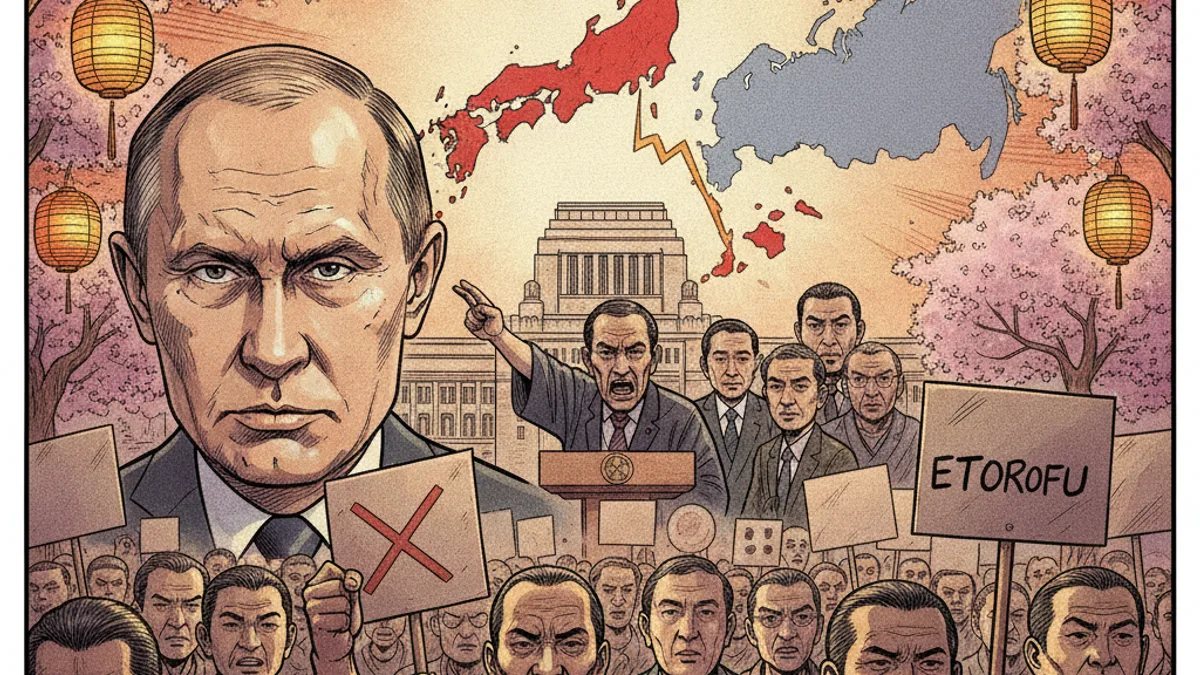
Putin's Visit to Etorofu Island Sparks Strong Protest from Japan
President Putin's first visit to disputed Etorofu Island on August 13, 2026, drew strong protests from Japan's government. Prime Minister Takamichi called it "absolutely unacceptable," while opposition leaders demanded policy changes toward Russia.
AI-written summary of Japanese reports; not human-reviewed; check the linked sources. How we write articles
Key Points
- • Putin made first-ever visit to disputed Etorofu Island on August 13, 2026.
- • Japanese Prime Minister called visit "absolutely unacceptable" and formally protested to Russia.
- • Opposition leaders demand policy shift including potential expulsion of Russian diplomats.
- • Territorial dispute prevents Japan-Russia peace treaty since World War II ended.
In a move that has significantly escalated tensions between Japan and Russia, President Vladimir Putin made an unprecedented visit to Etorofu Island (known as Iturup in Russian) on August 13, 2026. This marks the first time the Russian leader has visited the disputed Northern Territories, prompting immediate and forceful protests from the Japanese government.
According to NHK, the visit came as a sudden development that caught many observers by surprise. Prime Minister Fumio Takamichi responded swiftly, stating that the visit is "absolutely unacceptable" and directly conflicts with Japan's longstanding position that the Northern Territories are inherent Japanese territory. The Prime Minister emphasized that this action would affect the "medium to long-term relationship" between the two nations, signaling potential diplomatic consequences.
For foreign residents in Japan, this development represents more than just a diplomatic spat. The Northern Territories—comprising Etorofu, Kunashiri, Shikotan, and the Habomai island group—have been a contentious issue since the end of World War II, when Soviet forces occupied them. Japan has consistently maintained that these islands are illegally occupied, and the territorial dispute has prevented the two countries from signing a formal peace treaty to officially end World War II hostilities.
The political response within Japan has been notably sharp. Yuichiro Tamaki, leader of a major political party, expressed particular frustration with what he characterized as Russia taking advantage of Japan. As reported by Livedoor News, Tamaki stated that Japan is being "looked down upon too much" and called for a fundamental shift in Japan's Russia policy. He identified six specific problem areas, including the dispatch of economic delegations to Russia, and demanded concrete actions such as expelling suspected Russian spies from Japanese territory.
Experts interviewed by NHK have offered various interpretations of Putin's motivations for this visit. The timing appears calculated to assert Russian sovereignty over the disputed territories while Japan's government navigates complex domestic and international challenges. The visit serves as a clear signal that Russia has no intention of returning the islands to Japanese control in the foreseeable future.
For expats living in Japan, this incident provides important context for understanding Japanese foreign policy priorities and national sentiment. The Northern Territories issue remains deeply emotional for many Japanese citizens, particularly those with family connections to the islands. The dispute frequently appears in Japanese media and political discourse, and foreign residents may notice increased discussion of Russia-Japan relations in coming weeks.
The practical implications for expats are primarily indirect but worth noting. Any deterioration in Japan-Russia relations could affect business opportunities, travel connections, and cultural exchanges between the two countries. Those working in industries with ties to Russia or involved in diplomatic circles should monitor developments closely.
Japan's response demonstrates the government's commitment to maintaining its territorial claims despite Russia's actions. The strong language used by Prime Minister Takamichi—describing the visit as "absolutely unacceptable"—reflects the seriousness with which Tokyo views this development. This firm stance aligns with Japan's broader security policy, which has become increasingly assertive in recent years amid regional tensions.
Looking ahead, this visit is likely to complicate any potential negotiations over the territorial dispute. While economic cooperation between Japan and Russia has continued in certain sectors despite political tensions, Putin's visit to Etorofu may prompt Japanese policymakers to reconsider these arrangements, as suggested by opposition leaders like Tamaki.
For foreign residents, understanding this historical grievance helps explain certain aspects of Japanese political culture and foreign policy decision-making. The Northern Territories dispute remains one of Japan's most significant unresolved post-war issues, and developments like Putin's visit will continue to shape the bilateral relationship for years to come.
Sources
This article was written by AI from these Japanese-language reports. Check them before acting on anything here.
- [1] NHK — original report (Japanese)
- [2] Livedoor News — original report (Japanese)
- [3] NHK — original report (Japanese)
- [4] Yahoo! Japan News — original report (Japanese)