Record Heat Wave Sends 4,500 to Hospital, Damages Airport Infrastructure
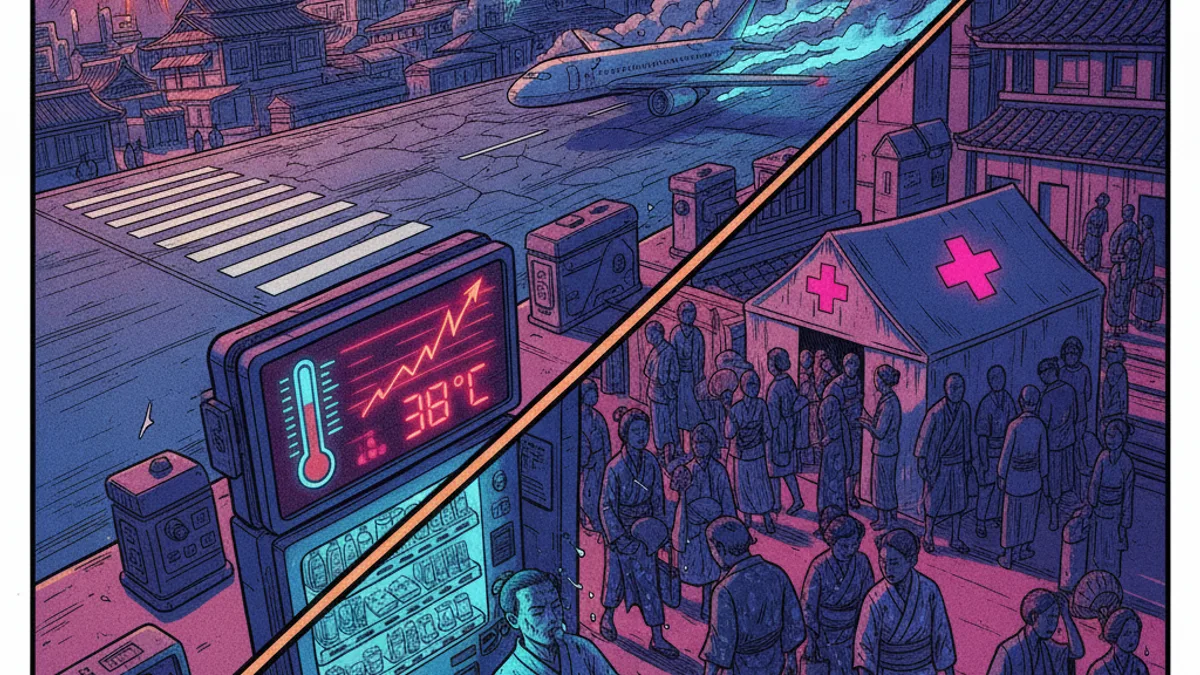
Over 4,500 people hospitalized for heatstroke in one week as temperatures hit 38°C across Japan. Extreme heat damaged Haneda Airport runway, causing flight disruptions. Authorities urge air conditioning use and hydration.
AI-written summary of Japanese reports; not human-reviewed; check the linked sources. How we write articles
Key Points
- • Heatstroke hospitalizations exceeded 4,500 people, triple the previous week's total.
- • Temperatures reaching 38°C expected in Toyama, Niigata, and Yamanashi prefectures.
- • Use air conditioning consistently and drink water regularly throughout the day.
- • Extreme heat caused Haneda Airport runway damage and major flight disruptions.
Japan is experiencing a dangerous heat wave that has sent heatstroke hospitalizations soaring and caused unprecedented infrastructure damage, including the temporary closure of a runway at Tokyo's Haneda Airport. Foreign residents should take immediate precautions as temperatures reach life-threatening levels across the country.
According to the Fire and Disaster Management Agency, over 4,500 people were hospitalized for heatstroke in the week ending July 12—more than triple the previous week's figure. The sharp increase coincides with the end of the rainy season and the onset of intense summer heat across eastern and western Japan.
Temperatures have reached dangerous levels throughout the country. NHK reports that on July 14, temperatures in the Tokai and Shikoku regions exceeded 38 degrees Celsius (100.4 degrees Fahrenheit). The forecast for July 15 predicts similarly extreme conditions, with Toyama, Niigata, and Yamanashi prefectures expected to reach 38 degrees. Even the typically cooler Tohoku region in northern Japan is anticipated to experience temperatures above 35 degrees Celsius.
The heat wave has exposed vulnerabilities in Japan's infrastructure. On July 13, Haneda Airport experienced significant flight disruptions after extreme temperatures caused runway surface deterioration. According to the Ministry of Land, Infrastructure, Transport and Tourism, the intense heat caused moisture that had entered cracks in the runway surface to expand, weakening the pavement and causing sections to peel away. The incident resulted in major delays and cancellations, affecting thousands of travelers.
This infrastructure damage represents an unusual consequence of extreme heat in Japan and highlights the severity of current conditions. While Japan's infrastructure is generally well-maintained, the intensity of this heat wave has exceeded normal parameters.
Health authorities are urging residents—both Japanese nationals and foreign residents—to take heatstroke prevention seriously. The sudden temperature spike following the rainy season is particularly dangerous, as bodies have not had time to acclimatize to the heat. According to Yahoo Japan, this post-rainy season period sees a dramatic increase in heat-related illnesses precisely because of this lack of acclimatization.
Experts recommend several critical precautions. First, use air conditioning appropriately and consistently, even if you're concerned about electricity costs. Heat-related illness can be life-threatening, and the health risks far outweigh utility expenses. Second, drink water regularly throughout the day, even when you don't feel thirsty. Dehydration can occur quickly in extreme heat. Third, avoid unnecessary outdoor activities during peak heat hours, typically between 10 a.m. and 4 p.m.
For expats unfamiliar with Japanese summers, this heat wave may be more intense than expected. Japan's high humidity levels make the heat feel even more oppressive than the actual temperature reading suggests. Unlike dry heat, humid heat prevents sweat from evaporating efficiently, making it harder for the body to cool itself.
Foreign residents should be aware that heat-related symptoms include dizziness, nausea, headache, rapid heartbeat, and confusion. If you or someone near you experiences these symptoms, move to a cool location immediately, drink water, and seek medical attention if symptoms persist. In emergencies, call 119 for an ambulance.
The Japan Meteorological Agency continues to issue heat warnings across multiple prefectures. These warnings should be taken seriously, as they indicate conditions where heatstroke becomes a significant risk even for healthy individuals.
As climate patterns continue to evolve, such extreme weather events may become more frequent. Foreign residents should familiarize themselves with heat safety protocols and ensure their living spaces have adequate cooling. Checking on elderly neighbors and those living alone is also recommended, as these groups face higher risks during heat waves.
While Japan's infrastructure and emergency services are well-equipped to handle extreme weather, individual preparedness remains essential. Stay informed through weather updates, modify outdoor plans accordingly, and prioritize health and safety during this dangerous heat period.
Sources
This article was written by AI from these Japanese-language reports. Check them before acting on anything here.
- [1] NHK — original report (Japanese)
- [2] NHK — original report (Japanese)
- [3] Yahoo! Japan News — original report (Japanese)
- [4] NHK — original report (Japanese)
- [5] NHK — original report (Japanese)