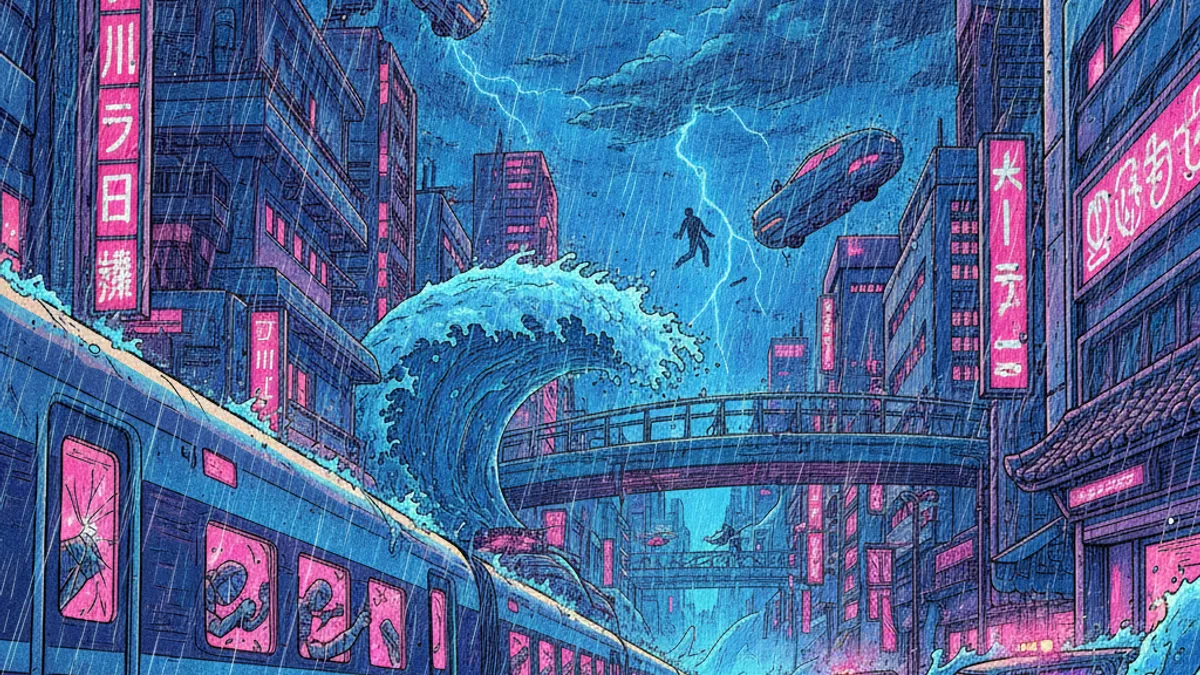
Record Rainfall Disrupts Transportation and Claims Life in Eastern Japan
Record rainfall across eastern Japan has caused one death, major train disruptions, and dangerous flooding. Weather authorities warn heavy rain may continue until October, urging residents to stay alert.
Key Points
- • Heavy rain warnings continue through September 10th across eastern Japan regions.
- • JR lines in Chiba suspended; expect transportation delays and overcrowding.
- • Never drive through flooded underpasses; drainage systems may fail during storms.
- • Check municipal websites for multilingual emergency information and evacuation alerts.
Eastern Japan is experiencing severe transportation disruptions and dangerous flooding conditions as record-breaking rainfall continues to impact the region, with authorities warning that unsettled weather may persist until October.
According to the Japan Meteorological Agency (JMA), the Izu Islands off Tokyo initially received a Level 5 Special Warning for landslide disasters, the highest alert level, before being downgraded to a Level 4 Emergency Warning on the morning of September 8th. The northern Izu Islands and southern Chiba Prefecture have experienced record-breaking precipitation, with soil disaster risks remaining extremely high even after the alert downgrade.
The heavy rainfall has already claimed at least one life. On September 7th, a woman in her 60s died after her vehicle became submerged in a flooded underpass in Iwaki City, Fukushima Prefecture, according to NHK. Investigators discovered that while drainage pumps were installed at the location, they failed to function properly because the receiving river's water level had risen too high, preventing adequate drainage. Iwaki City officials have pledged to implement measures to prevent similar tragedies.
Transportation networks across the affected regions have faced significant disruptions. JR East Japan reported that multiple train lines in Chiba Prefecture suspended operations from first service on September 8th. The Kururi Line between Kururi Station and Kazusa-Kameyama Station will remain suspended for the entire day, while other sections of the line also experienced service interruptions.
In Tokyo, the JR Saikyo Line temporarily reduced service frequency due to the heavy rain, causing severe overcrowding at stations. Video footage from Akabane Station on the morning of September 7th showed platforms overflowing with commuters waiting for trains. The Tohoku Shinkansen also experienced a roughly 2.5-hour suspension following a separate fatal incident involving a woman on the tracks in Utsunomiya City, though service has since resumed.
Meteorologist Tsuyoshi Yazawa warned that the current weather pattern shows no signs of immediate improvement. A seasonal rain front stretching across eastern Japan continues to generate heavy precipitation, with a tropical low-pressure system potentially merging with and intensifying the front. Weather forecasters indicate that the Tokai region faces particular risk of linear precipitation bands—a phenomenon that produces extremely intense, concentrated rainfall.
The JMA has issued warnings for heavy rain affecting areas from Shikoku through the southern Tohoku region, with the Kanto area expected to experience continued downpours through approximately September 10th. Yazawa noted that residents should not expect clear autumn weather until October.
For foreign residents in affected areas, understanding Japan's five-level disaster warning system is crucial. Level 5 represents an emergency situation where disasters may have already occurred, while Level 4 indicates residents in high-risk areas should evacuate immediately. Even with the Izu Islands' alert downgraded to Level 4, the danger remains significant.
Expats should monitor local weather reports closely and avoid unnecessary travel, particularly during commuting hours when transportation delays are most severe. Never attempt to drive through flooded roads or underpasses, as the Iwaki tragedy demonstrates the fatal risks involved. Water levels can rise rapidly and drainage systems may fail during extreme weather events.
Local governments typically provide evacuation information through multiple channels, including municipal websites, emergency alert systems, and broadcast media. Many municipalities now offer multilingual emergency information services—check your local city or ward office website for available resources in English and other languages.
As climate patterns continue shifting, foreign residents should familiarize themselves with Japan's disaster preparedness systems and maintain emergency supplies including food, water, flashlights, and portable chargers. The current weather event underscores the importance of staying informed and prepared for natural disasters while living in Japan.
Sources
This article was written by AI from these Japanese-language reports. Check them before acting on anything here.
- [1] Yahoo! Japan News — original report (Japanese)
- [2] NHK — original report (Japanese)
- [3] NHK — original report (Japanese)
- [4] NHK — original report (Japanese)
- [5] Livedoor News — original report (Japanese)
- [6] NHK — original report (Japanese)
- [7] NHK — original report (Japanese)
- [8] NHK — original report (Japanese)
AI-written summary of Japanese reports; not human-reviewed; check the linked sources. How we write articles