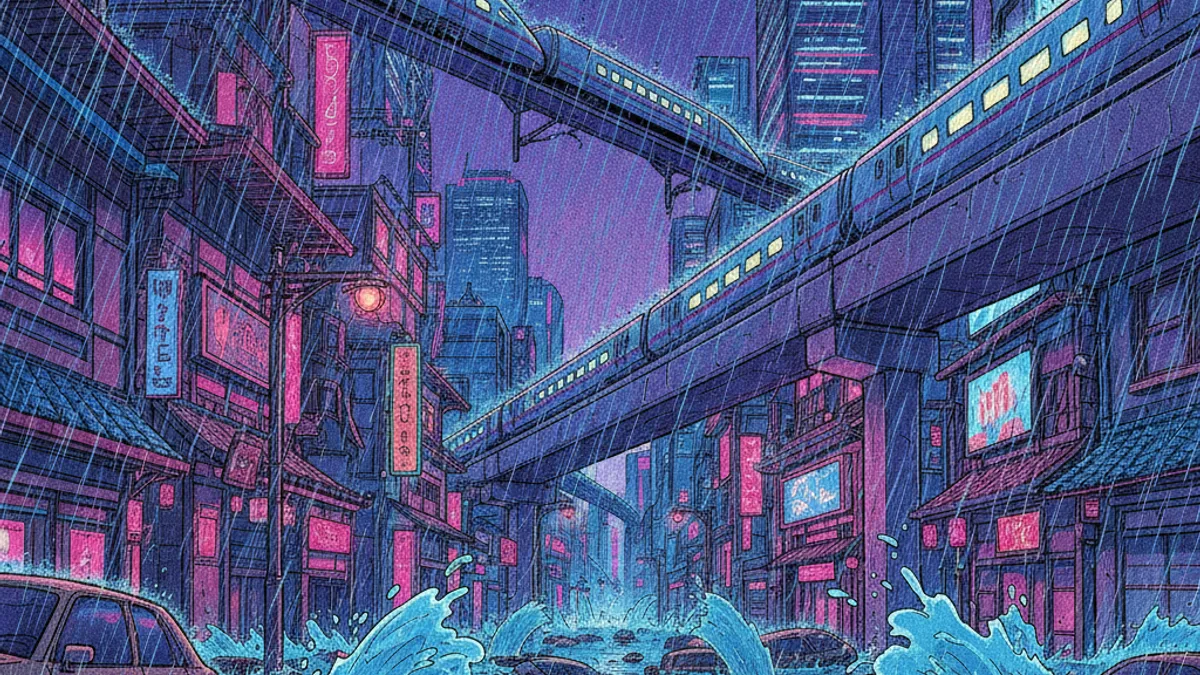
Record Rainfall Floods Tokyo and Chiba, Disrupting Major Train Lines
Record rainfall on August 22 caused severe flooding across Tokyo and Chiba, with streets submerged and manholes overflowing. JR Sotobo Line resumed full service August 23, one day ahead of schedule.
Key Points
- • Record rainfall triggered emergency weather alerts across southern Kanto on August 22.
- • JR Sotobo Line resumed full service from first trains on August 23.
- • Register for local government emergency alerts to receive multilingual weather warnings.
- • Check hazard maps to identify flood-risk zones in your neighborhood.
Tokyo and surrounding areas experienced severe flooding on August 22, 2026, following record-breaking rainfall that brought transportation to a standstill and caused widespread infrastructure damage across the Kanto region.
According to NHK, intense rainfall struck southern Kanto on the evening of August 22, triggering multiple "record short-term heavy rain" emergency weather alerts from the Japan Meteorological Agency. The downpour was so severe that it overwhelmed drainage systems throughout the metropolitan area, creating hazardous conditions for residents and commuters alike.
In Tokyo's Suginami Ward, streets became impassable as floodwaters submerged roads and swept away signage, according to video footage reported by NHK. The situation was similarly dramatic in Sumida Ward, where manhole covers were unable to contain the volume of water, causing geysers to erupt from the sewage system, as reported by Livedoor News. The phenomenon also affected parts of Saitama Prefecture, highlighting the regional scope of the weather emergency.
The rainfall had significant impacts on public transportation, particularly affecting rail services that many foreign residents rely on for their daily commutes. JR East's Sotobo Line, which connects Tokyo with coastal areas of Chiba Prefecture, suspended operations on portions of the route due to flooding and safety concerns. The line serves as a vital link for commuters traveling between Chiba and the capital, and its closure left thousands of passengers stranded or forced to seek alternative routes.
However, there is positive news for commuters. According to NHK, recovery work on the Sotobo Line progressed faster than initially anticipated. The railway company announced that full service would resume from the first trains on August 23—one day ahead of the original schedule. This accelerated timeline demonstrates the efficiency of Japan's infrastructure recovery systems, though it also underscores the importance of staying informed about service status during extreme weather events.
For foreign residents, this event serves as an important reminder of Japan's vulnerability to sudden, intense rainfall, particularly during the late summer season when atmospheric conditions can produce localized extreme weather. The "record short-term heavy rain" alerts issued by meteorological authorities represent the highest level of precipitation warning and should be taken seriously.
Expats living in Tokyo and surrounding prefectures should familiarize themselves with their local area's flood risk zones, which are typically indicated on hazard maps (ハザードマップ) available from ward and city offices or their websites. Low-lying areas, locations near rivers, and neighborhoods with older drainage infrastructure are particularly susceptible to rapid flooding during intense rainfall.
During such weather emergencies, it's crucial to monitor official information sources. NHK provides continuous coverage in Japanese, while some municipalities offer emergency alerts in multiple languages through apps and email services. Foreign residents should register for their local government's emergency notification system to receive real-time updates about weather warnings and evacuation advisories.
Transportation disruptions are common during severe weather, and passengers should check railway company websites and apps before traveling. JR East and other railway operators typically provide service updates in English on their official platforms. Having alternative route plans and allowing extra travel time during weather warnings can help avoid being stranded.
The rapid recovery of the Sotobo Line demonstrates Japan's infrastructure resilience, but the dramatic scenes of flooding in central Tokyo neighborhoods show that even well-prepared cities can be overwhelmed by extreme weather. As climate patterns continue to shift, foreign residents should treat disaster preparedness as an essential aspect of life in Japan, ensuring they have emergency supplies, understand evacuation procedures, and know how to access multilingual emergency information when severe weather strikes.
Sources
This article was written by AI from these Japanese-language reports. Check them before acting on anything here.
- [1] NHK — original report (Japanese)
- [2] NHK — original report (Japanese)
- [3] Livedoor News — original report (Japanese)
AI-written summary of Japanese reports; not human-reviewed; check the linked sources. How we write articles