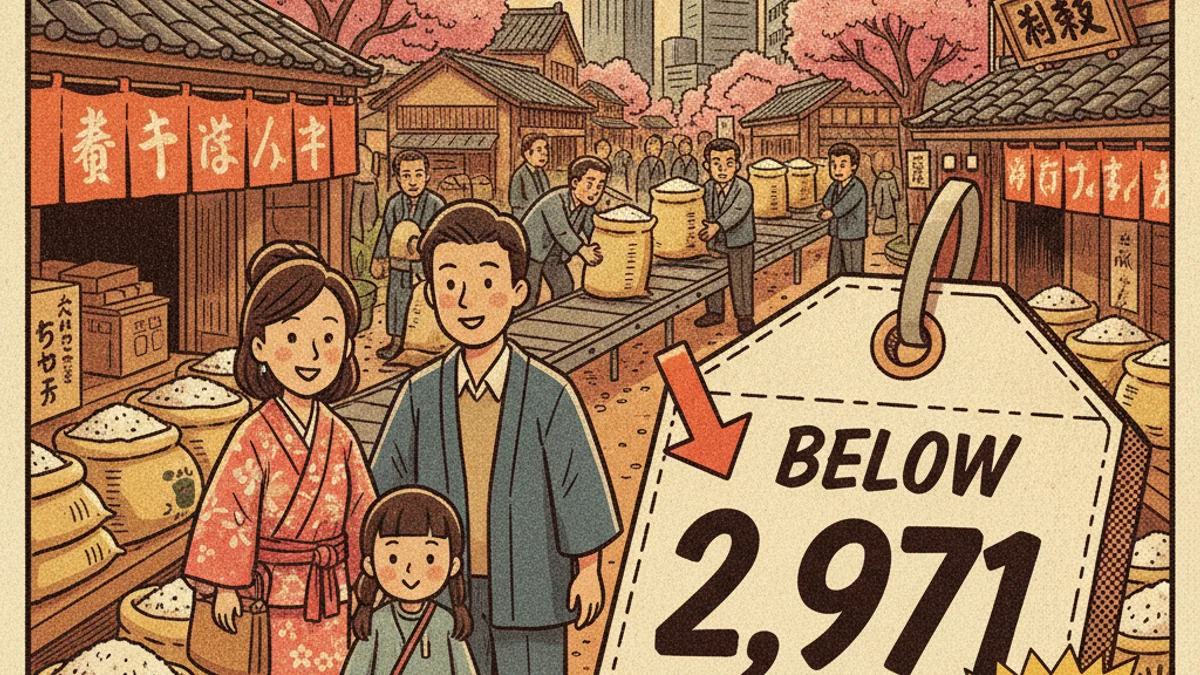
Rice Prices Drop Below 3,000 Yen as Government Buyback Takes Effect
Rice prices fell to 2,971 yen per 5kg, the first time below 3,000 yen since 2024. The government will buy back 210,000 tons of reserve rice, signaling supply stabilization and offering household budget relief.
Key Points
- • Rice prices dropped to 2,971 yen per 5kg bag nationwide.
- • Government buying back 210,000 tons of reserve rice from suppliers.
- • Prices below 3,000 yen mark first time since September 2024.
- • Autumn harvest season may bring additional promotional pricing opportunities.
Foreign residents across Japan will find some relief at supermarket checkout counters as rice prices have fallen below 3,000 yen per 5-kilogram bag for the first time in nearly two years, marking a significant shift in the country's staple food market.
According to NHK, the average price of rice at supermarkets nationwide reached 2,971 yen per 5-kilogram bag (including tax) during the week ending September 13, 2026. This represents a 32-yen decrease from the previous week and marks the first time prices have dropped into the 2,000-yen range since September 2024.
For expats living in Japan, where rice forms the foundation of most meals, this price reduction offers tangible household budget relief. A typical household consuming one 5-kilogram bag per month could save approximately 380 yen monthly compared to peak prices, translating to roughly 4,500 yen annually.
The price decline comes as the Ministry of Agriculture, Forestry and Fisheries announced on September 18 that it will buy back 210,000 tons of government reserve rice from eight collection businesses, according to NHK. This rice was originally released from government stockpiles last year during a period of supply concerns and elevated prices.
The government's strategic reserve system, designed to stabilize rice supplies and prices during shortages or emergencies, operates by purchasing rice during abundant harvests and releasing it when supplies tighten. The current buyback signals that domestic rice production has normalized and market supplies have recovered sufficiently to warrant restocking government reserves.
While the price drop benefits consumers, Yahoo Japan Business reports there are concerns within the agricultural sector. Rice farmers, who faced challenging market conditions in recent years, may experience reduced income as wholesale prices follow retail trends downward. This dynamic reflects the ongoing tension in Japanese agricultural policy between supporting domestic producers and ensuring affordable food prices for consumers.
For foreign residents, particularly those from countries where rice is less central to daily meals, understanding Japan's rice market dynamics provides insight into broader economic and policy priorities. Rice cultivation remains culturally significant in Japan, with government policies heavily influencing production levels, pricing, and distribution. The commodity receives more policy attention than most other agricultural products, making price movements noteworthy indicators of both agricultural policy and consumer welfare concerns.
Expats shopping at supermarkets should note that while prices have declined, they remain elevated compared to pre-2024 levels. The current 2,971-yen average still represents a significant increase from historical norms, reflecting ongoing structural factors including labor shortages in agriculture, climate-related production challenges, and evolving consumption patterns.
The timing of this price reduction coincides with the autumn harvest season, when fresh rice typically enters the market. Consumers may find even better deals by purchasing newly harvested rice varieties, which often carry promotional pricing as retailers compete for market share.
Looking ahead, the government's decision to replenish reserves suggests confidence in stable supply conditions for the foreseeable future. However, Japan's rice market remains vulnerable to weather events, particularly typhoons and unseasonable temperatures that can impact harvest yields. Climate change concerns continue to influence long-term agricultural planning and policy discussions.
For budget-conscious expats, this presents an opportune moment to stock up on rice, particularly if storage space permits. Properly stored in cool, dry conditions, rice can maintain quality for extended periods, allowing households to lock in current lower prices.
The rice price trajectory will likely continue reflecting the interplay between government policy interventions, domestic production levels, and changing consumer demand patterns as Japan's population demographics evolve.