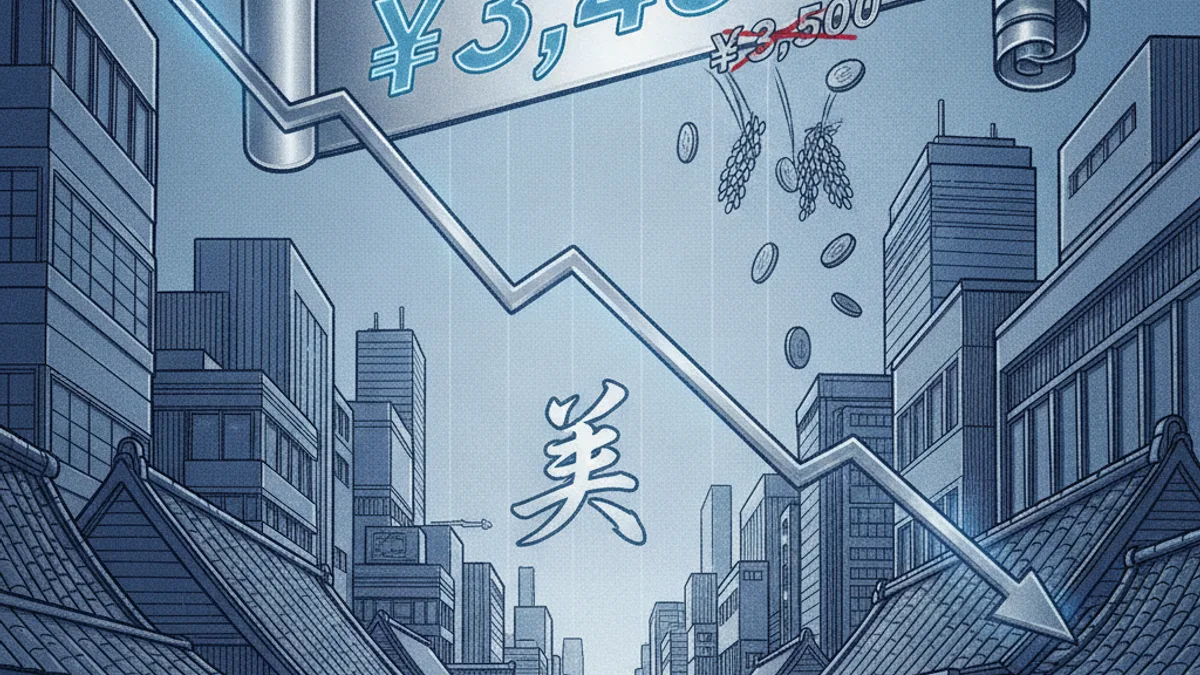
Rice Prices Fall Below ¥3,500 per 5kg for First Time Since Early 2025
Rice prices at Japanese supermarkets dropped below ¥3,500 per 5kg for the first time since early 2025, reaching ¥3,458 as inventory levels normalize, offering financial relief to households.
Key Points
- • Rice prices fell to ¥3,458 per 5kg during week ending July 5, 2026.
- • First time below ¥3,500 threshold in approximately 18 months of elevated pricing.
- • Inventory levels now exceed seasonal averages, stabilizing retail prices nationwide.
- • Good time to stock up as current supply suggests continued price stability.
Foreign residents in Japan are seeing welcome relief at supermarket checkout counters as rice prices have dropped below ¥3,500 per 5-kilogram bag for the first time in approximately 18 months. According to NHK, the average price for rice sold at supermarkets nationwide during the week ending July 5, 2026, reached ¥3,458 per 5kg including tax, marking a significant milestone in the normalization of Japan's rice market.
This price decline represents a notable shift from the elevated costs that have challenged household budgets since early 2025. The drop comes as rice inventory levels across Japan have stabilized and now exceed typical seasonal averages, creating downward pressure on retail prices as both wholesalers and retailers adjust their pricing strategies in response to improved supply conditions.
For expats living in Japan, where rice forms a dietary staple regardless of cultural background, this development offers tangible financial relief. A 5-kilogram bag of rice typically lasts a small household approximately two to three weeks, meaning the price reduction could translate to savings of several thousand yen annually for regular rice consumers. The timing is particularly significant as it coincides with the summer season when household food expenses often increase.
The price trajectory of rice in Japan has been closely monitored by government agencies and consumer advocacy groups, as rice remains a politically and culturally sensitive commodity. Unlike many other food items, rice prices in Japan are influenced by domestic production policies, import restrictions, and strategic reserve management. The recent price stabilization suggests that the supply chain disruptions and inventory concerns that drove prices above ¥3,500 in late 2024 and early 2025 have been successfully addressed.
Retailers and wholesalers have responded to the improved inventory situation by implementing competitive pricing strategies. According to NHK's reporting, the combination of above-average stockpiles and normalized distribution channels has enabled these price adjustments. This market dynamic benefits consumers directly, as supermarkets compete for customer traffic by offering more attractive rice prices.
For foreign residents shopping at Japanese supermarkets, this is an opportune time to stock up on rice, particularly if storage space permits. While rice prices can fluctuate based on harvest outcomes and policy decisions, the current inventory levels suggest that prices should remain relatively stable in the near term. Expats should note that Japanese rice varieties differ in price, with premium brands like Koshihikari and Akitakomachi typically commanding higher prices than standard varieties, though all categories have seen downward price movement.
The practical implications extend beyond immediate grocery savings. Lower rice prices can help offset inflationary pressures in other food categories, making overall household budgeting more manageable for foreign residents. This is especially relevant for families with children or those on fixed incomes who have felt the squeeze of elevated food costs over the past year and a half.
Looking ahead, the rice market will likely continue to be influenced by the upcoming harvest season and government inventory management policies. However, the current trend indicates that the period of unusually high rice prices has ended, returning to more historically typical pricing levels. For expats navigating life in Japan, this represents one area where cost-of-living pressures are easing, providing a small but meaningful improvement to household finances.
As Japan's food market continues to adjust to various economic pressures, the normalization of rice prices serves as a positive indicator for consumers and demonstrates how improved supply chain management can directly benefit household budgets across the country.