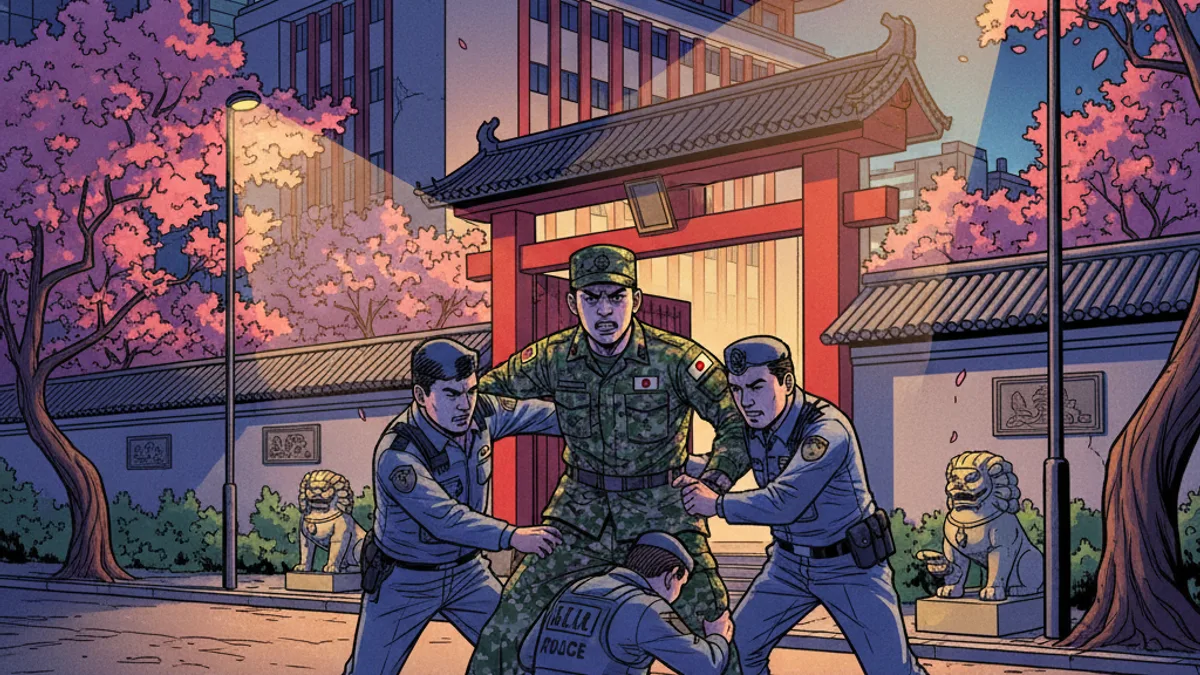
SDF Member Arrested After Intrusion at Chinese Embassy in Tokyo
A 23-year-old GSDF member was arrested for intruding on Chinese Embassy grounds in Tokyo, allegedly to confront the ambassador about anti-Japan statements and possibly threatening diplomats.
Key Points
- • GSDF third-class lieutenant arrested March 24 for Chinese Embassy intrusion in Tokyo.
- • Suspect allegedly wanted to confront ambassador about hardline statements against Japan.
- • Reports indicate possible threats made against Chinese diplomatic personnel under investigation.
- • Embassy intrusions are serious criminal offenses regardless of perpetrator's nationality or intentions.
A 23-year-old member of Japan's Ground Self-Defense Force (GSDF) was arrested on March 24, 2026, after allegedly intruding onto the grounds of the Chinese Embassy in Tokyo's Minato Ward. The incident, which occurred on the morning of March 24, has raised serious questions about diplomatic security and the conduct of Japan's military personnel.
According to NHK, the arrested individual, a third-class lieutenant (3等陸尉), was taken into custody on suspicion of building intrusion. During police questioning, the GSDF member reportedly stated that he "wanted to meet with the ambassador to tell him to refrain from making hardline statements against Japan." This statement suggests the intrusion was motivated by political concerns rather than any personal grievance.
The incident takes on additional gravity given reports from Livedoor News indicating that the suspect may have also made threats against Chinese diplomatic personnel. According to one report, the individual allegedly threatened to "kill Chinese diplomats," though the exact nature and timing of these threats remain under investigation by Tokyo Metropolitan Police.
The Chinese Embassy in Tokyo, located in the upscale Minato Ward, is considered foreign territory under international law, making any unauthorized entry a serious diplomatic and legal matter. Embassy grounds are protected by the Vienna Convention on Diplomatic Relations, which Japan has signed and ratified. Unauthorized intrusion onto diplomatic premises is treated as a criminal offense under Japanese law, regardless of the perpetrator's intentions.
For foreign residents in Japan, this incident serves as an important reminder of the legal protections surrounding diplomatic facilities. All embassies and consulates operate under special legal status, and any unauthorized entry—even with non-violent intentions—can result in arrest and prosecution. This applies equally to Japanese nationals and foreign residents.
The arrest of an active-duty SDF member adds another layer of concern to the incident. Japan's Self-Defense Forces maintain strict codes of conduct for their personnel, and members are expected to remain politically neutral and avoid actions that could compromise Japan's diplomatic relations. The involvement of a military officer in what appears to be a politically motivated intrusion is highly unusual and will likely prompt internal investigations within the GSDF.
The timing of this incident comes amid ongoing tensions in Sino-Japanese relations, though Japanese authorities have not indicated whether recent diplomatic developments played any role in motivating the suspect's actions. The individual's reference to "hardline statements" suggests he may have been responding to recent diplomatic rhetoric, though police have not confirmed specific triggers for the intrusion.
Diplomatic security experts note that while embassy intrusions are relatively rare in Japan, this incident highlights potential vulnerabilities in protecting diplomatic facilities. The Chinese Embassy, like other major diplomatic missions in Tokyo, maintains security personnel, but the details of how the suspect gained access to the grounds have not been publicly disclosed.
For the foreign community in Japan, this incident underscores several important points about living in a country with complex regional diplomatic relationships. While Japan maintains a safe and stable environment for residents and visitors, political tensions with neighboring countries occasionally surface in unexpected ways. Foreign residents should remain aware of their surroundings near diplomatic facilities and avoid any actions that could be construed as interfering with diplomatic operations.
The case also highlights Japan's serious approach to protecting diplomatic personnel and property. Regardless of personal political views, Japanese law enforcement treats threats against diplomats and intrusions onto embassy grounds as major offenses requiring swift legal action.
As investigations continue, the suspect remains in police custody facing potential prosecution for building intrusion and possibly additional charges related to the alleged threats. The incident will likely prompt reviews of security protocols at diplomatic facilities throughout Tokyo and may result in disciplinary action within the Self-Defense Forces.