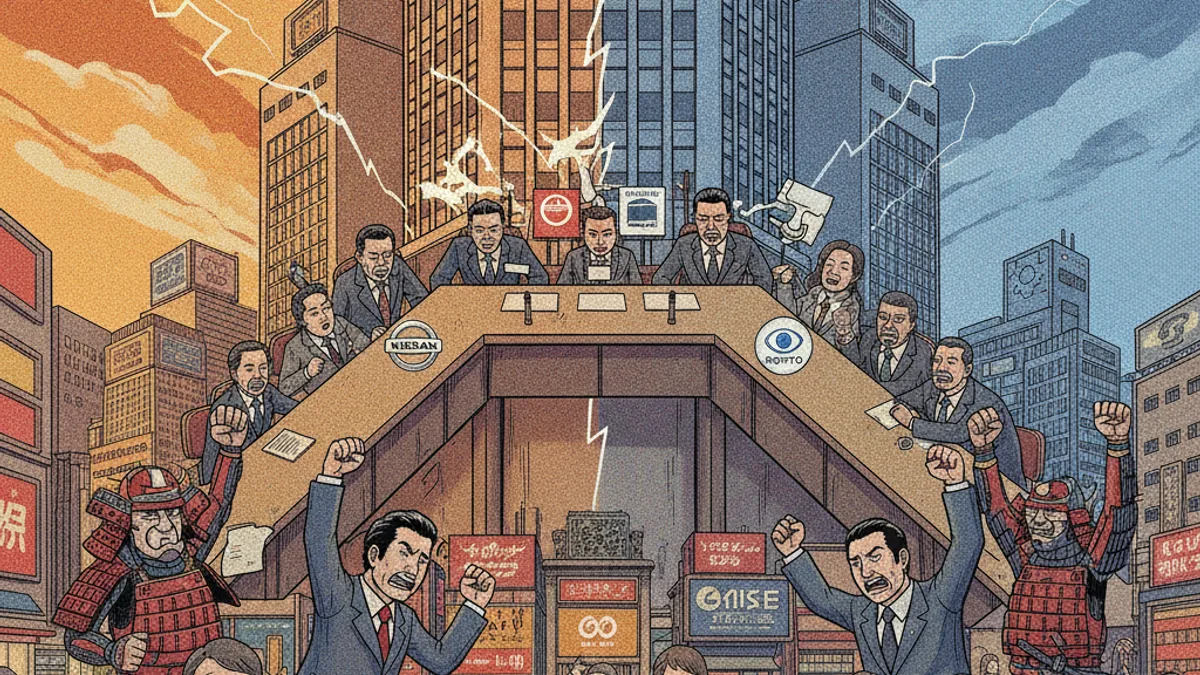
Shareholder Activism Surges at Japanese Companies as Board Battles Intensify
Shareholder activism reached record levels at Japanese AGMs in June 2026, with investors challenging management at Nissan, KADOKAWA, and Rohto Pharmaceutical, signaling significant corporate governance changes affecting employees and investors.
Key Points
- • Nissan rejected board member reappointment with only 48% shareholder approval on June 24.
- • Shareholder proposals from activist investors hit record highs during 2026 AGM season.
- • KADOKAWA and Rohto Pharmaceutical defeated proposals to remove top executives despite activist pressure.
- • Corporate governance battles may affect workplace restructuring and investment returns for expats.
Foreign residents working for or investing in Japanese companies are witnessing a significant shift in corporate governance as shareholder activism reaches unprecedented levels during this year's annual general meeting (AGM) season. The week of June 24, 2026, marked the peak of shareholder meetings across Japan, with activist investors challenging management decisions at some of the country's most prominent corporations.
According to NHK, shareholder proposals from activist investors have reached record highs this year, with several cases involving demands for management shake-ups at major firms. The trend reflects growing international pressure on Japanese companies to improve corporate governance and enhance shareholder value, a development that could reshape workplace cultures and business practices for employees and investors alike.
The most notable case involved Nissan Motor Company, where shareholders rejected the reappointment of outside director Motoo Nagai, a former executive from Mizuho Financial Group. NHK reported that Nagai received only 48% approval from shareholders, falling short of the majority needed for reappointment. The vote became particularly significant because major shareholder Renault abstained from voting, raising questions about the future direction of Nissan's management and its alliance relationships. This rejection of a board member at such a prominent automaker signals that Japanese shareholders are increasingly willing to challenge management recommendations.
At KADOKAWA Corporation, a major publisher and anime production company, shareholders voted on June 24 on a proposal from an investment fund demanding the removal of the company's president, citing poor business performance. According to NHK, the proposal was rejected by a majority of shareholders, allowing current management to remain in place. However, the mere submission of such a proposal at a company central to Japan's entertainment industry demonstrates the expanding reach of activist shareholders into diverse sectors of the Japanese economy.
Rohto Pharmaceutical also faced shareholder challenges during its Osaka meeting on June 24. An overseas investment fund, described by NHK as an activist investor, proposed removing the founding family's chairman from his position. Despite the activist push, shareholders voted down the proposal, maintaining the traditional leadership structure. The case illustrates the ongoing tension between Japan's family-controlled corporate traditions and international investors seeking governance reforms.
For expats working in Japan's corporate sector, these developments signal potential changes in workplace dynamics and decision-making processes. Companies facing shareholder pressure may implement restructuring measures, shift strategic priorities, or modify compensation structures to satisfy investor demands. Foreign employees should stay informed about shareholder proposals at their employers, as approved measures could affect job security, career advancement opportunities, or corporate culture.
Investors among Japan's expat community should pay particular attention to AGM schedules and voting results. Shareholder activism can create stock price volatility in the short term but may drive long-term value creation through improved governance. Understanding the dynamics between management, founding families, and activist investors provides crucial context for investment decisions in Japanese equities.
The surge in shareholder proposals also reflects broader changes in Japanese business culture, gradually moving away from consensus-driven, management-friendly governance toward greater accountability to shareholders. This shift aligns Japan more closely with Western corporate governance standards, potentially making Japanese companies more attractive to international talent and investment.
As this AGM season demonstrates, the days of rubber-stamp approval for management proposals at Japanese companies are fading. Whether working for or investing in Japanese corporations, expats should recognize that corporate governance battles are becoming a regular feature of Japan's business landscape, with real implications for employment stability, investment returns, and the evolution of Japanese corporate culture.