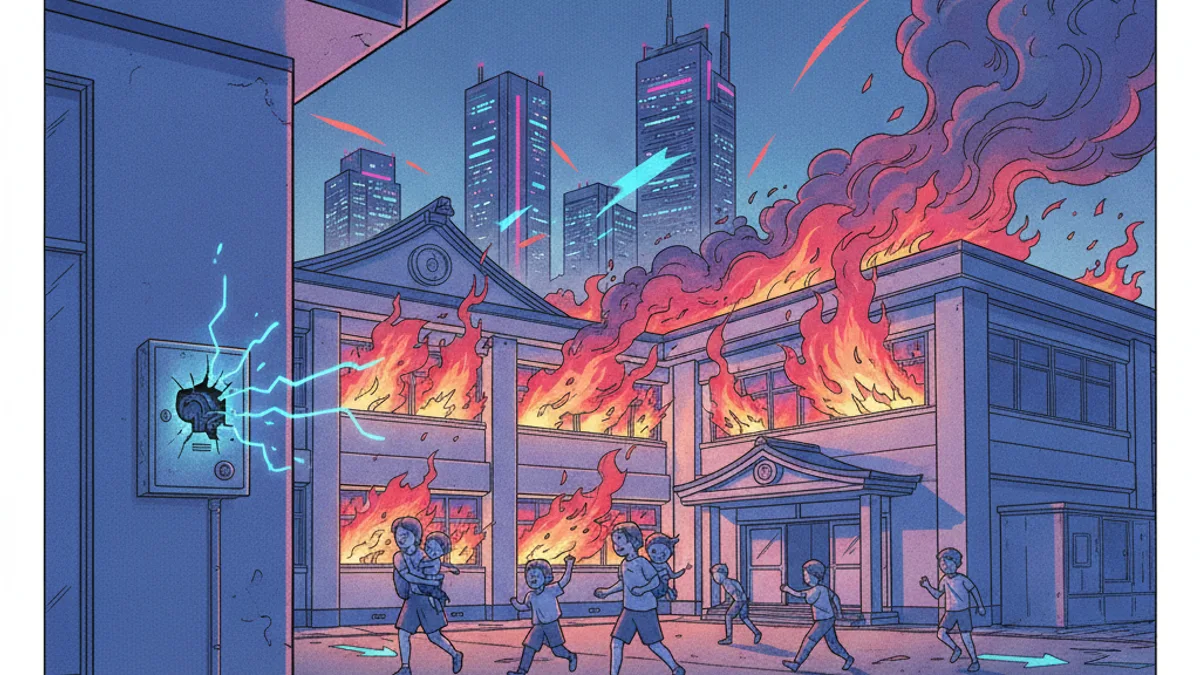
Tokyo Elementary School Fire Raises Safety Questions After 11 Injured
An electric heater fire in a Tokyo elementary school injured 11 people, exposing issues with early fire detection and evacuation procedures. The incident highlights important safety considerations for foreign families.
Key Points
- • Electric heater and circulator caused fire in music preparation room injuring eleven.
- • Automatic fire shutters blocked stairs, forcing teachers to evacuate students through windows.
- • Staff noticed burning smell but failed to recognize fire emergency immediately.
- • Parents should verify schools have multilingual emergency procedures for non-Japanese speaking children.
A fire at an elementary school in Tokyo's Kita Ward on June 19, 2026, has raised serious questions about fire safety protocols in Japanese schools after eleven people, including students and staff, were injured. The incident, which originated in a music preparation room, has highlighted concerns about heating equipment management and emergency evacuation procedures that are relevant to foreign residents with children in Japanese schools.
According to NHK, investigators from the Tokyo Metropolitan Police discovered the burned remains of an electric heater and a circulator fan in the music preparation room, which has been identified as the source of the fire. Police have ruled out arson as a possibility, with the investigation focusing on the electrical heating equipment as the likely cause of the blaze.
The fire's progression revealed critical gaps in early detection. According to police interviews reported by NHK, some staff members noticed a burning smell but did not immediately recognize it as a fire emergency. This delayed response allowed smoke to fill the corridors before evacuation procedures could be fully implemented, creating a more dangerous situation for students and staff.
When teachers attempted to evacuate students, they encountered an unexpected obstacle: the fire safety shutters near the stairwell had already descended automatically, blocking what would have been the most direct evacuation route. According to NHK, this forced teachers to make quick decisions about alternative escape routes. Staff ultimately determined that evacuating students through windows was the safest option given the smoke-filled corridors and blocked stairways.
One teacher reported to investigators that the corner area of the music preparation room was burning intensely when discovered, suggesting the fire had already gained significant strength before being detected. The Tokyo Metropolitan Police conducted a thorough on-site investigation of the music preparation room to determine the exact cause and sequence of events leading to the fire.
For foreign residents with children attending Japanese elementary schools, this incident underscores several important safety considerations. Japanese schools typically use various heating methods during colder months, including electric heaters and kerosene stoves. While these are generally safe when properly maintained and monitored, this fire demonstrates the risks associated with electrical heating equipment, particularly in rooms that may not be constantly supervised, such as preparation rooms or storage areas.
The incident also highlights the importance of understanding your child's school emergency procedures. Japanese schools conduct regular evacuation drills (hinan kunren), but the effectiveness of these drills depends on clear communication and proper execution during actual emergencies. Parents should inquire about their school's fire safety protocols, including how non-Japanese speaking children are assisted during emergencies and whether multilingual emergency communications are available.
The automatic fire shutters, while designed to contain fires and prevent their spread, created an unexpected challenge during evacuation. This is a common feature in Japanese buildings, and understanding how these systems work can help parents discuss emergency scenarios with their children. Schools should have multiple evacuation routes planned for different emergency situations.
The eleven injuries sustained in this incident serve as a reminder that even with Japan's generally strong safety standards, accidents can occur. Parents should ensure their children know basic fire safety principles, including staying low in smoke, not returning to a building once evacuated, and following teacher instructions during emergencies.
As the investigation continues, the Tokyo Metropolitan Police and school authorities will likely review safety protocols and heating equipment management procedures. For the expat community, this incident reinforces the importance of engaging with school safety communications, attending parent meetings where safety procedures are discussed, and ensuring children understand emergency protocols regardless of language barriers.