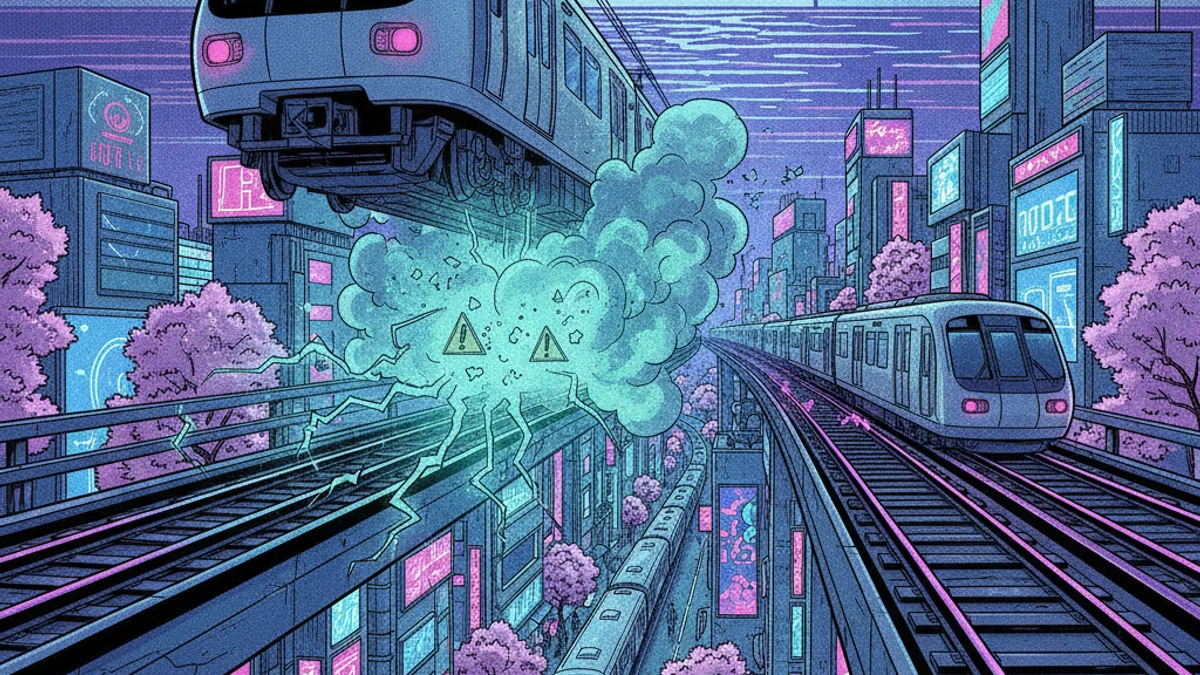
Tokyo Metro Suspends Half of Subway Network After Asbestos Found
Tokyo Metro suspended the Hanzomon Line for 14 hours on August 11 after discovering asbestos-containing debris. Service resumed after inspections, with system-wide checks now planned across all lines.
AI-written summary of Japanese reports; not human-reviewed; check the linked sources. How we write articles
Key Points
- • Hanzomon Line suspended 14 hours on August 11 after asbestos discovery.
- • System-wide inspections planned across all Tokyo Metro lines following incident.
- • Brief asbestos exposure poses minimal health risk compared to prolonged contact.
- • Monitor Tokyo Metro's English app for service updates during ongoing inspections.
Tokyo Metro suspended service on the Hanzomon Line for approximately 14 hours on August 11, 2026, after asbestos-containing materials were discovered on a station platform, according to NHK. The suspension, which lasted from the first train until early evening, affected one of Tokyo's busiest subway lines and disrupted commutes for thousands of foreign residents and Japanese commuters alike.
The discovery occurred when station staff found thread-like debris containing asbestos on a platform along the Hanzomon Line. Tokyo Metro immediately halted all service on the line as a precautionary measure while specialists assessed the health risks and conducted thorough inspections. The operator has commissioned experts to investigate potential health impacts on passengers and staff who may have been exposed to the material.
The Hanzomon Line connects major business and residential districts frequented by expats, running from Shibuya through central Tokyo to Oshiage near Tokyo Skytree. The line serves approximately 1.2 million passengers daily under normal circumstances, making this disruption particularly significant for the city's transportation network. Foreign residents living along the line or using it for their daily commute faced substantial delays and had to seek alternative routes during the suspension period.
According to Yahoo Japan Business, service resumed later on August 11 after safety inspections were completed. However, the incident has prompted Tokyo Metro to announce comprehensive inspections across all of its subway lines to ensure no similar asbestos-containing materials are present elsewhere in the network. This system-wide review demonstrates the operator's commitment to passenger safety but may lead to additional service disruptions in coming weeks.
Asbestos, once commonly used in construction materials throughout Japan, has been banned since 2006 due to its serious health risks. Exposure to asbestos fibers can cause severe respiratory diseases, including lung cancer and mesothelioma, though these conditions typically develop after prolonged exposure rather than brief contact. The material was extensively used in Japanese buildings and infrastructure constructed before the ban, meaning aging facilities occasionally reveal previously unknown asbestos-containing components.
For expats using Tokyo's subway system, this incident highlights the importance of staying informed about service disruptions. Tokyo Metro operates nine lines across the capital, and while such incidents are rare, infrastructure issues can occur in any aging urban transit system. The operator maintains English-language service updates on its official website and mobile app, which foreign residents should monitor during their commutes.
Passengers who were present on Hanzomon Line platforms when the asbestos materials were discovered and have health concerns should consult with medical professionals. However, experts note that brief, one-time exposure to asbestos typically poses minimal health risk compared to prolonged occupational exposure. Tokyo Metro has not announced any specific health monitoring programs for affected passengers at this time.
The incident also underscores broader infrastructure challenges facing Tokyo as the city's subway system ages. Many stations and tunnels were constructed during Japan's rapid economic growth period in the 1960s and 1970s, when asbestos was standard in construction materials. As these facilities require maintenance and renovation, similar discoveries may occur, though operators have established protocols for safe handling and removal.
Tokyo Metro's decision to conduct system-wide inspections following this incident reflects Japanese transportation operators' typically cautious approach to safety issues. While this thoroughness benefits passengers, expats should prepare for possible future service interruptions as inspections proceed. Maintaining flexible commute options and allowing extra travel time during this period would be prudent for foreign residents relying on Tokyo Metro services.
Sources
This article was written by AI from these Japanese-language reports. Check them before acting on anything here.
- [1] NHK — original report (Japanese)
- [2] Yahoo! Japan News — original report (Japanese)
- [3] Livedoor News — original report (Japanese)
- [4] Livedoor News — original report (Japanese)