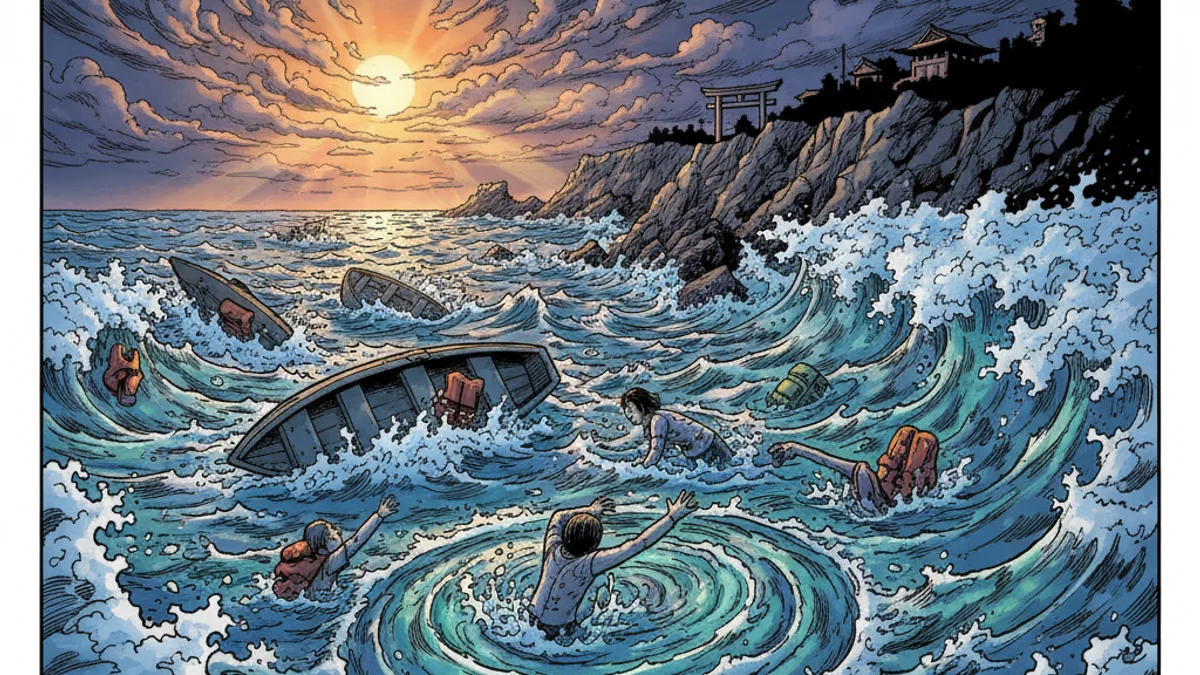
Two Dead in Henoko Coast Boat Capsizing During Kyoto School Trip
Two people died when boats carrying Kyoto high school students capsized off Henoko coast on March 16. The Coast Guard identified dangerous underwater topography as a contributing factor to the tragedy.
Key Points
- • Two boats capsized March 16 off Henoko, killing student and captain.
- • Underwater topography causes sudden wave intensification in accident area, Coast Guard reports.
- • Investigation vessel also capsized at scene, highlighting ongoing dangerous conditions.
- • Parents should verify safety protocols before consenting to school water activities.
A tragic boat accident off the coast of Henoko in Nago City, Okinawa Prefecture, claimed the lives of a high school student and a boat captain on March 16, 2026, raising serious questions about safety protocols for educational trips in Japan's coastal waters.
According to NHK, two boats carrying students from a Kyoto Prefecture high school capsized in rough seas near the site of the U.S. Marine Corps Air Station Futenma relocation construction project. The victims were identified as a female student and one of the boat captains. The students were participating in a study tour that included observation of the Henoko coastal area.
The Japan Coast Guard reported that the accident occurred in waters known for dangerous conditions due to underwater topography that can cause waves to intensify suddenly. The area's seabed formation creates circumstances where wave heights can increase rapidly and unexpectedly, even when conditions appear calm from shore. This geographical factor played a significant role in the tragedy, as reported by NHK.
In a particularly alarming development, a small investigation vessel dispatched to examine the accident scene also capsized due to the same hazardous wave conditions, according to Livedoor News. While no injuries were reported from this secondary incident, it underscored the inherent dangers of the location and raised questions about whether the area should have been deemed safe for student activities.
Representatives from the organization that operated the boats held a press conference to apologize for the incident, as reported by Livedoor News. The high school involved also announced plans to hold a press conference on March 17 to address the tragedy and provide information to concerned families and the public.
For foreign residents in Japan, this incident highlights critical considerations when participating in or organizing school trips and educational excursions. Many international schools and educational programs in Japan incorporate coastal and marine activities into their curricula, making awareness of safety protocols essential for expat families.
The accident raises important questions about risk assessment procedures for educational trips in Japan. Schools organizing excursions involving water activities should verify that operators conduct thorough weather and sea condition assessments, possess appropriate safety certifications, and maintain adequate emergency response capabilities. Parents should feel empowered to ask detailed questions about safety measures before consenting to student participation in such activities.
Japan's educational system places high value on experiential learning through school trips, known as "shugaku ryoko" for overnight trips and "kengaku" for study visits. While these programs provide valuable educational experiences, this tragedy demonstrates that safety considerations must remain paramount, particularly in environments with known hazards.
The Coast Guard's investigation will likely examine whether proper safety protocols were followed, including adequate assessment of weather and sea conditions, appropriate vessel capacity and equipment, and whether participants were provided with proper safety gear and instructions. For expat families, understanding that such investigations can take considerable time in Japan is important for managing expectations about accountability and transparency.
This incident serves as a sobering reminder that natural environments in Japan can present significant hazards, even in areas that may appear suitable for educational activities. Coastal waters around Okinawa, while beautiful, can be particularly unpredictable due to complex underwater topography, strong currents, and rapidly changing weather patterns.
Foreign residents should ensure their children's schools have comprehensive safety policies for off-campus activities and should not hesitate to request detailed information about planned excursions. Understanding your rights to decline participation in activities you deem unsafe is an important aspect of navigating the Japanese educational system as an expat parent.