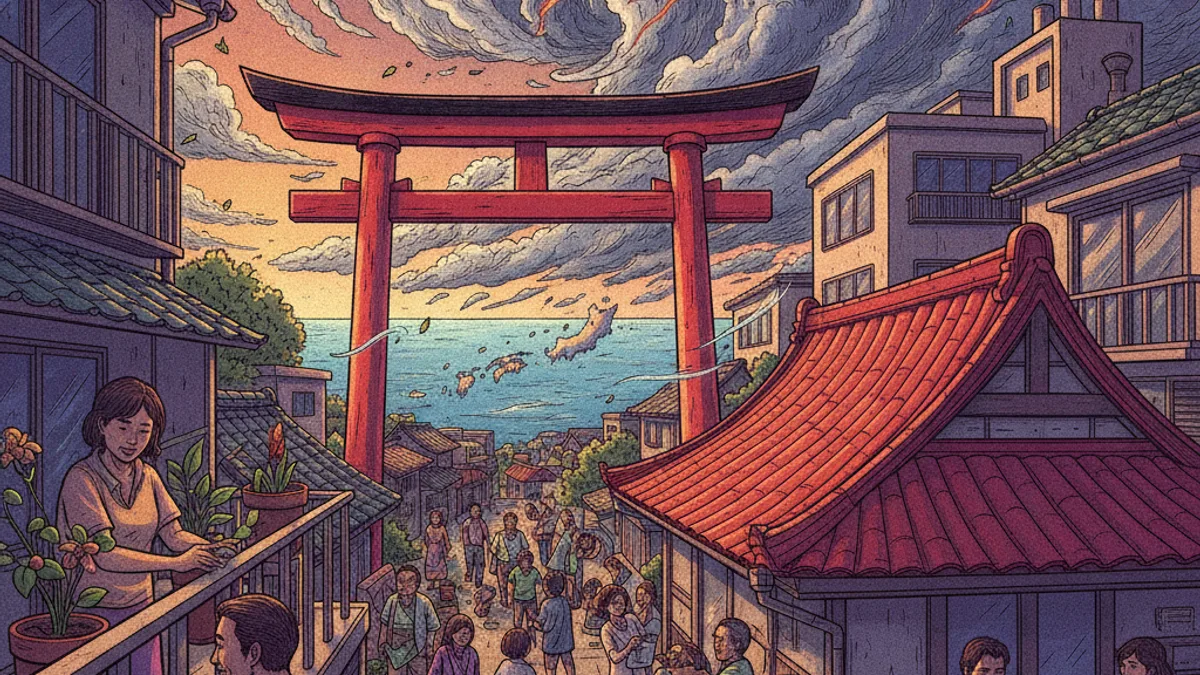
Typhoon 18 Approaching Okinawa and Amami: Severe Winds Expected
Typhoon 18 will approach Okinawa and Amami from August 25 with extremely violent winds starting August 24. Residents should prepare immediately with supplies, secure outdoor items, and identify evacuation centers.
Key Points
- • Typhoon 18 approaches Okinawa and Amami August 25 with violent winds expected.
- • Winds strengthen August 24; high waves threaten coastal areas throughout impact period.
- • Stock three days of water, food, batteries; secure all outdoor items immediately.
- • Identify nearest evacuation center and keep passport in waterproof bag ready.
Foreign residents in Okinawa and the Amami Islands should prepare immediately for Typhoon 18, which is forecast to approach the region from August 25, 2026, bringing extremely severe winds and dangerous conditions, according to the Japan Meteorological Agency (JMA).
The powerful typhoon, currently classified as "very strong" on Japan's intensity scale, poses a significant threat to the southwestern island chains. According to NHK, the storm is expected to impact the Okinawa and Amami regions starting August 25, with conditions deteriorating rapidly from August 24 onward.
Wind conditions will become increasingly dangerous throughout the warning period. The JMA reports that winds will begin strengthening on August 24, with extremely violent winds expected to strike on August 25. These "ferocious winds," as described in Japanese weather terminology, represent some of the most dangerous conditions associated with tropical cyclones and can cause significant structural damage, uproot trees, and make outdoor movement extremely hazardous.
In addition to wind threats, coastal areas face serious risks from high waves. Livedoor News reports that the typhoon will generate dangerous surf conditions along coastlines throughout the Nansei Islands, the archipelago stretching from Kyushu to Taiwan that includes both Okinawa and Amami. Residents near coastal areas should expect significant wave action and potential flooding in low-lying zones.
The Japan Meteorological Agency is urging residents to complete preparations early, emphasizing that waiting until the storm arrives may be too late. For foreign residents who may be experiencing their first major typhoon, this advanced warning period is critical for ensuring safety.
Expats living in affected areas should take several immediate actions. First, secure or bring indoors any outdoor items such as bicycles, potted plants, laundry poles, and patio furniture that could become dangerous projectiles in high winds. Second, stock up on essential supplies including drinking water (at least three days' worth), non-perishable food, flashlights, batteries, and any necessary medications. Third, charge all mobile devices and portable battery packs, as power outages are common during severe typhoons.
Residents should also identify the nearest evacuation center, which is typically a reinforced public building such as a school or community center. Local municipal offices can provide information about designated shelters, and many cities post this information on their websites in multiple languages. Keep important documents, including passport and residence card, in a waterproof bag in case evacuation becomes necessary.
For those unfamiliar with Japan's typhoon warning system, it's important to understand that classifications like "very strong" and warnings about "ferocious winds" indicate genuinely dangerous conditions, not exaggerations. Japan's meteorological terminology is carefully calibrated, and such warnings should be taken seriously.
Transportation disruptions are highly likely. Airlines typically cancel flights well in advance of typhoon arrival, and ferry services to and from the islands will almost certainly be suspended. Those with travel plans should contact their carriers immediately and consider rescheduling if possible.
Foreign residents should also ensure they can receive emergency alerts. The JMA issues warnings through various channels, including television, radio, and smartphone emergency alert systems. English-language updates are available through NHK World and various weather apps designed for foreign residents.
As Typhoon 18 approaches, the message from meteorological authorities is clear: prepare now, not later. The combination of extreme winds and high waves presents serious risks, but proper preparation can significantly reduce danger. Residents of Okinawa and Amami should use the time before August 24 to ensure they, their families, and their properties are ready for severe weather conditions.
Sources
This article was written by AI from these Japanese-language reports. Check them before acting on anything here.
- [1] NHK — original report (Japanese)
- [2] Livedoor News — original report (Japanese)
AI-written summary of Japanese reports; not human-reviewed; check the linked sources. How we write articles