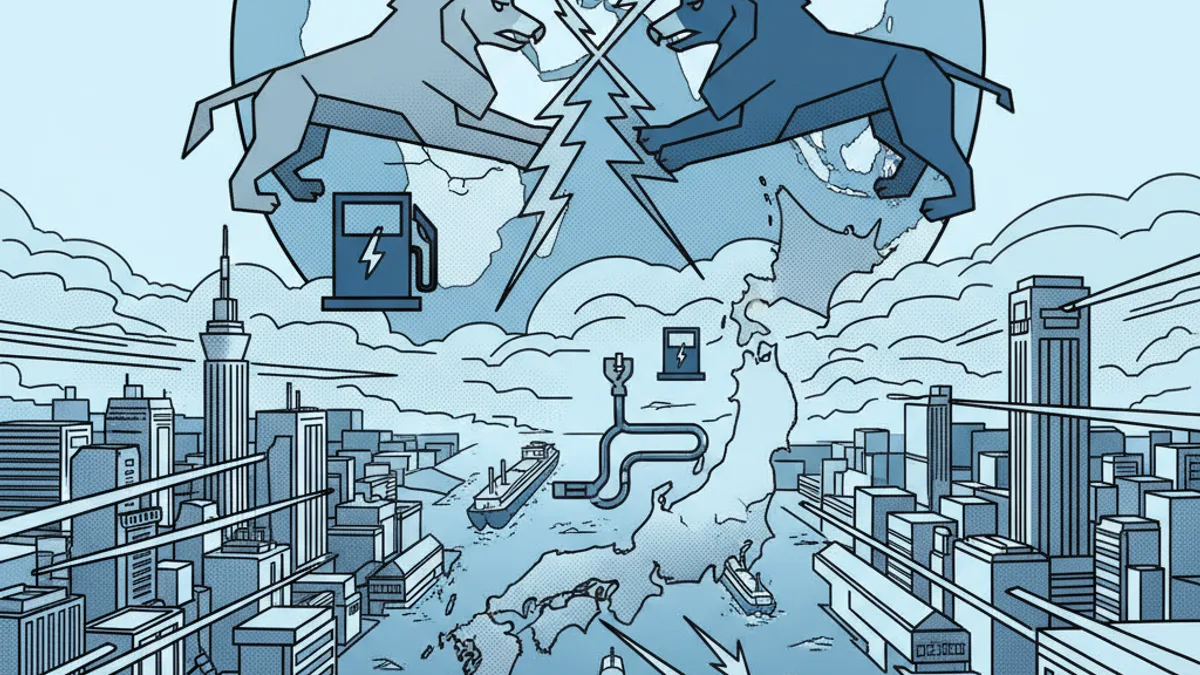
U.S.-Iran Conflict Threatens Japan's Energy Security and Markets
U.S.-Iran military escalation threatens Japan's energy security as Qatar halts LNG production and Hormuz Strait tensions rise. Markets plunge while government monitors fuel costs and coordinates diplomatic response.
Key Points
- • Qatar halted LNG production after attacks, threatening Japan's energy imports.
- • Tokyo stocks dropped 1,900 points amid oil price and conflict concerns.
- • U.S. Navy escorting tankers through Hormuz Strait; 42 Japanese vessels confirmed safe.
- • Expect higher electricity, gas, and fuel costs if conflict continues.
Foreign residents in Japan should brace for potential economic turbulence as escalating military operations between the United States and Iran threaten the nation's energy supply and financial stability. The conflict, which U.S. President Donald Trump has dubbed "Operation Overwhelming Fury," has already triggered significant market disruptions and raised concerns about Japan's heavy dependence on Middle Eastern energy imports.
According to NHK, the U.S. Central Command has conducted strikes on over 1,700 targets across Iran in the first 72 hours of operations, with Israeli forces also attacking Iran's presidential palace and Supreme National Security Council buildings. Most alarmingly for Japan, Iranian nuclear facilities have been struck for the first time since the joint U.S.-Israel operation began, significantly escalating tensions in the region.
The conflict's impact on Japan's energy security is immediate and severe. Qatar's state-owned energy company announced it has halted liquefied natural gas (LNG) production after related facilities came under attack, according to NHK reporting. This development is particularly concerning for Japan, which relies heavily on Qatari LNG imports. Prime Minister Takaichi has stated that the government is closely monitoring LNG procurement and price movements, emphasizing efforts to ensure stable supply.
The strategic Strait of Hormuz, through which a significant portion of Japan's energy imports transit, has become a flashpoint. President Trump announced via social media that the U.S. Navy will begin escorting tankers through the strait "as quickly as possible." Japan's Transport Minister Kaneko confirmed that all 42 Japanese-affiliated vessels in the region have been accounted for and are safe, but the situation remains fluid.
Financial markets have responded dramatically to the crisis. Tokyo's stock market experienced severe volatility, with the Nikkei average plunging more than 1,900 points at one point during trading on March 3rd, reflecting investor concerns about rising oil prices and prolonged conflict. The New York Stock Exchange saw similar panic, with the Dow Jones dropping over 1,200 points as fears of extended hostilities grew.
Currency markets have also been affected, with the yen weakening against the dollar as investors sought the perceived safety of U.S. currency during the crisis. Finance Minister Katayama acknowledged "significant fluctuations" in the foreign exchange market, stating that authorities are monitoring developments "with extremely high tension" and coordinating with overseas counterparts.
European energy markets have seen natural gas and crude oil futures prices surge dramatically due to supply concerns, according to NHK. Japanese companies are increasingly worried about fuel price increases, which could translate into higher costs for transportation, utilities, and consumer goods—directly affecting expats' daily expenses and cost of living.
Japan's government is actively engaging in diplomatic efforts to contain the crisis. Foreign Minister Motegi held telephone consultations with his Omani counterpart, emphasizing Japan's position favoring diplomatic resolution through dialogue while seeking assurances about safe navigation through the Strait of Hormuz and the safety of Japanese nationals in the region. Prime Minister Takaichi is also coordinating summit meetings with G7 leaders from Canada and France to present a unified response and prevent further escalation.
For foreign residents in Japan, the immediate concerns include potential increases in electricity and gas bills, higher gasoline prices, and broader inflationary pressures if the conflict continues. Prime Minister Takaichi has indicated that Iran policy will be a key discussion topic at the upcoming U.S.-Japan summit meeting scheduled for later this month.
Expats should monitor official government communications through the Ministry of Foreign Affairs website and consider reviewing household budgets to account for potential energy cost increases. Those with travel plans to the Middle East should reconsider their itineraries and register with their embassies. While Japan remains safe, the economic reverberations of this distant conflict will likely be felt in wallets across the archipelago in the coming weeks and months.