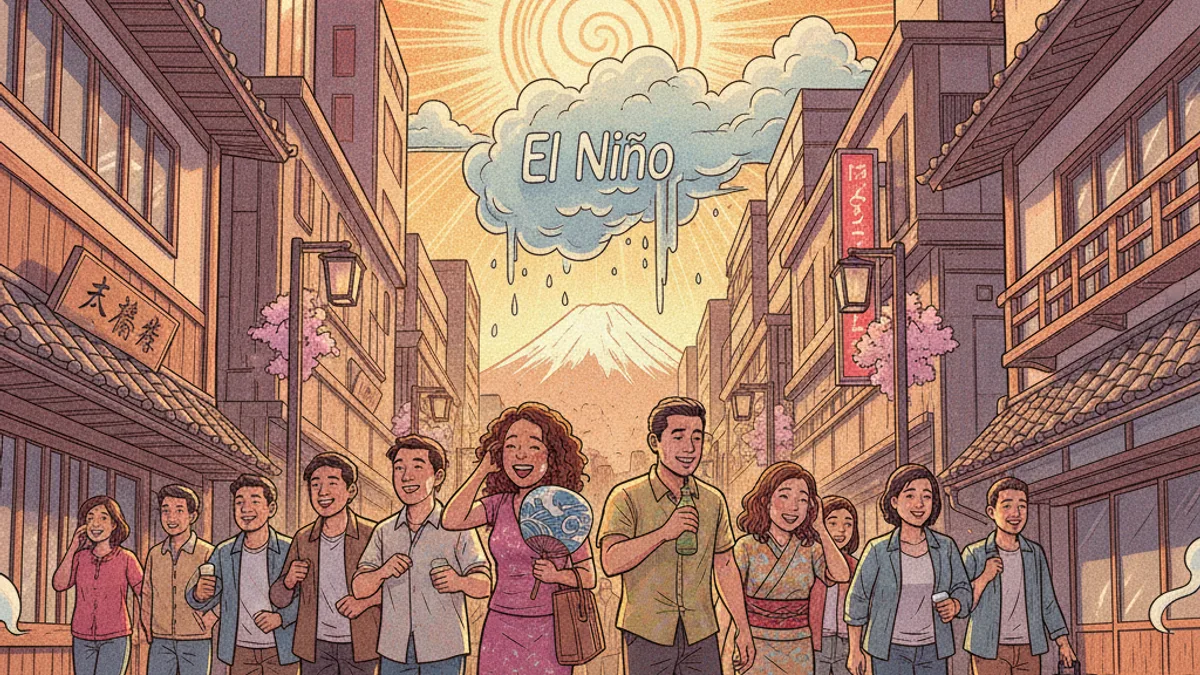
El Niño Returns to Japan After Two Years, Summer Heat Expected
El Niño has returned after two years, but Japan expects hotter-than-average summer temperatures despite the phenomenon typically bringing cooler weather, requiring expats to prepare for intense heat.
AI-written summary of Japanese reports; not human-reviewed; check the linked sources. How we write articles
Key Points
- • Japan Meteorological Agency confirmed El Niño development on June 10, 2026.
- • Summer temperatures expected higher than average despite El Niño's typical cooling effect.
- • Prepare adequate cooling systems and budget for increased electricity costs this summer.
- • Monitor heat illness prevention measures and stay hydrated during peak heat.
The Japan Meteorological Agency (JMA) announced on June 10, 2026, that the El Niño weather phenomenon has likely developed for the first time in two years, with significant implications for summer weather patterns across Japan and globally.
According to NHK, the agency detected above-average sea surface temperatures off the coast of Peru in South America, a key indicator of El Niño conditions. This climate pattern, which occurs irregularly every two to seven years, is known for its far-reaching effects on weather systems worldwide, including Japan's seasonal temperatures and precipitation patterns.
Understanding El Niño's Impact on Japan
While El Niño typically brings cooler summer temperatures to Japan, the JMA's current forecast indicates that this summer will likely see higher-than-average temperatures despite the phenomenon's presence. This seemingly contradictory prediction reflects the complex interaction between El Niño conditions and other atmospheric factors currently at play.
For foreign residents in Japan, this means preparing for a potentially hot summer season rather than the traditionally cooler conditions associated with El Niño years. The expected higher temperatures could affect daily life, from increased air conditioning costs to heightened risks of heat-related illnesses.
What Expats Should Know
El Niño events can persist for several months to over a year, meaning its effects may extend beyond the immediate summer season into autumn and potentially winter. Historical El Niño patterns in Japan have been associated with milder winters and altered rainfall distribution, though each event varies in intensity and specific impacts.
The phenomenon occurs when trade winds weaken across the Pacific Ocean, allowing warm water to spread eastward toward South America. This shift in ocean temperatures triggers a cascade of atmospheric changes that influence jet streams, storm tracks, and temperature patterns across the globe.
Practical Preparations for Residents
Foreign residents should take several precautions as summer approaches. First, ensure your living space has adequate cooling systems, whether air conditioning or fans, and budget for potentially higher electricity costs during peak summer months. Many expats may be experiencing their first or second summer in Japan and might underestimate the intensity of Japanese summer heat and humidity.
Second, familiarize yourself with heat illness prevention measures. Japan takes heat-related health risks seriously, with public health campaigns encouraging frequent hydration, use of cooling products, and awareness of heatstroke symptoms. Convenience stores and vending machines are ubiquitous for purchasing cold drinks, and many public spaces offer air-conditioned respite.
Third, stay informed about weather updates through English-language resources. The JMA provides forecasts and warnings, and several apps and websites offer translations or English versions of critical weather information. Understanding terms like "mōsho-bi" (extremely hot day, above 35°C) can help you plan outdoor activities safely.
Longer-Term Considerations
Beyond immediate summer preparations, El Niño may influence autumn typhoon patterns and winter conditions. Japan's typhoon season typically peaks from August through October, and El Niño years can alter storm frequency and trajectories, though predictions remain uncertain.
For those planning travel within Japan or internationally, be aware that El Niño affects weather patterns globally, potentially impacting destinations throughout Asia and beyond. Agricultural production may also be affected, potentially influencing food prices for certain products in the coming months.
The return of El Niño after a two-year absence serves as a reminder of the dynamic climate patterns that shape life in Japan. By staying informed and taking practical precautions, foreign residents can navigate the upcoming weather changes safely and comfortably. Monitor updates from the Japan Meteorological Agency and local news sources as the summer season progresses to adjust preparations as needed.
Sources
This article was written by AI from these Japanese-language reports. Check them before acting on anything here.
- [1] NHK — original report (Japanese)
- [2] Yahoo! Japan News — original report (Japanese)