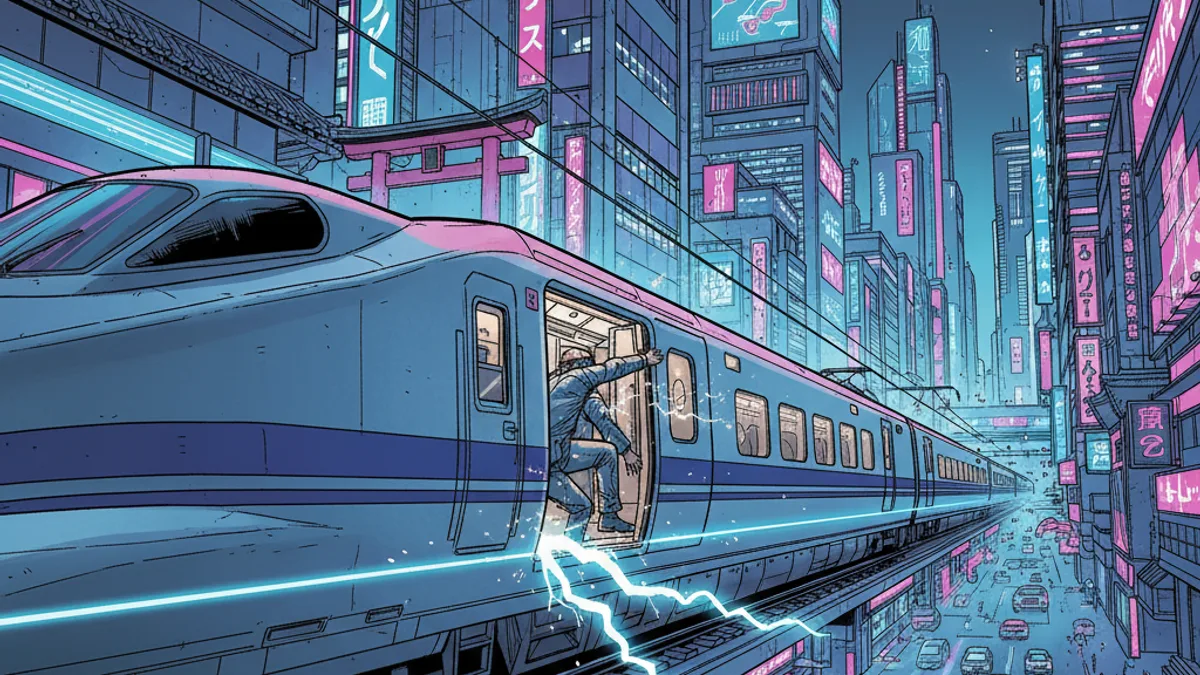
Express Train Door Opens Mid-Journey, Classified as Serious Incident
A door opened on the moving Limited Express Kaiji train, prompting authorities to classify it as a serious incident. Investigations are underway to determine the cause of the safety system failure.
Key Points
- • Limited Express Kaiji door opened during operation, triggering emergency stop procedures.
- • Ministry classified event as serious incident requiring comprehensive safety investigation.
- • Kaiji trains connect Tokyo-Yamanashi, frequently used by expats for Mount Fuji access.
- • Report unusual door sounds or gaps to staff using emergency intercom immediately.
A door on a moving express train opened unexpectedly during operation in Japan, prompting transportation authorities to classify the event as a serious incident—a designation reserved for situations that could have led to major accidents. The incident has raised safety concerns among both regular commuters and foreign residents who rely on Japan's railway network.
According to reports from multiple Japanese news outlets, the incident occurred on the Limited Express "Kaiji" train, which operates between Tokyo and areas in Yamanashi Prefecture. During normal operation, a passenger door opened while the train was traveling at speed, forcing an emergency stop. The Japan Transport Safety Board, under the Ministry of Land, Infrastructure, Transport and Tourism (MLIT), has officially designated this occurrence as a "serious incident" requiring thorough investigation.
In Japan's railway safety classification system, a "serious incident" (jūdai incidento) represents a critical category just below an actual accident. This designation is applied to events that, while not resulting in casualties or derailments, had the potential to cause serious harm or death. The classification triggers mandatory investigation protocols and requires railway operators to submit detailed reports to transportation authorities.
The Limited Express Kaiji is a popular service operated by JR East, connecting Tokyo's Shinjuku Station with destinations including Kōfu in Yamanashi Prefecture. The route is frequently used by both business travelers and tourists heading to popular destinations such as Mount Fuji and the surrounding wine country. For expats living in Tokyo, this train line serves as a major gateway to recreational areas and is commonly used for weekend excursions.
While specific details about the cause of the door malfunction have not yet been released, railway authorities have launched a comprehensive investigation. Modern Japanese trains are equipped with multiple safety systems designed to prevent doors from opening during operation, including electronic locks that engage when the train is moving and sensors that detect improper door closure. The fact that a door opened despite these safeguards suggests either a mechanical failure or a potential system malfunction that investigators will need to identify.
For foreign residents in Japan, this incident serves as a reminder that even in one of the world's safest and most reliable railway systems, mechanical issues can occasionally occur. However, it's important to note that Japan's railway safety record remains exceptional by global standards, and serious incidents like this are extremely rare. The country's transportation authorities maintain strict oversight and investigation protocols precisely to prevent such occurrences from recurring.
Passengers who regularly use express train services should remain aware of basic safety procedures. If you notice anything unusual, such as strange sounds from doors, gaps between door panels, or warning indicators, immediately notify train staff using the emergency intercom system found in every car. These intercoms are typically marked with red buttons and pictograms showing a conductor's cap or telephone symbol.
The investigation into this incident will likely take several weeks or months, as authorities examine mechanical components, review maintenance records, and analyze data from the train's recording systems. JR East will be required to implement any corrective measures identified during the investigation and report their findings to the transport ministry.
For expats planning travel on express train services, there is no need for immediate concern or changes to travel plans. Japanese railway operators maintain rigorous safety standards and conduct regular inspections of all equipment. The serious incident classification demonstrates that the system is working as intended—identifying and investigating potential safety issues before they result in actual harm.
As this investigation progresses, transportation authorities will likely release additional information about the cause and any preventive measures being implemented across the railway network.
Sources
This article was written by AI from these Japanese-language reports. Check them before acting on anything here.
- [1] Yahoo! Japan News — original report (Japanese)
- [2] Livedoor News — original report (Japanese)
AI-written summary of Japanese reports; not human-reviewed; check the linked sources. How we write articles