Fatal Arson Attack in Higashihiroshima Highlights Home Security Concerns
A fatal arson attack in Higashihiroshima on February 16 resulted in one death after an intruder forced entry, attacked residents, and set fire to the home, prompting a murder investigation.
Key Points
- • Man found dead with knife wounds after house fire in Higashihiroshima.
- • Attacker forced entry through broken window before setting fire with accelerant.
- • Residents should screen visitors using intercom systems and secure windows properly.
- • Know emergency numbers: 110 for police, 119 for fire and ambulance.
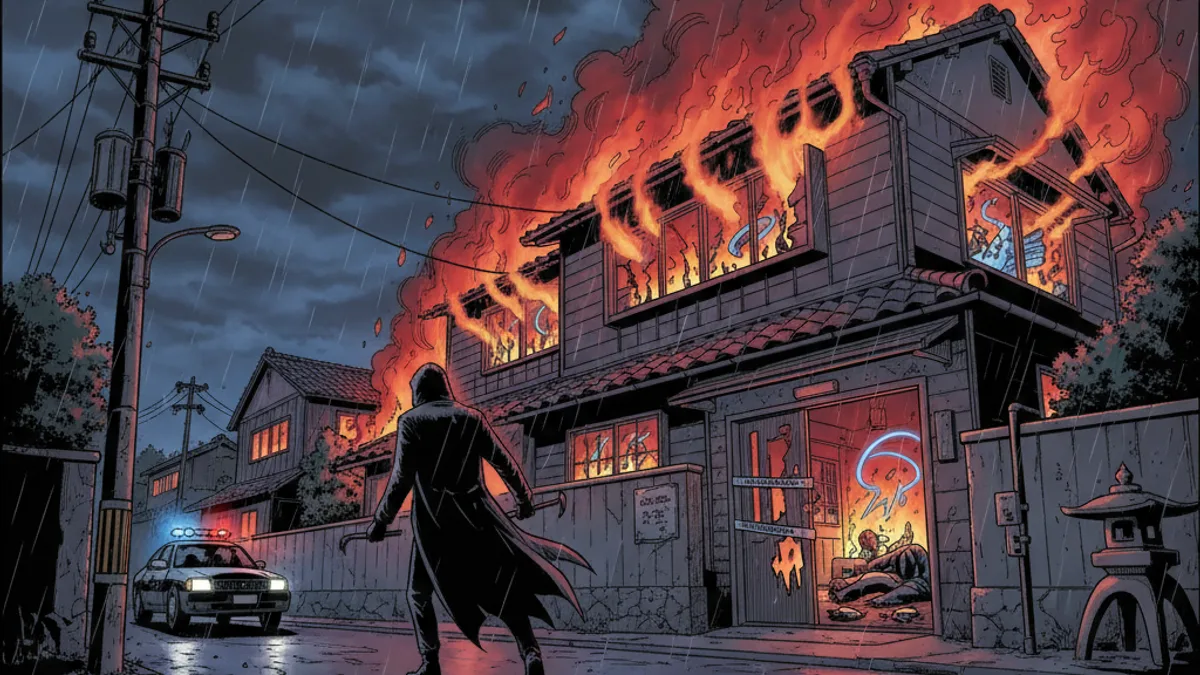
A deadly arson attack in Higashihiroshima has shocked the local community and raised important questions about home security for residents in Japan. In the early morning hours of February 16, 2026, a house fire resulted in the death of a male resident, with police now treating the incident as a murder investigation.
According to NHK, emergency services responded to reports of a fire at a residential property in Higashihiroshima, Hiroshima Prefecture. During firefighting operations, responders discovered a man on the property with severe neck injuries and bleeding. He was pronounced dead at the scene. Investigation revealed that the victim had sustained wounds consistent with a knife attack, leading police to immediately launch a murder investigation.
The circumstances surrounding the attack are particularly alarming. NHK reports that a female resident of the home told police that a man had visited the house, attacked the residents, and then set the property ablaze. The woman stated that the assailant "sprayed something" before igniting the fire, suggesting the use of an accelerant. Investigators found evidence of forced entry, with a ground-floor window broken, indicating the perpetrator had forcibly entered the premises.
This violent incident represents a relatively rare occurrence in Japan, a country known for its low crime rates. However, it serves as a stark reminder that serious crimes can occur anywhere, and residents—including foreign nationals—should take appropriate precautions to protect themselves and their property.
For expats living in Japan, this case underscores several important security considerations. First, home security measures remain essential even in generally safe neighborhoods. While Japan's overall crime rate is low compared to many Western countries, ensuring that windows and doors have proper locks and considering additional security measures such as motion-sensor lighting or security cameras can provide extra protection.
Second, the incident highlights the importance of being aware of unexpected visitors. The reported circumstances suggest the attacker may have approached the residence directly. Residents should exercise caution when answering doors to unknown individuals, particularly during late-night or early-morning hours. Many Japanese homes are equipped with intercom systems that allow residents to screen visitors before opening doors—a feature that expats should utilize consistently.
Third, understanding emergency procedures is crucial. Foreign residents should ensure they know how to contact emergency services (110 for police, 119 for fire and ambulance) and can communicate basic emergency information in Japanese. Many municipalities offer emergency contact cards or apps with pre-translated phrases that can be invaluable during crisis situations.
The investigation into this Higashihiroshima incident remains ongoing, with police working to identify and apprehend the suspect. According to NHK's reporting, investigators are examining the crime scene for forensic evidence and interviewing witnesses to establish the perpetrator's identity and motive.
This case also raises broader questions about public safety policy in Japan. While the country maintains one of the world's lowest homicide rates, incidents like this may prompt local governments to review community safety measures and consider enhanced support for crime prevention initiatives.
For the expat community, staying informed about local safety conditions through reliable news sources and community networks is essential. Many municipalities offer crime prevention information through ward offices and community centers, often with multilingual support available.
While this tragic incident should not cause undue alarm—violent home invasions remain statistically rare in Japan—it serves as a reminder that personal security awareness and basic precautionary measures are important regardless of location. Expats should balance their appreciation of Japan's general safety with practical vigilance, ensuring their homes are adequately secured and they remain alert to unusual circumstances in their neighborhoods.