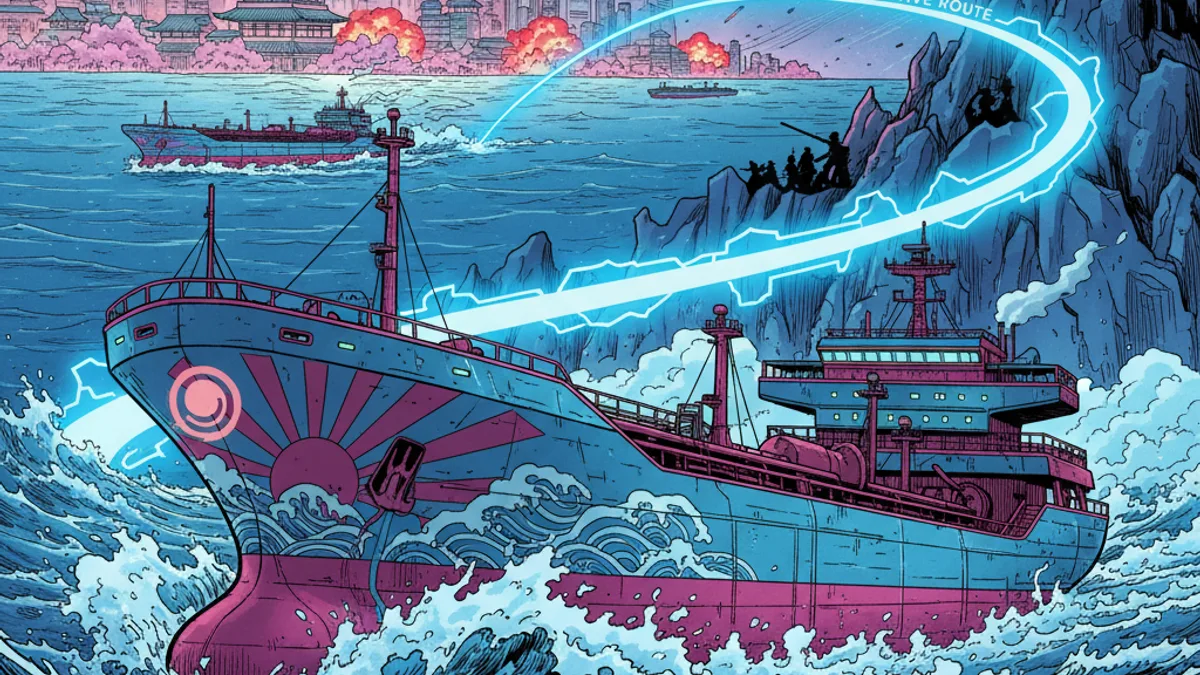
First Oil Tanker Reaches Japan via Alternative Route Amid Middle East Crisis
Japan received its first oil tanker via alternative route since Iran military operations began, bypassing the Strait of Hormuz. Another tanker expected in April as Japan secures energy supplies amid Middle East tensions.
Key Points
- • First post-strike Middle East oil tanker arrived in Ehime via alternative route.
- • Second alternative-route tanker expected to arrive in Japan by April 2026.
- • Japan maintains 240-day petroleum reserves to cushion against supply disruptions.
- • Higher oil costs may gradually increase electricity and transportation expenses.
A crude oil tanker carrying Middle Eastern oil has arrived off the coast of Ehime Prefecture, marking the first delivery to Japan via an alternative route since military operations began in Iran, according to NHK. The arrival signals Japan's proactive response to potential supply disruptions as tensions escalate in the Persian Gulf region.
The tanker successfully bypassed the Strait of Hormuz, a critical chokepoint through which approximately 90% of Japan's oil imports typically pass. This strategic waterway has become increasingly vulnerable following the commencement of U.S. and Israeli military operations against Iran, raising concerns about the stability of Japan's energy supply chain.
For foreign residents in Japan, this development carries significant implications beyond geopolitical headlines. Japan imports nearly all of its crude oil, with roughly 95% coming from the Middle East. Any disruption to this supply could affect daily life through increased fuel costs, higher electricity prices, and potential impacts on transportation and heating expenses during winter months.
According to reports from Livedoor News, another tanker using an alternative route is expected to arrive in Japan by April 2026. These arrivals demonstrate that Japanese energy companies and government agencies are actively implementing contingency plans to maintain stable oil supplies despite regional instability.
The alternative route, while not specifically detailed in official reports for security reasons, likely involves longer shipping distances around the Arabian Peninsula rather than through the Strait of Hormuz. This extended journey increases transportation costs and delivery times, factors that could eventually influence consumer prices for petroleum-based products and electricity in Japan.
Expats living in Japan should understand that the country maintains strategic petroleum reserves designed to cushion against supply shocks. Japan's national and private stockpiles can cover approximately 240 days of consumption under normal conditions, providing a substantial buffer against short-term disruptions. However, prolonged instability in the Middle East could still lead to gradual price increases across various sectors.
The Japanese government has historically prioritized energy security, particularly following the 1970s oil crises. Current efforts to diversify supply routes and sources reflect this long-standing policy priority. For residents, this means authorities are closely monitoring the situation and taking preventive measures to minimize impact on daily life.
Foreign residents should be aware that any sustained increase in oil prices could affect multiple aspects of household budgets. Beyond gasoline prices at the pump, higher crude oil costs typically flow through to electricity bills, as Japan still relies significantly on thermal power generation. Additionally, transportation costs for goods and services may rise, potentially leading to broader inflationary pressures.
The timing of these alternative route deliveries is particularly significant as Japan enters the spring season, when energy demand typically moderates compared to winter heating and summer cooling periods. This provides a window for companies to adjust supply chains and build reserves before peak demand seasons return.
Looking ahead, experts suggest that Japan will continue exploring diverse energy sources and routes to reduce vulnerability to Middle Eastern supply disruptions. Recent investments in renewable energy and liquefied natural gas imports from various regions reflect this strategic shift, though oil remains crucial for transportation and industrial sectors.
For now, expats in Japan can expect continued stability in fuel availability, though monitoring household energy costs in coming months would be prudent. The successful arrival of these alternative-route tankers demonstrates that contingency plans are functional, but the situation remains fluid as Middle Eastern tensions continue to evolve. Staying informed through reliable Japanese and international news sources will help foreign residents understand how regional developments might affect their daily lives in Japan.