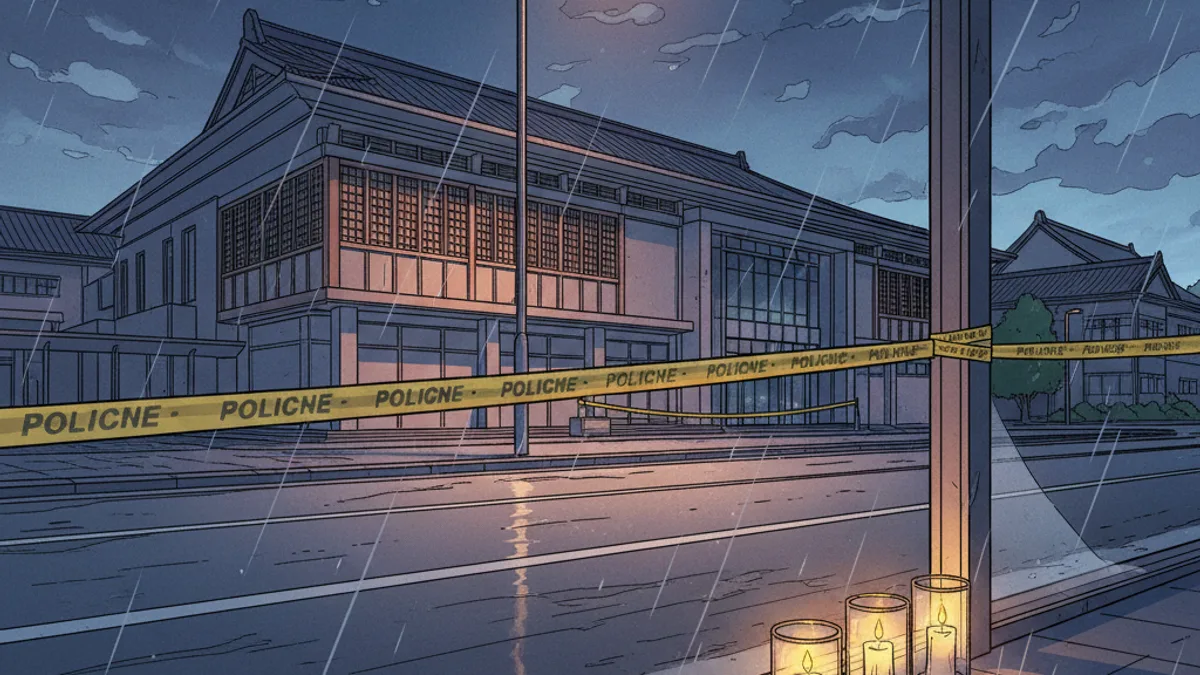
Fukuoka Library Stabbing: Three Injured in Random Attack
A 61-year-old man stabbed three strangers at Fukuoka City General Library on February 19th, seriously injuring one. Police arrested the suspect immediately on attempted murder charges.
Key Points
- • Random stabbing at Fukuoka library injured three people, one seriously on February 19th.
- • Suspect arrested on-site, admitted attacking three strangers with no prior connection.
- • Emergency numbers in Japan: 110 for police, 119 for ambulance and fire.
- • Maintain situational awareness in public facilities despite Japan's low crime rates.
A random stabbing attack at Fukuoka City General Library on the evening of February 19th left three people injured, including one man in serious condition, raising concerns about public safety in typically secure community spaces throughout Japan.
According to NHK, police arrested a 61-year-old suspect at the scene on suspicion of attempted murder. During questioning, the suspect admitted to the charges and stated he had no prior acquaintance with any of the three victims, indicating this was a random attack on strangers.
The incident occurred at the Fukuoka City General Library, a major public facility frequented by residents and visitors alike. Three people—both men and women—were stabbed with a bladed weapon during the evening hours. One male victim sustained serious injuries after being stabbed in the abdomen, while two others also suffered injuries requiring medical attention, according to reports from Livedoor News.
Emergency services received a 110 emergency call reporting the stabbing, and police responded quickly to apprehend the suspect on-site. The swift arrest prevented further harm, though the attack has shaken the local community's sense of security in public spaces.
For foreign residents in Japan, this incident serves as a sobering reminder that while Japan maintains one of the world's lowest violent crime rates, random attacks can occur even in traditionally safe public facilities. Libraries, community centers, and similar venues are generally considered secure environments, but this case demonstrates the importance of maintaining situational awareness even in familiar settings.
Public facilities in Japan typically have minimal security presence compared to Western countries, relying instead on social norms and Japan's overall low crime rate. However, recent years have seen several high-profile random attacks in public spaces, including the 2021 knife attack on a Tokyo train and the 2022 shooting of former Prime Minister Shinzo Abe, prompting discussions about security measures at public venues.
Expats should familiarize themselves with emergency procedures at facilities they regularly visit. In Japan, the emergency number 110 connects to police, while 119 reaches fire and ambulance services. Unlike some countries, Japan does not have a unified emergency number, so knowing both numbers is essential.
While there's no need for alarm, foreign residents should practice basic safety awareness: note emergency exits when entering public buildings, stay alert to unusual behavior, and trust instincts if something feels wrong. Many public facilities in major cities have increased security patrols and surveillance following previous incidents, though implementation varies by location and budget.
The Fukuoka incident also highlights the importance of understanding how Japan's legal system handles such cases. Attempted murder charges carry severe penalties under Japanese law, with convictions potentially resulting in lengthy prison sentences. The suspect's immediate arrest and reported confession suggest a straightforward legal process, though investigations will continue to determine motive and mental state.
For expats living in Fukuoka or planning to visit the city, this incident shouldn't deter use of public facilities, which remain statistically very safe. However, it reinforces the value of staying informed about local news and safety issues through English-language sources and community networks.
Local authorities have not announced specific changes to security protocols at Fukuoka libraries or other public facilities following this attack, though reviews may be forthcoming. Foreign residents concerned about safety at specific venues can contact facility management or local ward offices for information about security measures.
As investigations continue, this case serves as a reminder that personal safety requires awareness regardless of location. Japan's reputation for safety remains well-deserved, but vigilance in public spaces is a universal principle that applies everywhere, including in one of the world's safest countries.