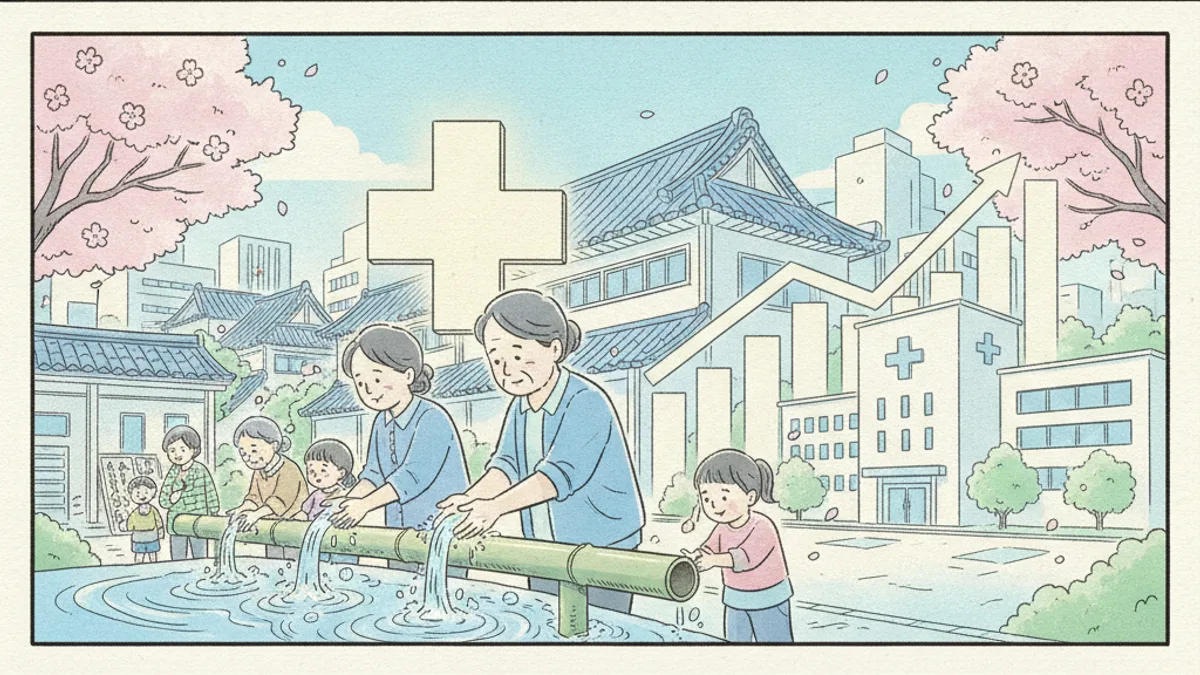
Hand, Foot and Mouth Disease Outbreak Spreads as Healthcare Costs Face Review
Hand, foot and mouth disease has reached warning levels in 15 prefectures, prompting health officials to urge thorough handwashing. Meanwhile, the government plans to revise medical costs for elderly patients by year-end.
Key Points
- • Hand, foot and mouth disease at warning levels in 15 prefectures nationwide.
- • Parents should practice thorough handwashing and monitor children for fever and rashes.
- • Government reviewing medical copayment rates for patients aged 70 and above.
- • Policy roadmap for elderly healthcare cost changes due by December 2026.
Foreign residents in Japan with young children should be aware of two significant healthcare developments this week: a widespread outbreak of hand, foot and mouth disease affecting 15 prefectures, and proposed changes to medical cost burden policies that could impact elderly residents and their families.
According to NHK, hand, foot and mouth disease (HFMD) has reached warning levels in 15 prefectures across Japan as of July 7, 2026. The contagious illness primarily affects children and causes distinctive rashes on the hands, feet, and inside the mouth. Health experts report that patient numbers are increasing nationwide, indicating the outbreak is actively spreading. Medical specialists are urging parents and caregivers to implement thorough handwashing practices to prevent further transmission.
For expat families with children enrolled in daycare centers, kindergartens, or elementary schools, this outbreak warrants particular attention. HFMD spreads easily in group settings where young children interact closely. The disease is caused by various enteroviruses and typically presents with fever, followed by painful sores in the mouth and a rash on hands and feet. While most cases are mild and resolve within a week to ten days, the condition can cause discomfort and may require children to stay home from school or childcare facilities.
Parents should monitor their children for early symptoms including fever, reduced appetite, sore throat, and general malaise. If a rash develops on the hands, feet, or buttocks, or if sores appear in the mouth, medical consultation is recommended. Treatment focuses on symptom management, as no specific antiviral therapy exists for HFMD. Prevention centers on rigorous hygiene practices: frequent handwashing with soap and water, especially after using the toilet and before eating, disinfecting contaminated surfaces, and avoiding close contact with infected individuals.
Simultaneously, the Japanese government is advancing significant changes to healthcare cost policies that may affect foreign residents, particularly those with elderly family members or those planning long-term residence in Japan. According to NHK reporting on July 7, the government has presented revised proposals for its "Basic Policy on Economic and Fiscal Management and Reform" (commonly known as the "Honebuto no Hoshin" or fundamental policy framework).
The modifications include provisions to review out-of-pocket medical costs for patients aged 70 and above. Currently, elderly patients pay between 10% and 30% of medical costs at the point of service, depending on their income level. The proposed changes would adjust the age thresholds at which patients move from 20% to 30% copayment rates, and revise the income brackets that determine these categories.
According to further NHK reporting, the Liberal Democratic Party and Japan Innovation Party have agreed on practical steps to implement these changes. Their working group has outlined plans to create a roadmap by the end of 2026 detailing how these adjustments will be phased in. The roadmap will specify new age thresholds for the 20% and 30% copayment categories and revise income criteria used to determine patient cost-sharing levels.
For foreign residents, these changes carry several implications. Those with elderly parents on dependent visas should anticipate potential increases in out-of-pocket medical expenses. Long-term residents planning their own retirement in Japan should factor these evolving cost structures into their healthcare budgets. The changes reflect Japan's ongoing efforts to manage healthcare costs amid its rapidly aging population, a demographic challenge that affects both Japanese citizens and foreign residents equally.
Expats should stay informed as implementation details emerge toward year-end. Consulting with employers about health insurance coverage and reviewing personal healthcare budgets may prove prudent as these policy changes take shape. Meanwhile, immediate attention to the HFMD outbreak through preventive hygiene measures remains the pressing concern for families with young children.