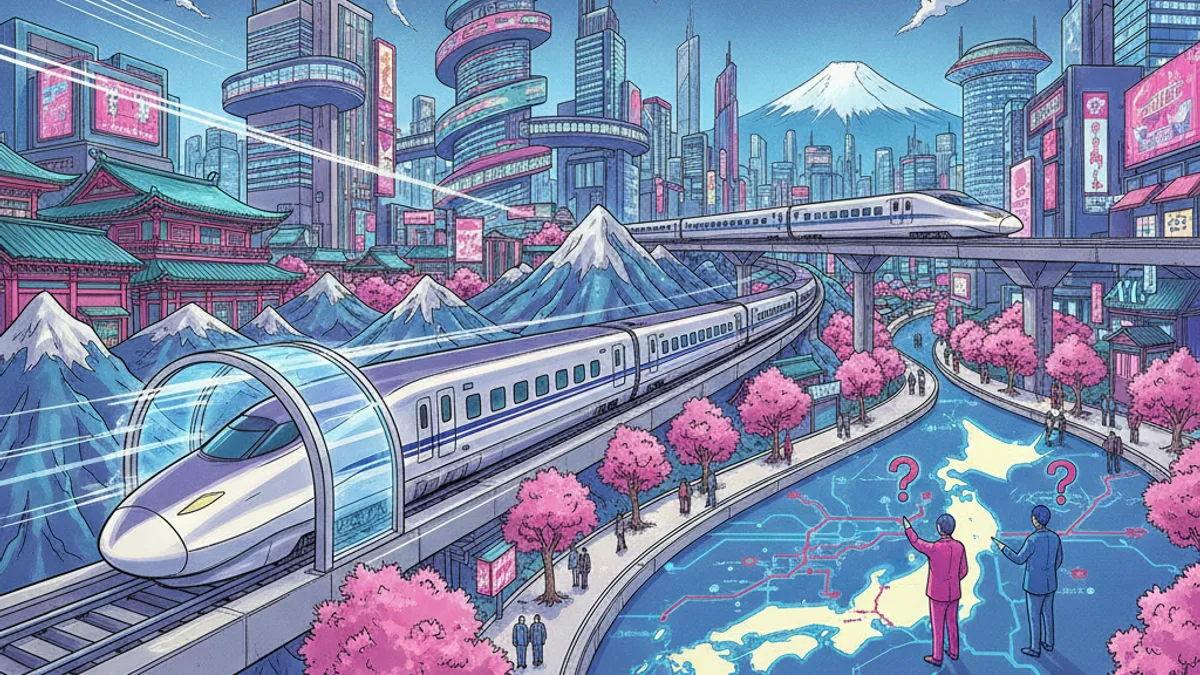
Major Shinkansen Developments: Linear Construction Approved, Route Debate Continues
Shizuoka approves Linear Chuo Shinkansen construction after years of delays, while Osaka officials debate Hokuriku Shinkansen extension routes. Both projects will reshape Japan's high-speed rail network over the coming decade.
Key Points
- • Linear Chuo Shinkansen construction begins July 18, 2026, in Shizuoka Prefecture.
- • Project completion expected in approximately 10 years, around mid-2030s.
- • Hokuriku Shinkansen extension route remains undecided between Obama-Kyoto and Maibara options.
- • Linear line will reduce Tokyo-Nagoya travel time to 40 minutes.
Japan's high-speed rail network is undergoing significant changes as two major infrastructure projects advance, with implications for travelers and residents across the country. Shizuoka Prefecture has approved construction of the Linear Chuo Shinkansen, while debates continue over the optimal route for extending the Hokuriku Shinkansen to Osaka.
After years of delays, Shizuoka Governor Suzuki has indicated approval for construction of the Linear Chuo Shinkansen within the prefecture, according to NHK. This breakthrough allows JR Central to proceed with the long-stalled maglev project connecting Tokyo and Nagoya. The company plans to sign an environmental conservation agreement on July 18, 2026, before commencing construction work, with the possibility of breaking ground before year's end.
The Linear Chuo Shinkansen, utilizing magnetic levitation technology, promises to revolutionize travel between Japan's major urban centers. Once completed, the route will reduce travel time between Tokyo and Nagoya to approximately 40 minutes, compared to the current 100 minutes via conventional Tokaido Shinkansen. The project will eventually extend to Osaka, creating a high-speed corridor connecting three of Japan's largest metropolitan areas.
However, significant challenges remain. According to Yahoo Japan Business, construction is expected to take approximately 10 years to complete, even with Shizuoka's approval now secured. The extended timeline reflects the project's technical complexity, including tunneling through the Southern Alps and addressing environmental concerns that initially delayed construction approval.
The Shizuoka section has been particularly contentious due to concerns about water resources. Environmental groups and local officials worried that tunnel construction could affect the Oigawa River's water flow, impacting agriculture and local communities. The environmental conservation agreement addresses these concerns, though specific mitigation measures will require ongoing monitoring throughout the construction period.
Meanwhile, the Hokuriku Shinkansen extension project faces its own routing challenges. According to NHK, a ruling party committee meeting on July 7, 2026, heard presentations from Osaka Prefecture Governor and Osaka City Mayor regarding preferred routes for extending the line to Shin-Osaka Station. Officials expressed preference for either the "Obama-Kyoto Route" or the "Maibara Route," each offering distinct advantages and drawbacks.
The Obama-Kyoto Route would follow the currently planned path through Obama City in Fukui Prefecture before proceeding to Kyoto and Osaka. This option maintains continuity with existing plans but involves higher construction costs and longer travel times. The Maibara Route would connect to the existing Tokaido Shinkansen at Maibara Station in Shiga Prefecture, potentially reducing construction costs and travel times but requiring coordination between different railway operators.
For foreign residents and travelers in Japan, these developments carry practical implications. The Linear Chuo Shinkansen will eventually provide faster access between Tokyo, Nagoya, and Osaka, benefiting business travelers and tourists exploring multiple regions. However, the 10-year construction timeline means these benefits remain distant, with completion not expected until the mid-2030s at earliest.
The Hokuriku Shinkansen routing decision will affect access to Japan's northern coastal regions, including popular destinations like Kanazawa and Toyama. The final route selection will influence travel times, ticket prices, and connectivity with other railway lines, factors important for trip planning and regional accessibility.
Both projects demonstrate Japan's continued investment in railway infrastructure despite fiscal pressures and demographic challenges. The government views high-speed rail as essential for economic connectivity and regional development, maintaining Japan's position as a global leader in railway technology.
As these projects progress, foreign residents should monitor developments through official JR announcements and local news sources. Construction activities may temporarily affect travel routes and schedules, particularly in Shizuoka Prefecture where Linear Chuo Shinkansen work begins shortly. Long-term, these infrastructure improvements will enhance Japan's already extensive railway network, providing faster and more efficient transportation options for residents and visitors alike.
Sources
This article was written by AI from these Japanese-language reports. Check them before acting on anything here.
- [1] NHK — original report (Japanese)
- [2] NHK — original report (Japanese)
- [3] Yahoo! Japan News — original report (Japanese)
AI-written summary of Japanese reports; not human-reviewed; check the linked sources. How we write articles