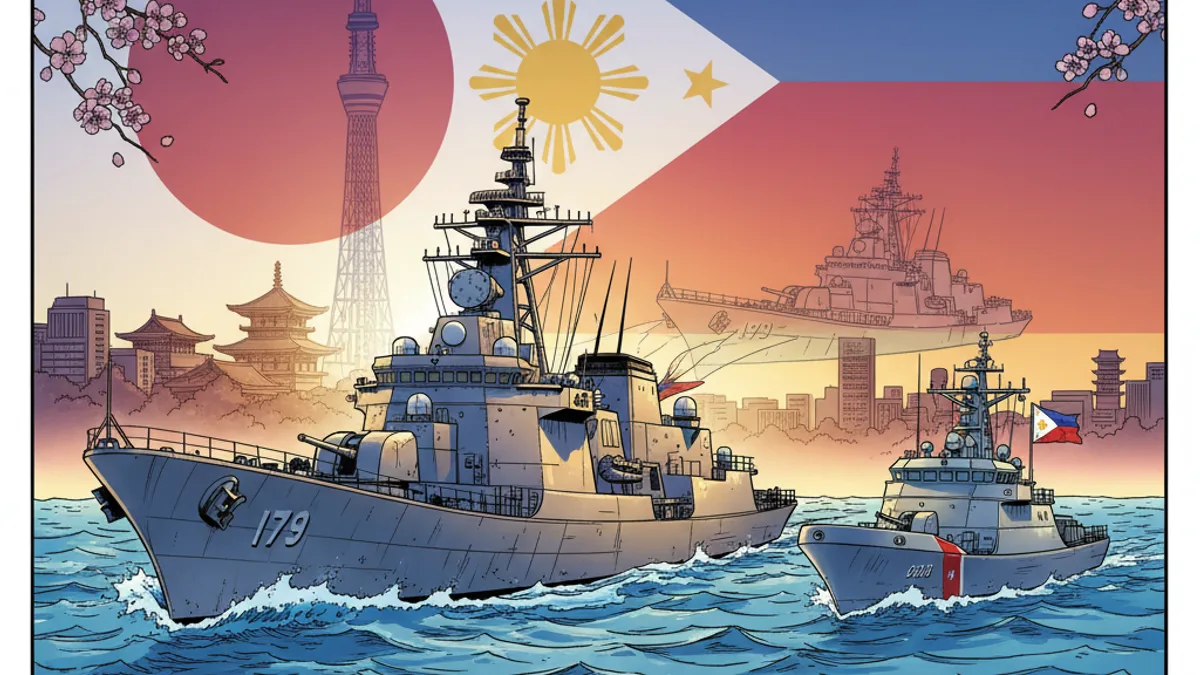
Japan and Philippines Establish Framework for Maritime Defense Vessel Transfer
Japan and the Philippines agreed to establish a working group to facilitate the transfer of used JMSDF escort vessels, following Japan's policy change allowing lethal weapon exports.
Key Points
- • Japan and Philippines create working group for used escort vessel transfers.
- • Agreement follows Japan's new policy permitting lethal weapon exports in principle.
- • Working group will determine transfer timing, methods, and technical arrangements.
- • Development reflects Japan's expanding regional security role and defense partnerships.
Japan and the Philippines have agreed to establish a working group to facilitate the transfer of used Japan Maritime Self-Defense Force (JMSDF) escort vessels to the Philippine military, marking a significant development in bilateral defense cooperation and Japan's evolving security export policy.
Japanese Defense Minister Koizumi met with Philippine Defense Secretary Teodoro during an official visit to the Philippines on May 5, 2026, where the two nations formalized their commitment to advancing the vessel transfer process, according to NHK. The agreement establishes a working group between defense authorities from both countries to discuss specific details including the timing and methods of transfer.
This development follows Japan's recent policy shift that now permits the export of lethal weapons in principle, a departure from the country's traditionally restrictive stance on military equipment exports. The new policy framework enables Japan to transfer used military vessels and equipment to partner nations, particularly those facing maritime security challenges in the Indo-Pacific region.
The Philippines has been seeking to strengthen its maritime defense capabilities amid ongoing territorial disputes in the South China Sea. Japanese escort vessels, even used ones, represent a significant upgrade to the Philippine Navy's current fleet. These vessels are equipped with advanced radar systems, anti-submarine warfare capabilities, and modern communication equipment that could substantially enhance the Philippines' ability to patrol and defend its maritime territories.
For foreign residents in Japan, this agreement reflects the country's increasingly active role in regional security affairs. Japan has been gradually expanding its defense posture and international security partnerships, moving away from its post-World War II pacifist policies. This shift has implications for Japan's international standing and its relationships with both regional partners and potential adversaries.
The working group will address several critical aspects of the transfer, including the condition assessment of vessels, necessary refurbishments, crew training requirements, maintenance support, and financial arrangements. According to NHK, the discussions will focus on achieving an early transfer, suggesting both nations view this as a priority initiative.
This vessel transfer arrangement is part of a broader pattern of deepening Japan-Philippines defense ties. The two countries have been conducting joint military exercises, sharing intelligence on maritime activities, and coordinating responses to regional security challenges. Japan has also been providing the Philippines with patrol vessels and equipment through official development assistance programs, though those transfers involved non-lethal equipment.
The agreement also demonstrates Japan's strategic approach to countering China's growing maritime assertiveness in the region. By strengthening the defensive capabilities of Southeast Asian partners, Japan aims to maintain a balance of power and ensure freedom of navigation in critical sea lanes that are vital to its economy.
Expats working in defense-related industries, international relations, or maritime sectors in Japan may find expanded opportunities as these bilateral defense partnerships grow. The establishment of the working group will likely involve technical experts, translators, and logistics specialists from both nations.
The timing and scope of the actual vessel transfers remain to be determined through the working group's deliberations. Defense analysts suggest that the first transfers could occur within the next year, depending on the condition of available vessels and the Philippines' readiness to receive and operate them.
This agreement represents a milestone in Japan's defense policy evolution and its commitment to supporting regional stability. For the international community in Japan, it signals the country's willingness to take a more proactive role in addressing security challenges in the Indo-Pacific, potentially reshaping perceptions of Japan's global security contributions and its future direction in international affairs.