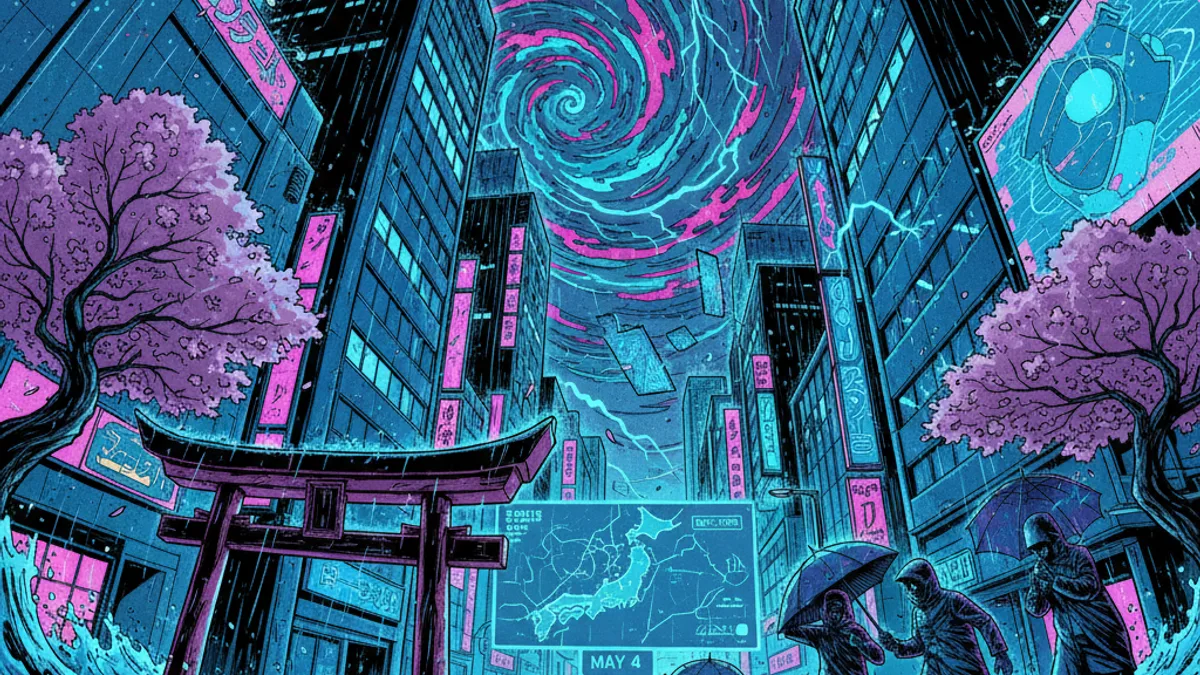
Severe Weather System Brings Heavy Rain and Strong Winds Across Japan
A severe low-pressure system is bringing heavy rain and strong winds across Japan through May 4th, with violent winds expected in Tohoku. The Amami region has entered rainy season, marking the start of tsuyu.
AI-written summary of Japanese reports; not human-reviewed; check the linked sources. How we write articles
Key Points
- • Violent winds expected in Tohoku region from evening May 3rd onward.
- • Weather warnings issued for heavy rain and strong winds through May 4th.
- • Transportation disruptions likely; check train and flight schedules frequently before traveling.
- • Amami region entered rainy season; prepare rain gear and emergency supplies now.
A developing low-pressure system is bringing severe weather conditions across Japan, with heavy rainfall and strong winds affecting multiple regions from May 3rd through May 4th, 2026. Foreign residents should prepare for potential transportation disruptions and take necessary safety precautions as the weather system moves eastward across the archipelago.
According to NHK, the low-pressure system and accompanying weather front are causing intensified rainfall across western Japan, with some areas already experiencing severe downpours. The developed rain clouds are gradually moving eastward, meaning central and northeastern regions of Japan will also face deteriorating weather conditions through May 4th.
The Tohoku region faces particularly concerning conditions, with NHK warning that violent winds are expected from the evening hours of May 3rd. Residents in northeastern Japan should exercise caution and remain vigilant regarding potential impacts on transportation systems and daily activities. The combination of heavy rain and strong winds creates hazardous conditions that could affect train services, flights, and road travel.
Yahoo Japan reports that weather warnings have been issued for both heavy rain and violent winds reaching alert levels through May 4th. These official warnings indicate that conditions may become severe enough to pose risks to personal safety and property. Foreign residents unfamiliar with Japan's weather warning system should understand that such alerts require immediate attention and appropriate action.
In a significant seasonal development, NHK announced that the Amami region of Kagoshima Prefecture has officially entered its rainy season. This marks the beginning of Japan's tsuyu (梅雨) period, which typically progresses northward across the country over the coming weeks. The rainy season brings prolonged periods of precipitation and increased humidity, requiring adjustments to daily routines and travel plans.
For expats living in affected areas, several practical considerations are essential during this severe weather event. First, monitor local weather forecasts regularly through reliable sources such as NHK or the Japan Meteorological Agency. Many weather apps and websites offer English-language services specifically designed for foreign residents.
Transportation disruptions are highly likely during severe weather conditions. Train services may experience delays or suspensions, particularly in the Tohoku region where violent winds are forecast. Airlines often cancel or delay flights during such weather systems. Those with travel plans should check with transportation providers frequently and consider alternative arrangements or postponing non-essential trips.
Flash flooding poses a significant risk during heavy rainfall events. Residents living near rivers or in low-lying areas should be particularly vigilant. Avoid walking or driving through flooded areas, as water depth and current strength can be deceptive and dangerous. If local authorities issue evacuation advisories, follow instructions promptly.
Strong winds can cause falling debris, damaged signage, and flying objects. Secure any outdoor items such as bicycles, potted plants, or laundry that could become projectiles. Avoid unnecessary outdoor activities during peak wind periods, and stay away from coastal areas where conditions may be especially hazardous.
For those new to Japan's rainy season, now is the time to invest in quality rain gear. A sturdy umbrella, waterproof shoes, and a rain jacket are essential items. Many convenience stores and supermarkets stock these items, but selection may be limited during severe weather when demand increases.
Japan's infrastructure is generally well-prepared for heavy rain, but individual preparedness remains crucial. Keep emergency supplies accessible, including flashlights, batteries, drinking water, and non-perishable food. Charge mobile devices fully to ensure communication capability if power outages occur.
As this weather system continues to develop and move across Japan, staying informed and taking appropriate precautions will help ensure safety for all residents, whether long-term or temporary. The Japan Meteorological Agency and local municipalities provide regular updates that should be monitored closely until conditions improve.
Sources
This article was written by AI from these Japanese-language reports. Check them before acting on anything here.
- [1] NHK — original report (Japanese)
- [2] Yahoo! Japan News — original report (Japanese)
- [3] NHK — original report (Japanese)