Japan Introduces Blue Ticket System for Bicycle Traffic Violations
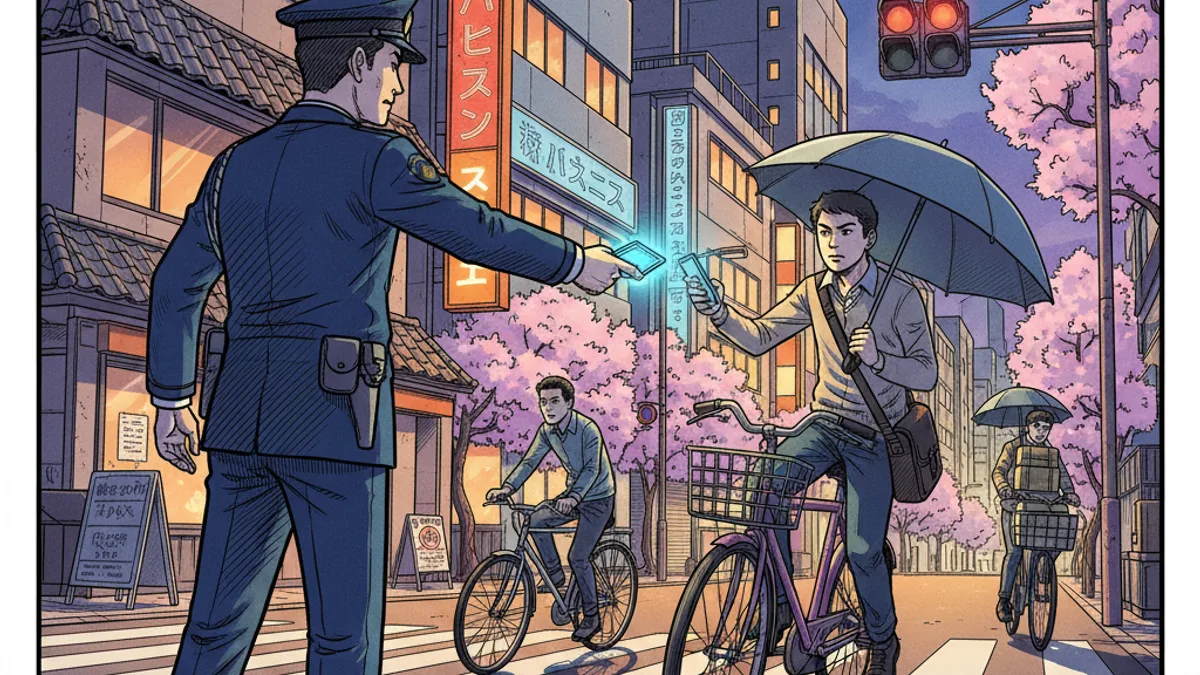
Japan's new blue ticket system for bicycle violations launched April 1, 2026, allowing police to issue on-the-spot fines for infractions like smartphone use, umbrella-holding while riding, and ignoring signals.
Key Points
- • Blue ticket bicycle enforcement began nationwide on April 1, 2026.
- • Cyclists receive on-the-spot fines for violations, similar to motorists.
- • Common violations include smartphone use, umbrella-holding, and ignoring traffic signals.
- • Police emphasize education but can issue immediate citations from day one.
Foreign residents cycling in Japan now face a new enforcement regime as the national "blue ticket" (ao kippu) system for bicycle traffic violations launched on April 1, 2026. This significant change in traffic enforcement means cyclists can now receive on-the-spot fines for violations, similar to motorists, marking a departure from Japan's previously lenient approach to bicycle infractions.
According to NHK, the blue ticket system allows police to issue traffic violation notices that require payment of fines directly to offenders. The Tokyo Metropolitan Police Department began enforcement on the first day of the new fiscal year, conducting stops throughout the capital to inform cyclists about traffic rules and issue citations where necessary.
The new system represents a major shift in how bicycle violations are handled. Previously, serious bicycle infractions could only be addressed through criminal prosecution with red tickets (aka kippu), a time-consuming process that police rarely pursued except in severe cases. This enforcement gap meant many violations went unpunished, contributing to widespread non-compliance with traffic rules. The blue ticket system fills this middle ground, providing police with a practical enforcement tool for common violations.
The timing of the launch proved particularly relevant in Osaka, where rainy weather on April 1 led to numerous instances of illegal umbrella-holding while cycling, according to Livedoor News. This violation—riding while holding an umbrella—is one of the infractions now subject to blue ticket enforcement. The prevalence of such violations on the very first day of the new system highlights the enforcement challenges police face and the cultural adjustment required from cyclists.
For expats, understanding which violations trigger blue tickets is essential. While specific fine amounts have not been publicly detailed in initial reports, the system targets common infractions that foreign residents may not realize are illegal. These include riding while using a smartphone, cycling under the influence of alcohol, ignoring traffic signals, riding on sidewalks where prohibited, and the aforementioned umbrella-holding while cycling. Double-riding (carrying passengers on bicycles not designed for it) and nighttime cycling without lights are also enforceable violations.
The nationwide implementation means enforcement standards should become more consistent across Japan's prefectures. Previously, enforcement practices varied significantly by region, with some areas rarely stopping cyclists while others maintained stricter oversight. The standardized blue ticket system aims to create uniform traffic safety standards throughout the country.
Police departments are emphasizing education alongside enforcement during the initial rollout period. According to NHK, officers are actively calling on bicycle users to observe traffic rules, suggesting authorities hope increased awareness will improve compliance without requiring excessive citations. However, foreign residents should not assume a grace period—violations can result in immediate fines from day one of the system.
The introduction of blue tickets reflects broader governmental concerns about bicycle safety in Japan. With cycling being a primary transportation mode for millions of residents, including many expats who rely on bicycles for daily commuting, improving rule compliance has become a policy priority. The previous enforcement vacuum meant dangerous behaviors often went unchecked, contributing to accidents and injuries.
For foreign residents, the practical implications are clear: bicycle traffic rules must now be taken as seriously as automotive traffic laws. Expats should familiarize themselves with local cycling regulations, which may differ from their home countries. Simple violations that might have been overlooked previously can now result in financial penalties.
The blue ticket system joins other changes implemented at the start of Japan's 2026 fiscal year, part of broader regulatory updates affecting daily life. As enforcement continues and fine schedules become publicized, foreign residents should stay informed through local government resources and community networks to ensure compliance with the new regime.
Sources
This article was written by AI from these Japanese-language reports. Check them before acting on anything here.
- [1] Livedoor News — original report (Japanese)
- [2] NHK — original report (Japanese)
- [3] NHK — original report (Japanese)
AI-written summary of Japanese reports; not human-reviewed; check the linked sources. How we write articles