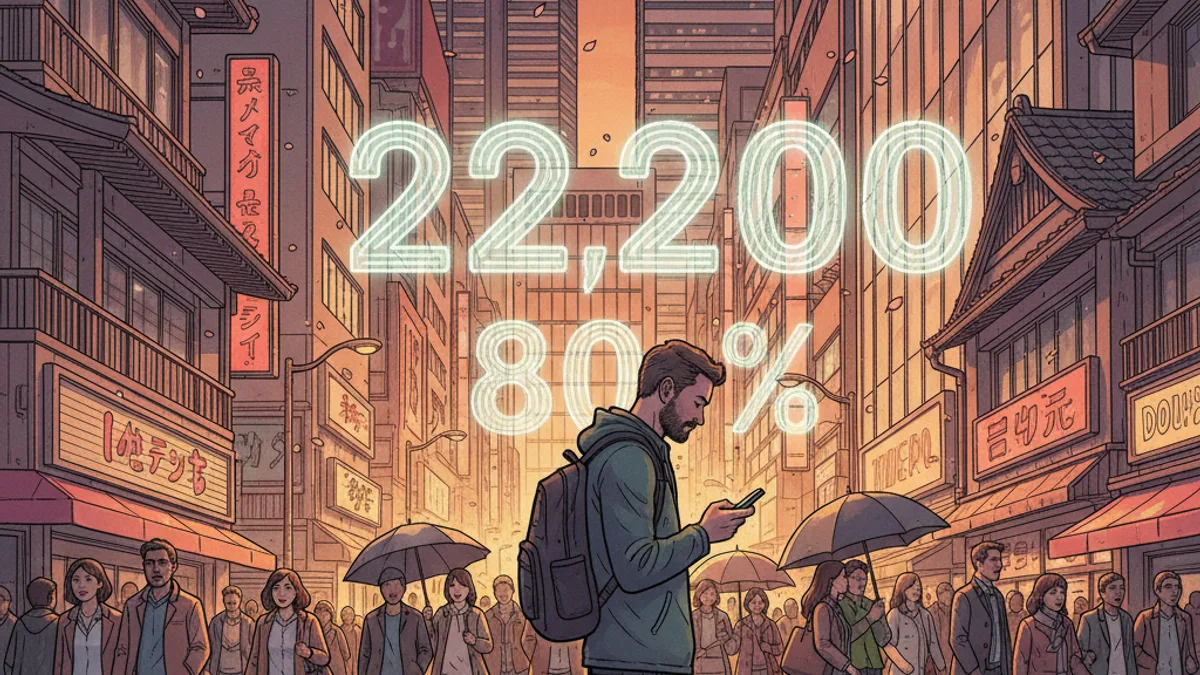
Japan Records 22,200 Isolated Deaths in 2024, 80% Among Men
Japan recorded 22,200 isolated deaths in 2024, up 360 from 2023, with 80% occurring among men. The trend highlights risks for expats living alone without family support networks in Japan.
Key Points
- • 22,200 people died in social isolation in 2024, increasing 360 from 2023.
- • Men comprised 80% of isolated deaths, reflecting weaker social connection patterns.
- • Expats face elevated isolation risks due to language barriers and distance from family.
- • Local communities offer support programs; actively maintain social connections for protection.
Japan's Cabinet Office released sobering statistics in April 2025 revealing that approximately 22,200 people died in social isolation during 2024, marking an increase of over 360 deaths compared to the previous year. The data, reported by NHK, highlights a growing crisis of loneliness and disconnection affecting residents across the country, with profound implications for Japan's aging society and foreign residents living far from family support networks.
According to the government's definition, these "isolated deaths" (孤立死, koritsu-shi) refer to individuals who died without anyone present and who were believed to have been socially isolated during their lifetime. The statistics paint a stark picture of vulnerability, with men comprising approximately 80% of all cases, as reported by Livedoor News. This gender disparity points to deeper social patterns, with research indicating that men in Japan have significantly lower rates of regular communication with family and friends compared to women.
The steady increase in isolated deaths—rising from 21,840 in 2023 to 22,222 in 2024—reflects broader demographic and social challenges facing Japan. As the country continues to age rapidly, with over 29% of the population now aged 65 or older, the risk of social isolation intensifies. Many elderly individuals live alone, particularly in urban areas where traditional family structures have weakened and multi-generational households have become less common.
For foreign residents in Japan, these statistics carry particular relevance. Expats, especially those living alone without family networks in Japan, may face elevated isolation risks due to language barriers, cultural differences, and distance from their home countries. The pandemic years demonstrated how quickly social connections can fray, and many foreign residents continue to experience limited integration into local communities even as COVID-19 restrictions have lifted.
The predominantly male victims reflect patterns observed in social research: Japanese men, particularly older and middle-aged individuals, often have fewer close friendships and weaker community ties than women. Traditional gender roles that emphasized workplace relationships over personal connections have left many men vulnerable when retirement, unemployment, or health issues disrupt their professional networks. For male expats working in Japan's demanding corporate culture, this pattern may feel familiar and concerning.
The Japanese government has begun acknowledging social isolation as a critical policy issue. In 2021, Japan established a Minister of Loneliness position, following similar initiatives in the United Kingdom. Local governments have also launched various community programs aimed at connecting isolated individuals with support services and social activities. However, these efforts have yet to reverse the upward trend in isolated deaths.
Experts emphasize that social isolation affects people across all age groups, not just the elderly. Younger workers, including foreign professionals, can experience profound loneliness despite living in densely populated cities. The phenomenon of hikikomori—severe social withdrawal—has gained international attention, but less extreme forms of isolation remain widespread and potentially dangerous.
For expats living in Japan, these statistics serve as a reminder to actively maintain social connections and community ties. Regular communication with family abroad, participation in local expat communities, engagement with Japanese neighbors, and involvement in hobbies or volunteer activities can provide crucial buffers against isolation. Mental health resources, including English-language counseling services, are increasingly available in major cities.
The rising number of isolated deaths represents not just a statistical trend but a human tragedy affecting thousands of families annually. As Japan grapples with this challenge, both Japanese citizens and foreign residents should recognize the importance of building and maintaining meaningful social connections in what can sometimes feel like an isolating society.