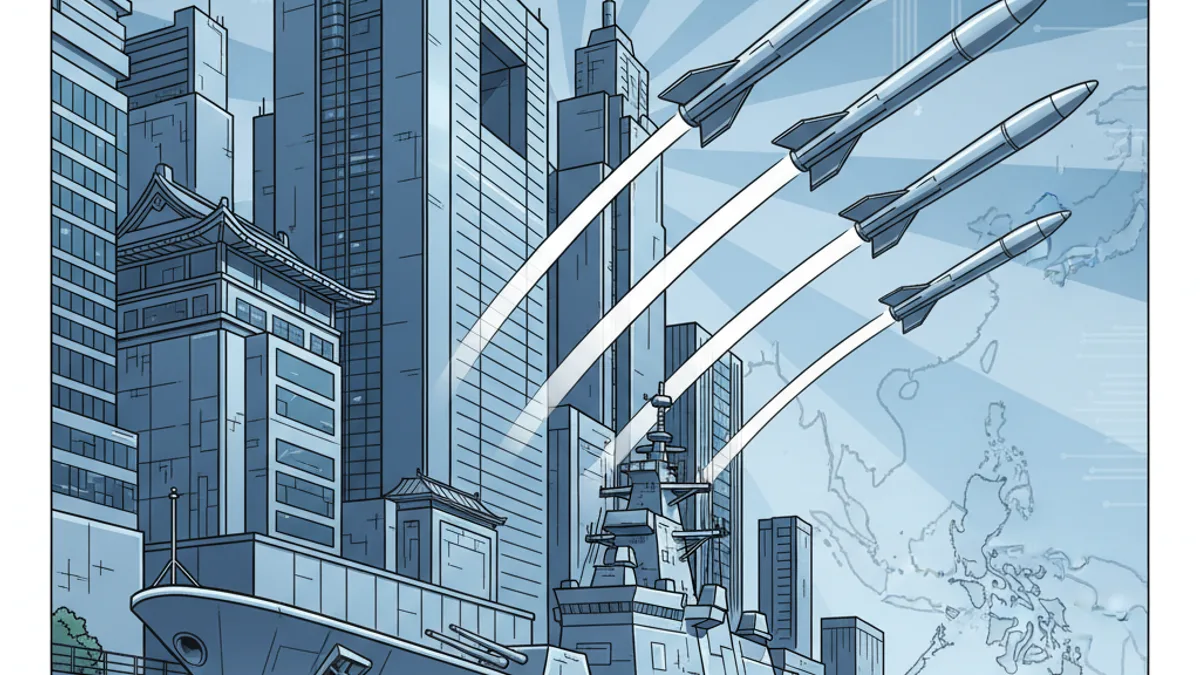
Japan Relaxes Defense Export Rules, Allows Lethal Weapons Sales Abroad
Japan abolished restrictions on lethal weapons exports on April 21, 2026, removing the "five categories" framework. The policy allows destroyer and missile sales, with Philippines negotiations beginning immediately.
Key Points
- • Japan removed export restrictions on lethal weapons effective April 21, 2026.
- • Destroyers and missiles can now be exported under revised principles.
- • Philippines negotiations for Japanese destroyers have begun under new rules.
- • Exports still prohibited to conflict zones or nations threatening peace.
Japan has fundamentally shifted its defense export policy, removing restrictions that previously limited overseas transfers of lethal military equipment. On April 21, 2026, the Takaichi administration revised the "Three Principles on Transfer of Defense Equipment and Technology" and its operational guidelines, eliminating the so-called "five categories" framework that had constrained weapons exports since its implementation.
According to NHK, the abolished "five categories" previously restricted defense equipment transfers to non-combat purposes such as rescue operations, transportation,警戒 (surveillance), 掃海 (minesweeping), and 警備 (security). With this framework removed, Japan can now export lethal weapons—including destroyers, missiles, and other combat-capable equipment—in principle, marking a significant departure from the nation's post-war pacifist stance on arms exports.
Defense Minister Koizumi announced that Japan will begin negotiations with the Philippines regarding the potential export of Japanese Maritime Self-Defense Force destroyers, demonstrating the immediate practical application of these policy changes. The Philippines has expressed interest in acquiring Japanese naval vessels, making it a likely early beneficiary of the relaxed export rules.
The policy shift represents a major security realignment for the Takaichi Cabinet, which has now been in office for six months. The government frames this change as necessary for strengthening regional security partnerships and supporting allied nations facing increasing military pressures, particularly in the Indo-Pacific region where territorial disputes and geopolitical tensions have intensified.
For foreign residents in Japan, this policy change signals a notable evolution in Japan's international posture. While the revision doesn't directly affect daily life for expats, it reflects broader shifts in Japan's strategic thinking and its willingness to play a more active role in regional security affairs. The move may influence Japan's diplomatic relationships and could affect the country's international reputation, potentially impacting business relationships and cultural exchanges.
The revised principles maintain certain safeguards. Transfers remain prohibited to countries involved in conflicts or those that might undermine international peace and security. The government emphasizes that exports will be evaluated case-by-case, with careful consideration of each recipient nation's circumstances and the potential impact on regional stability.
Critics have raised concerns about whether adequate controls exist to prevent exported weapons from being misused or diverted to unintended recipients. Questions also remain about transparency in the approval process and how the government will ensure compliance with international humanitarian law.
The defense industry implications are significant. Japanese manufacturers, which have historically focused on domestic defense production, now have opportunities to enter international markets. This could strengthen Japan's defense industrial base and create new economic opportunities, though it also places Japanese companies in the competitive and politically sensitive global arms market.
For expats working in defense-related industries, technology sectors, or international trade, these changes may create new business opportunities or partnerships. However, individuals employed in relevant sectors should be aware of Japan's export control regulations and compliance requirements, which remain stringent despite the policy relaxation.
The timing of this announcement aligns with broader regional security concerns, including North Korea's weapons development programs and China's military expansion. Japan's government argues that enabling defense equipment exports to partner nations strengthens collective security and reduces dependence on single suppliers.
As Japan navigates this policy shift, foreign residents should monitor how it affects Japan's international relationships and domestic political discourse. While the immediate impact on expat life is minimal, understanding these fundamental policy changes provides important context for Japan's evolving role in global affairs and its approach to national security in an increasingly complex geopolitical environment.