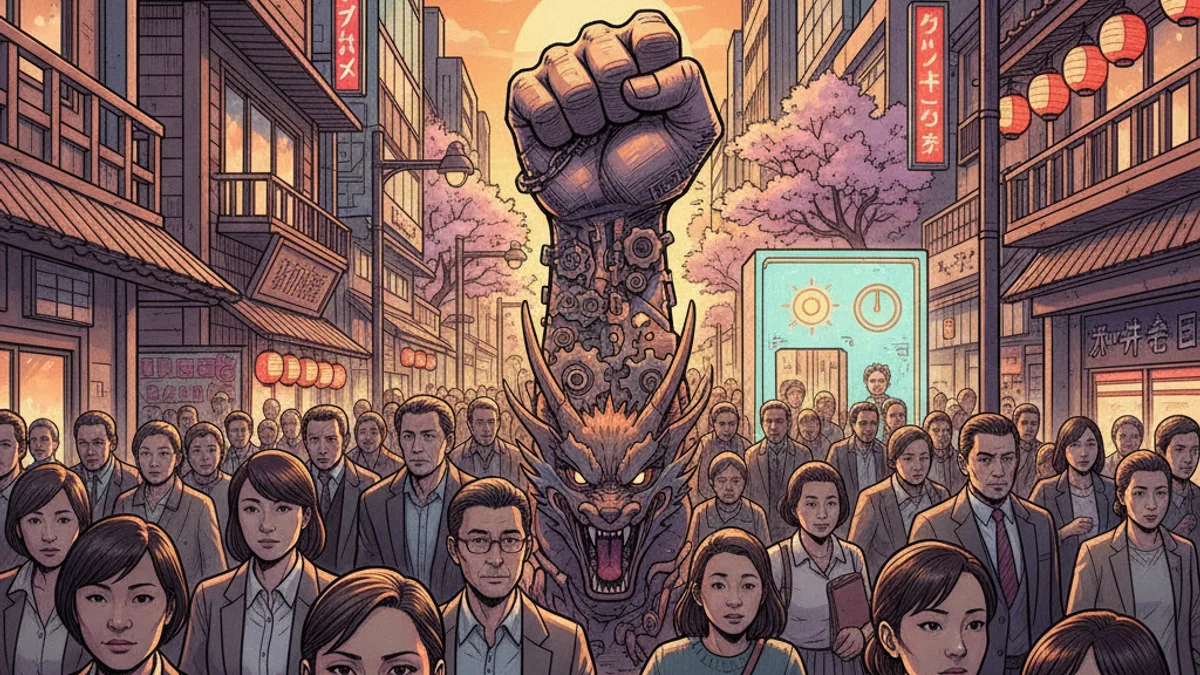
Japan's Discretionary Work System Expansion Faces Strong Union Opposition
Japan's government plans to expand the discretionary work system, which exempts workers from overtime pay, despite strong opposition from Rengo union. The change could significantly affect foreign workers' compensation and working hours.
Key Points
- • Government proposes expanding discretionary work system to additional job categories beyond current roles.
- • Rengo union formally opposes expansion, citing concerns about promoting excessive working hours.
- • Discretionary workers receive predetermined pay regardless of actual hours worked, losing overtime protections.
- • Foreign workers should verify employment contract classifications and negotiate compensation accordingly.
Japan's government is moving forward with plans to expand the discretionary work system, a controversial labor arrangement that exempts certain employees from standard overtime regulations. According to NHK, Rengo, Japan's largest labor union confederation, has submitted a formal objection to the Ministry of Health, Labour and Welfare, warning that the expansion could promote excessive working hours and undermine worker protections.
The discretionary work system allows employers to pay workers based on predetermined hours rather than actual time worked, regardless of whether employees work more or fewer hours than stipulated. Currently limited to specific professional categories such as researchers, designers, and certain consultants, the government is considering broadening the system to include additional job types. This reform represents one of the most significant proposed changes to Japan's labor framework in recent years.
Rengo's opposition centers on concerns that expanding the system will create loopholes allowing employers to avoid paying overtime compensation while demanding longer working hours from employees. The union argues that Japan's workplace culture already struggles with overwork issues, and loosening regulations could exacerbate the problem rather than modernize labor practices as the government claims.
For foreign workers in Japan, understanding the discretionary work system is crucial, as it fundamentally changes how working hours and compensation are calculated. Under standard Japanese labor law, employees are entitled to overtime pay for work exceeding eight hours daily or forty hours weekly. However, workers classified under the discretionary system have their compensation predetermined, meaning additional hours worked do not automatically result in additional pay.
The proposed expansion comes as Japan grapples with labor shortages and pressure to improve workplace flexibility. Government officials argue that the discretionary system promotes work-life balance by focusing on output rather than hours spent at a desk. They contend that modern knowledge workers, including many foreign professionals in technology and creative industries, benefit from flexible arrangements that reward productivity over presenteeism.
However, labor advocates counter that without proper safeguards, the system can be exploited. Past data has shown that workers under discretionary arrangements sometimes work significantly longer hours than their non-discretionary counterparts, yet receive no additional compensation. This concern is particularly relevant for foreign workers who may feel less empowered to challenge workplace practices or may not fully understand their rights under Japanese labor law.
The debate also intersects with recent government initiatives to address workplace stress. According to Yahoo Japan Domestic, authorities plan to expand mandatory stress check requirements by 2028, suggesting recognition that workplace mental health remains a pressing concern. Critics argue that expanding discretionary work while simultaneously acknowledging stress problems sends mixed messages about the government's commitment to worker wellbeing.
For expats currently employed in Japan or considering job offers, it's essential to clarify whether positions fall under the discretionary work system. Employment contracts should explicitly state the classification, expected working hours, and compensation structure. Workers should be aware that accepting a discretionary position means forfeiting standard overtime protections, making it critical to negotiate appropriate base compensation that reflects realistic workload expectations.
As this debate unfolds, foreign workers should monitor developments through their employers' human resources departments and consider consulting with labor law specialists if their job categories might be affected by any expansion. While the government has not announced a specific timeline for implementation, Rengo's formal opposition suggests the proposal will face continued scrutiny and possible modifications before any changes take effect.
The outcome of this labor law debate will have lasting implications for Japan's workforce, including its growing community of foreign professionals. Understanding these potential changes now will help expats make informed decisions about their employment arrangements and workplace rights in Japan.