Japan Secures Alternative Oil Supply Routes Amid Hormuz Strait Crisis
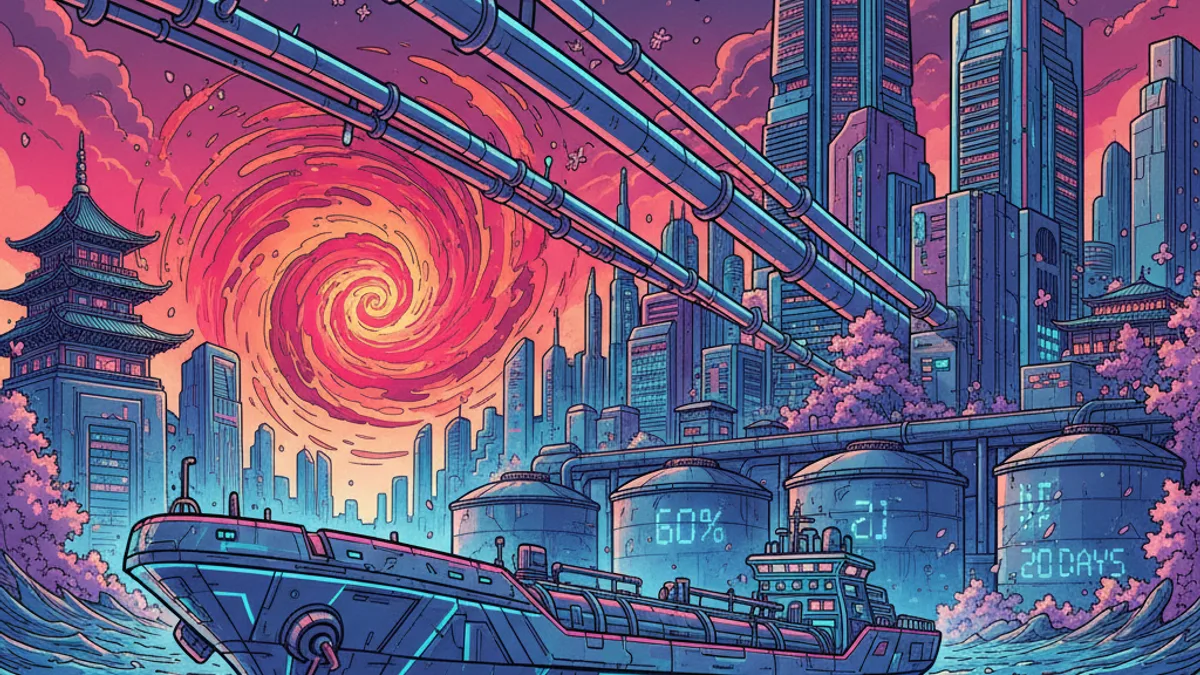
Japan has secured 60% of alternative oil supplies for May and will release 20 days of reserves to offset Hormuz Strait disruptions. Major energy companies are establishing new supply routes bypassing the strait.
Key Points
- • Government secured 60% of May's alternative oil supplies, supplementing with reserve releases.
- • Four Japanese tankers successfully passed Hormuz Strait with apparent Iranian permission.
- • Idemitsu Kosan supplying Vietnam via routes bypassing the Hormuz Strait entirely.
- • Energy costs may fluctuate despite stabilization efforts; monitor conservation requests.
Japan has made significant progress in securing alternative oil supplies as the Hormuz Strait crisis continues to disrupt traditional energy routes, with the government confirming approximately 60% of alternative crude oil procurement has been secured for May, according to NHK.
The developments come as Iran's effective blockade of the Hormuz Strait has raised concerns about energy security across Asia. The strait, through which a significant portion of Middle Eastern oil traditionally flows to Japan, has become increasingly difficult to navigate, forcing the Japanese government and energy companies to pursue alternative supply chains.
According to NHK, the government plans to combine the newly secured alternative crude oil supplies with a release of 20 days' worth of national oil reserves to meet domestic demand. This dual approach aims to ensure stability in Japan's energy supply while alternative procurement routes are fully established.
In a notable development, several Japanese tankers have successfully navigated the Hormuz Strait in recent days. Yahoo Japan Business and Livedoor News reported that the tanker "Idemitsu Maru" passed through the strait heading east on April 28, marking the fourth Japan-related vessel to make the passage. According to Livedoor News, the large Japanese tanker appears to have obtained permission from Iran to transit the strategic waterway, suggesting some vessels may still access traditional routes under specific circumstances.
Major energy company Idemitsu Kosan has taken proactive steps to maintain regional supply chain stability. According to NHK, the petroleum distributor has decided to supply crude oil to Vietnam using routes that bypass the Hormuz Strait entirely. This arrangement demonstrates how Japanese energy companies are adapting their operations to support both domestic and regional energy security amid the ongoing crisis.
For foreign residents in Japan, these developments have important practical implications. While the government's measures suggest fuel supplies will remain stable in the near term, the situation highlights Japan's vulnerability to Middle Eastern energy disruptions. The combination of alternative procurement and strategic reserve releases is designed to prevent shortages and price spikes that could affect daily life.
Expats should be aware that energy costs may still experience volatility despite these stabilization efforts. Alternative procurement routes often involve longer shipping distances and different supplier relationships, which can influence pricing. The government's decision to tap into national reserves for 20 days' worth of supply indicates the seriousness of the situation, though it also demonstrates preparedness.
The fact that only 60% of alternative supplies have been secured for May means the government is still working to close the remaining gap. This ongoing effort suggests the crisis may continue to influence Japan's energy landscape for the foreseeable future. Residents should stay informed about any potential energy conservation requests from the government, though none have been announced at this time.
Japan's energy security strategy has long relied on diversification and substantial strategic reserves precisely for situations like this. The country maintains some of the world's largest oil stockpiles, designed to cushion against supply disruptions. The current crisis is testing this system in real-time.
For businesses operating in Japan, particularly those in energy-intensive industries, monitoring these developments remains crucial. Transportation costs, manufacturing expenses, and heating or cooling budgets may all be affected by shifts in energy procurement patterns.
The government continues to work with energy companies and international partners to secure additional alternative supplies and maintain stable energy availability. While the Hormuz Strait situation remains fluid, Japan's response demonstrates the resilience of its energy security infrastructure and the effectiveness of its crisis management protocols.
Foreign residents should maintain awareness of the situation but can take some reassurance from the government's proactive approach to ensuring energy stability during this challenging period.