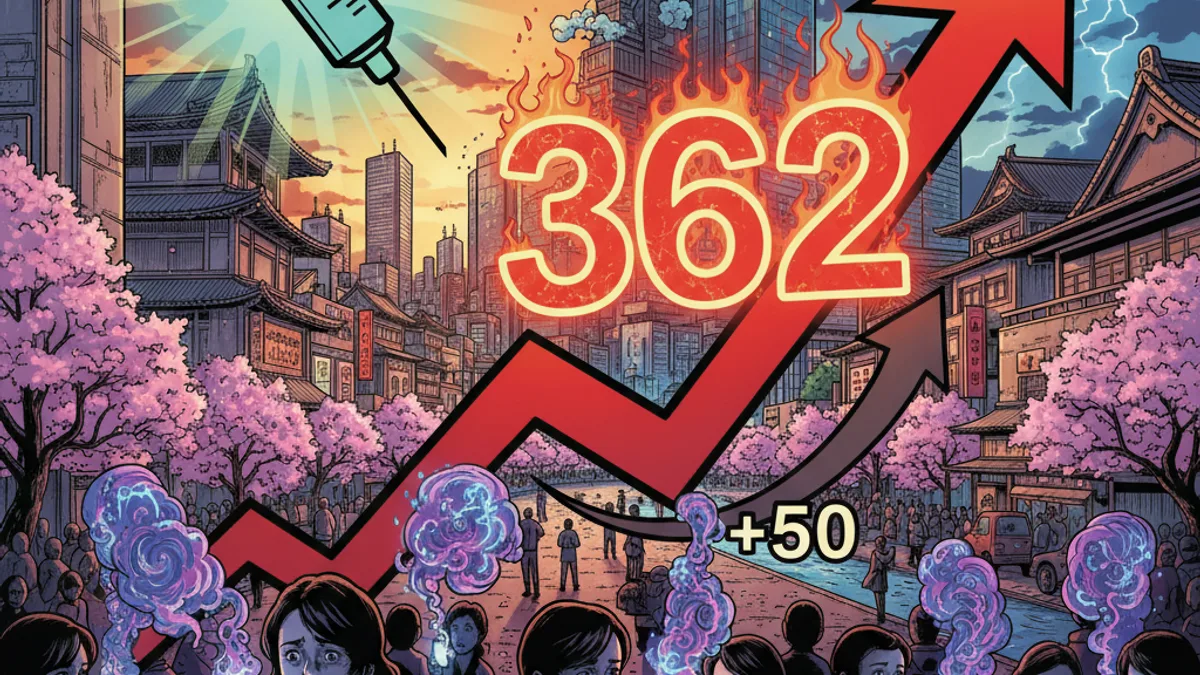
Measles Cases Surge to 362 in Japan as Misinformation Spreads Online
Measles cases in Japan have surged to 362, rising over 50 in one week—the fastest spread since 2020. Health experts urge vaccination as misinformation spreads online, warning of serious complications.
Key Points
- • Measles cases reached 362, increasing by over 50 in one week.
- • Current outbreak is 4.4 times larger than last year's same period.
- • Vaccination highly effective; experts warn against false social media claims.
- • Two MMR vaccine doses recommended; consult healthcare provider about vaccination status.
Japan is experiencing its fastest measles outbreak since 2020, with confirmed cases reaching 362 as of late April 2026, according to NHK. The number represents an increase of more than 50 cases in just one week and is approximately 4.4 times higher than the same period last year, Yahoo Japan Science reports.
The rapid acceleration of infections has prompted health authorities to issue urgent vaccination advisories, particularly as dangerous misinformation about measles vaccines spreads across social media platforms. For foreign residents in Japan, understanding the facts about this highly contagious disease and taking appropriate preventive measures has become increasingly critical.
The current outbreak marks the most aggressive spread of measles Japan has seen in recent years. Health experts are particularly concerned about the pace of transmission, as measles is one of the most contagious viral diseases known to medicine. A single infected person can transmit the virus to up to 90% of unvaccinated people they come into contact with, making community immunity through vaccination essential.
According to NHK, the outbreak has been accompanied by a troubling surge in scientifically unfounded claims circulating on social media. False information suggesting that "vaccinations are meaningless" and posts deliberately downplaying the number of infections have become widespread online. Medical experts have issued strong warnings against such misinformation, emphasizing that these claims contradict established scientific evidence.
Specialists stress that the measles vaccine is highly effective at preventing infection and, crucially, at preventing severe complications. Measles can lead to serious health consequences including pneumonia, encephalitis (brain inflammation), and in rare cases, death. Children under five, adults over 20, pregnant women, and immunocompromised individuals face particularly high risks of severe complications.
For expats living in Japan, verifying vaccination status should be a priority. The standard measles vaccination protocol involves two doses of the MMR (measles, mumps, rubella) vaccine. Those who received only one dose during childhood, or who are uncertain about their vaccination history, should consult with a healthcare provider about receiving an additional dose.
Japan's national immunization program offers free measles vaccinations for children at specified ages, but adults who missed vaccinations or need boosters typically must pay out of pocket. Many municipal health centers and clinics throughout Japan provide vaccination services, and some offer subsidies for specific age groups or circumstances. Foreign residents should check with their local ward or city office about available support programs.
The outbreak's timing is particularly concerning as Japan continues to see increased international travel following pandemic restrictions. Measles has a long incubation period of 10-14 days, during which infected individuals may unknowingly spread the virus. The disease is airborne and can remain infectious in the air for up to two hours after an infected person leaves an area.
Experts quoted by NHK warn that as infections spread, the number of people experiencing severe complications will inevitably increase. This puts additional strain on healthcare facilities and increases risks for vulnerable populations who cannot be vaccinated due to medical conditions.
Foreign residents should remain vigilant for measles symptoms, which typically begin with high fever, cough, runny nose, and red, watery eyes, followed by a characteristic rash that spreads from the face downward. Anyone experiencing these symptoms should call ahead before visiting a medical facility to prevent potential transmission in waiting rooms.
Health authorities emphasize that vaccination remains the most effective defense against measles. With cases rising rapidly and misinformation clouding public understanding, expats in Japan should prioritize confirming their vaccination status, avoid unverified health claims on social media, and consult qualified medical professionals for accurate information about protecting themselves and their families from this preventable disease.